 Historical Figure MBTI
3 min read
#126 · 3-15-26 · The Founding Generation of USA
James Warren
Revolutionary Leader · Political Figure · Steady Presence behind Massachusetts Resistance
1726 — 1808
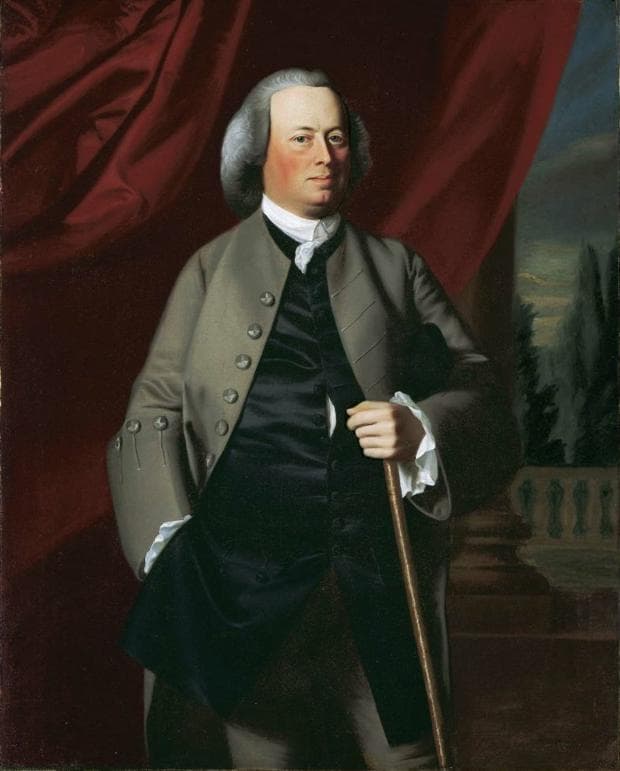
Portrait of James Warren
The Quiet Conviction
James Warren did not dominate the Revolution.
He stayed with it.
Born in 1726 in Plymouth, Massachusetts, Warren rose into political life not through force of personality, but through trust, steadiness, and conviction. He served as Speaker of the Massachusetts House and later as Paymaster General of the Continental Army — positions that required not spectacle, but reliability and principle.
He was close to the center of power, yet never seemed to seek it.
While others argued loudly, Warren’s presence was more measured. His influence came not from commanding attention, but from earning confidence over time — a man others relied on, even if they did not always notice him.
He was not trying to shape history through force.
He was trying to remain true within it.
That’s the INFP pattern: introverted feeling (Fi) paired with extraverted intuition (Ne) — not a public driver of systems, but a private anchor of values.
The Internal Compass
At his core, Warren operated through internal conviction.
He was guided less by external structure or authority, and more by a personal sense of what was right. His political involvement was not about ambition or control — it was about alignment with his beliefs.
Even when holding high positions, he did not project dominance. He remained grounded in his own internal compass, engaging when necessary, but never losing that quiet independence of judgment.
This is Fi: values held inwardly, but lived consistently.
The Supportive Vision
Warren showed an openness to ideas and perspectives, particularly within the revolutionary movement.
He was not rigidly attached to a single method or structure. Instead, he moved within a network of thinkers and leaders, engaging with possibilities and supporting broader change without needing to control its exact form.
This reflects Ne in a supportive role: adaptive, receptive, and context-aware, rather than directive.
The Grounded Presence
Warren’s steadiness was one of his defining traits.
He remained consistent across time — in relationships, in responsibilities, and in his role within the Revolution. His reliability was not accidental. It was rooted in a respect for continuity and duty, even as the world around him changed.
This gives his personality a grounded quality: present, dependable, and quietly enduring. This reflects introverted sensing (Si) providing stability to his core values.
The Measured Influence
Unlike many of his contemporaries, Warren did not lead through forceful organization or execution.
While he held positions of authority, he did not impose structure aggressively or seek to dominate systems. At times, this may have made him less visible or less assertive in political arenas driven by stronger Te personalities.
This aligns with inferior Te: capable when required, but not the preferred mode of operation.
Connected Figures
Further Reading
- Mercy Otis Warren: Sex, Politics, and the Beginning of American Literature — Rosemarie ZagarriThe most focused modern study of the Warrens' world; James appears throughout as spouse and political collaborator.
- Paul Revere's Ride — David Hackett FischerReconstructs the Boston patriot network — the Sons of Liberty, the Committee of Safety — in which James Warren was a key figure.
- Samuel Adams: A Life — Ira StollDocuments the Boston radical network Warren moved within; Adams and Warren are treated as close collaborators in the Massachusetts resistance.
- John Adams — David McCulloughThe Warrens appear frequently as intimate friends of John and Abigail Adams; essential context for James Warren's political world.
