 Historical Figure MBTI
4 min read
#19 · 2-7-26 · Classical Vienna
Ludwig van Beethoven
Composer · Defiant Voice · Sound That Refused to Yield
1770 — 1827
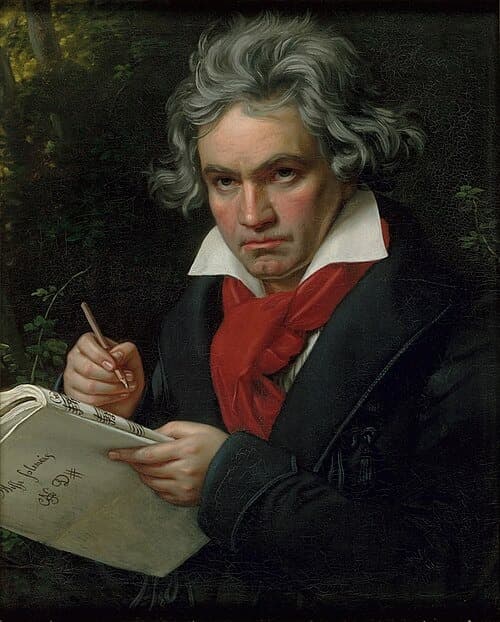
AI-assisted Portrait of Ludwig van Beethoven
The Sound That Refused to Yield
Born in 1770 in Bonn, Ludwig van Beethoven entered a household shaped by volatility and ambition. His father, a struggling court musician, attempted to mold him into a prodigy through force rather than encouragement. Practice sessions were relentless. Praise was scarce. Neighbors reported the child in tears at the keyboard.
His mother, by contrast, was described as gentle and steady — the emotional refuge of his early life. When she died while he was still a teenager, Beethoven effectively became head of the household, managing finances and caring for his younger brothers as his father declined into alcoholism.
By the time he settled in Vienna, Beethoven carried not only extraordinary talent, but also pride sharpened by hardship. Deafness would later isolate him further, amplifying both his intensity and his resolve. What emerged from that life was not detached intellectualism, but music that felt carved from lived emotional force — urgent, embodied, unyielding.
That's the ISFP signature: inwardly anchored conviction forged into form. Beethoven led with deeply internalized value intensity — emotion forged inward first, then expressed outward through craft.
Inwardly Anchored Conviction
Contemporaries repeatedly described Beethoven as hypersensitive, proud, morally intense, and easily wounded. He reacted strongly to perceived slights and guarded his dignity fiercely. His letters are personal and emotionally absolute rather than conceptually structured.
The Heiligenstadt Testament reads as a private moral reckoning — not a strategic manifesto, but a confession of shame, despair, and inner resolve. His language centers on honor, virtue, and being misunderstood. This is not emotional detachment. It is inwardly anchored conviction.
Beethoven did not adjust himself to fit social expectations. He preserved internal integrity even at personal cost. That constancy of inner value is characteristic of dominant Fi.
Embodied Artistry
His relationship to music was physical and immersive. Witnesses described him attacking the piano with intensity, embodying sound rather than delicately shaping it. His compositions expand emotional force through dynamic contrast, rhythmic propulsion, and sensory immediacy.
Even the famous opening of the Fifth Symphony does not wander through possibility — it strikes. It asserts. Se auxiliary supports this embodied artistry. The medium was not abstract theory; it was lived sensation translated into form. His obsessive revisions can be understood not as system-building for its own sake, but as refinement of impact. The sound had to feel right.
Convergence From Emotional Necessity
The structural cohesion of his large works does not require dominant Ni. Tertiary Ni can manifest as thematic convergence over time, especially in a gifted artist. In the late quartets, abstraction deepens — yet the music remains emotionally grounded rather than conceptually detached. The inwardness intensifies, but it does not become clinical.
The architecture appears to arise from emotional necessity rather than strategic blueprinting.
Structure Forged Under Pressure
Beethoven's personal life was notoriously chaotic. His apartment was disordered. His finances fluctuated. Social interactions were volatile. Yet in composition, he demonstrated rigorous revision and technical control.
Inferior Te in ISFPs can become highly developed, particularly when early life demands responsibility. After his mother's death, Beethoven assumed financial and familial duties as a teenager. Structure became survival. The discipline in his music appears domain-specific and hard-earned — not a globally organized temperament, but a tool forged through pressure.
Why ISFP Over INTJ
Why not INTJ?
INTJs are typically described as internally composed, strategically consistent, and emotionally contained. Beethoven was described by intimates as combustible, reactive, and deeply personally wounded. His letters do not display Ni–Te clarity. They display Fi intensity mediated through craft. The architectural strength of his compositions can be explained by mastery, training, and developed Te — it does not necessitate Ni dominance. Structure in his work does not point to emotional suppression. It points to emotional transformation.
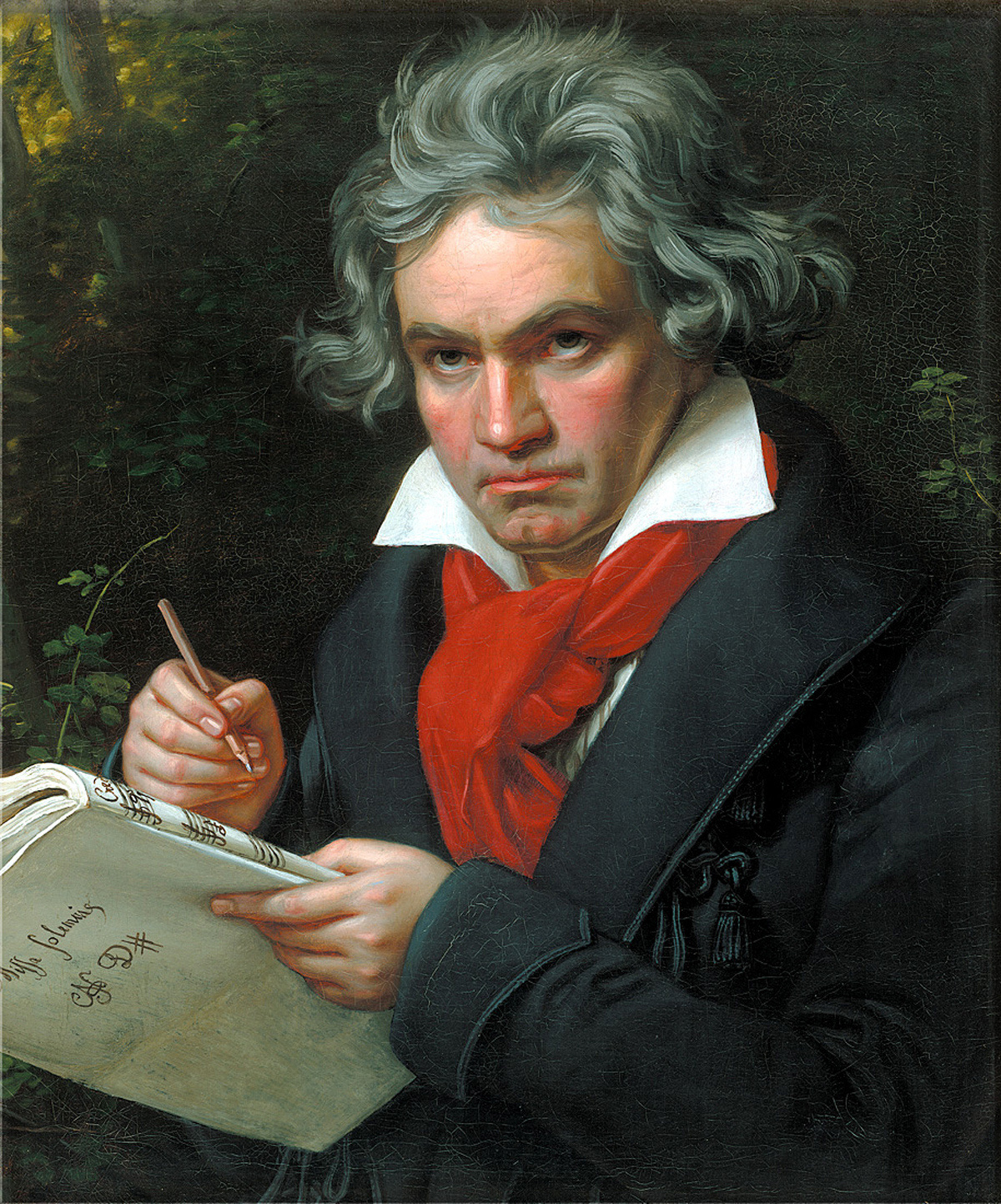
Connected Figures
Further Reading
- Beethoven: Anguish and Triumph — Jan SwaffordThe most comprehensive modern biography — sweeping in scope, alive to both the music and the man.
- Beethoven: A Life — Jan CaeyersScholarly yet readable; situates Beethoven in his Viennese social and political world with unusual precision.
- Beethoven's Letters — Ludwig van Beethoven (trans. Lady Wallace)Primary source — the Heiligenstadt Testament and his correspondence reveal the Fi core more directly than any biography.
- The Beethoven Compendium — Barry Cooper (ed.)A reliable reference guide covering the works, life chronology, and major interpretive debates.
