 Historical Figure MBTI
3 min read
#124 · 3-15-26 · The Founding Generation of USA
Abigail Adams
First Lady · Political Confidante · Moral Voice of the Revolution
1744 — 1818
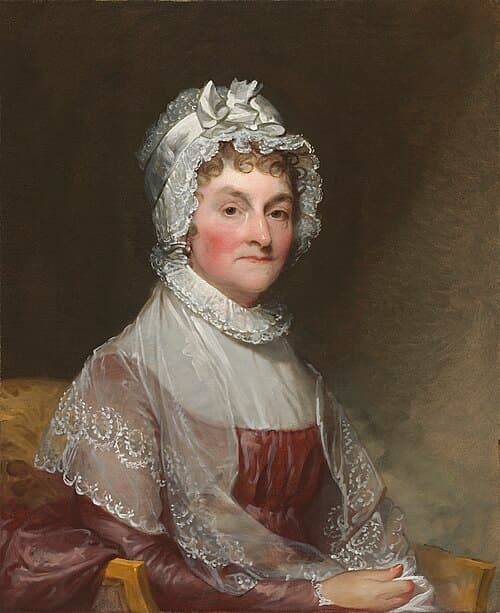
Portrait of Abigail Adams
The Voice Beside Power
Abigail Adams did not hold office — but she shaped it.
Born in 1744 in Weymouth, Massachusetts, she grew up without formal schooling, yet developed one of the sharpest political minds of her time through relentless self-education. In an era where women were expected to observe quietly, Abigail wrote — constantly, incisively, and with purpose.
Her letters to John Adams were not mere expressions of affection. They were arguments, advisories, and moral interventions. She urged him to "remember the ladies," challenged the contradictions of liberty in a slaveholding society, and pressed him to consider the human consequences of political decisions.
She was not operating in the background.
She was shaping the foreground — through influence, through language, through conviction.
Often typed as ISFJ due to her devotion and loyalty, a closer reading reveals something more outwardly directive: she was an ENFJ — not simply preserving a system, but actively guiding people within it.
Relational Authority
Abigail's defining trait was her relational authority.
She did not just care for others — she moved them. Her letters consistently show an instinct to influence, persuade, and elevate the people around her, especially John. She saw relationships as channels for moral alignment.
When she urged John to consider women's rights, she wasn't making a private emotional plea. She was intervening in the ethical trajectory of a nation.
That is Fe at its highest level: not harmony for its own sake, but shaping others toward a more just and humane order.
Patterns, Consequences, Futures
Abigail was not reacting moment-to-moment. She was thinking in patterns, consequences, and futures.
She saw the contradictions embedded in the founding ideals early — liberty alongside exclusion — and pushed for a broader, more coherent moral vision. Her thinking was not scattered or situational; it was focused, directional, and forward-looking.
This is Ni supporting Fe: a clear internal sense of where society should go, expressed through influence and guidance.
Grounded in Reality
Despite her intellectual and moral depth, Abigail was deeply grounded in the realities of daily life.
She managed the household, finances, and farm during John's long absences. She navigated wartime scarcity, illness, and uncertainty with practical competence. She was not detached from reality — she was fully engaged with it, adapting as needed.
This reflects tertiary Se: present, responsive, and capable — but always in service of a larger relational and moral framework.
Sharp, but Not Detached
Abigail's arguments were strong, but not impersonal.
Her reasoning was often morally driven rather than systemically detached. She could critique, question, and challenge — but her logic was always anchored in human impact, not abstract structure.
This is consistent with inferior Ti: capable of sharp reasoning, but ultimately subordinate to values and relational insight.
Why ENFJ Over ISFJ
Why not ISFJ?
ISFJs preserve. Abigail challenged. She did fulfill traditional responsibilities, but she did not simply maintain existing norms — she pushed against them, advocating for women's rights, questioning social hierarchies, and engaging directly in political discourse. An ISFJ might support the system faithfully. Abigail pressured the system to evolve.
Her voice was not quiet, even when her position required it to be written rather than spoken. The ENFJ doesn't simply hold the line — they expand it, pulling the people around them toward a more complete and humane vision of what could be.
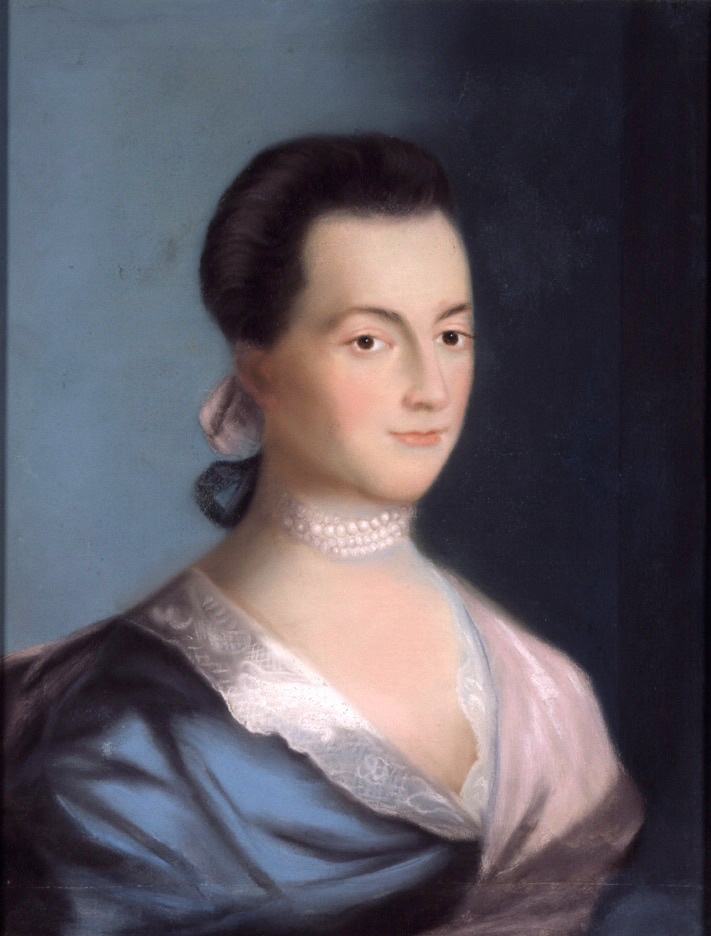
Connected Figures
Further Reading
- Abigail Adams — Woody HoltonThe most rigorous modern biography — recuperates Abigail as a shrewd financial operator and political thinker in her own right.
- My Dearest Friend: Letters of Abigail and John Adams — Margaret A. Hogan & C. James Taylor (eds.)The essential primary source — nearly 1,200 letters spanning five decades of the most documented marriage in American history.
- The Letters of John and Abigail Adams — Frank Shuffelton (ed.)Accessible Penguin Classics edition, ideal for readers coming to the correspondence for the first time.
- First Family: Abigail and John Adams — Joseph J. EllisA dual portrait of the partnership — argues that Abigail was the more morally consistent of the two throughout the Revolution.
- Remember the Ladies: The Story of Great Women Who Helped Shape America — Ilona JonesA broader survey that places Abigail within the longer arc of American women's political influence.
