 Historical Figure MBTI
4 min read
#123 · 3-15-26 · The Founding Generation of USA
John Adams
Lawyer · Revolutionary · Diplomat · Architect of American Independence
1735 — 1826
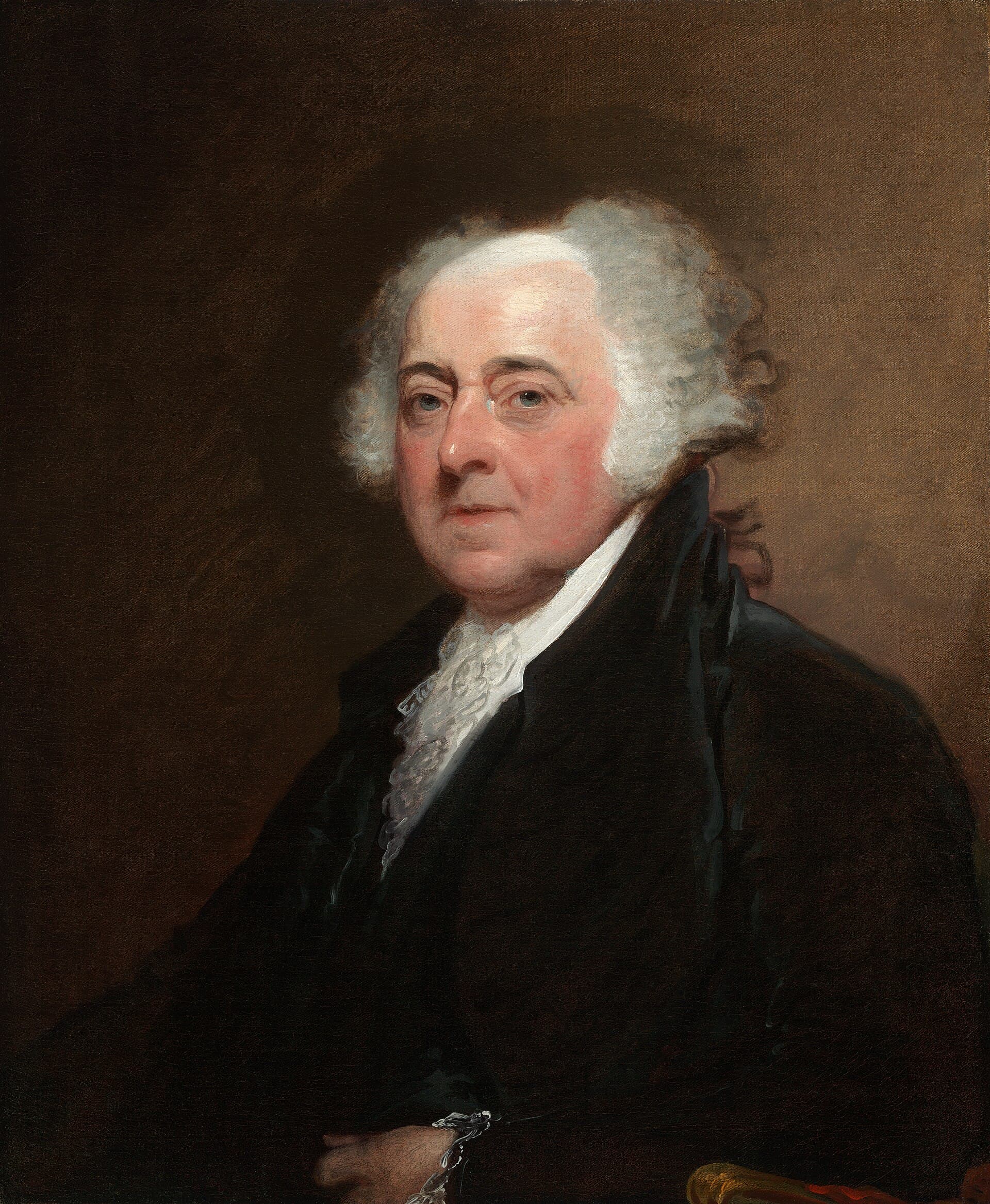
Portrait of John Adams
The Relentless Patriot
John Adams was not born into ease, nor into myth. Born in 1735 in Braintree, Massachusetts, he rose not through charm or inheritance, but through discipline, conviction, and an almost stubborn devotion to principle. Where others hesitated, Adams advanced. Where others sought approval, he sought outcomes.
He was a man of motion — intellectually, politically, and morally. From defending British soldiers after the Boston Massacre to negotiating peace in Europe, Adams consistently placed duty above optics. He was not interested in being liked. He was interested in being right — and more importantly, being effective.
His letters and diaries reveal a restless, driving mind. He was rarely at peace, often anxious, frequently intense. But that intensity had direction. Adams was not wandering through ideas — he was pushing history forward.
While often typed as an INTJ due to his intellect and strategic contributions, a closer look reveals a fundamentally different cognitive engine: he was an ENTJ — not a distant architect of ideas, but an executor of vision within the world itself.
Action Over Abstraction
Adams's defining trait was not introspection — it was action. He operated through external structure, systems, and results. Whether in law, politics, or diplomacy, Adams consistently sought to organize reality into functioning systems. He believed in institutions, in governance, in building something that works.
His defense of the British soldiers after the Boston Massacre is a perfect example: not emotionally driven, not ideologically reactive — but grounded in principle, law, and societal stability. That's Te at its core: what sustains the system, even when it's unpopular.
He didn't just believe in independence. He worked relentlessly to make it operational.
A Future He Could Already See
Behind that execution was a long-range vision. Adams wasn't reacting to events — he was interpreting them through a broader trajectory. He saw early that independence was not just possible, but inevitable. And once he saw it, he committed.
His diplomacy in Europe reflects this clearly. He wasn't improvising. He was navigating toward a specific future — aligning alliances, securing treaties, shaping outcomes that would outlast him.
This is Ni in service of Te: vision, translated into strategy, executed in reality.
The Argument in the Room
Adams had a grounded, real-world presence — not in a charismatic sense, but in a confrontational, direct, sometimes abrasive way. He engaged with the world head-on. He argued. He debated. He pushed. He was not withdrawn or detached — he was in it, often to the point of social friction.
This is not inferior Se avoidance. This is tertiary Se engagement — imperfect, sometimes blunt, but undeniably present. Where some strategists operate from a remove, Adams put himself in the room and made his presence impossible to ignore.
The Feeling Beneath the Force
Emotionally, Adams was complicated. His writings reveal deep feeling — insecurity, longing, frustration — but these emotions were not smoothly integrated into his outward behavior. He struggled with recognition, with comparison (especially with figures like Jefferson), and with feeling properly valued.
This is classic inferior Fi: a strong internal emotional world that is felt intensely but expressed unevenly. He cared deeply — but didn't always know how to metabolize that care cleanly. The result was a man whose emotional life often emerged as irritability, restlessness, or wounded pride rather than open vulnerability.
Why ENTJ Over INTJ
Why not INTJ?
INTJs lead with Ni — internal vision first, action second. Adams was the reverse. He did not sit back and refine a singular internal model before acting. He moved, constantly, through institutions, debates, and negotiations. His cognition was externally oriented — toward doing, organizing, building. An INTJ might design the structure. Adams was in the room, arguing until the structure existed.
His verbosity, his argumentative nature, his need to engage and persuade — these are not the quiet compressions of Ni dominance. They are the driving force of Te in motion. The ENTJ doesn't wait for the perfect vision to crystallize. They push the world into shape through sheer organizational will.
Connected Figures
Further Reading
- John Adams — David McCulloughThe definitive popular biography — richly sourced from letters and diaries, it captures Adams's combative brilliance and deep personal life.
- Passionate Sage: The Character and Legacy of John Adams — Joseph J. EllisA sharp psychological portrait of Adams in old age, tracing how his character shaped — and constrained — his legacy.
- The Adams-Jefferson Letters — Edited by Lester J. CapponThe full correspondence between Adams and Jefferson across decades — one of the most revealing primary sources in American political history.
- My Dearest Friend: Letters of Abigail and John Adams — Edited by Margaret A. Hogan & C. James TaylorThe essential collection of their 1,100-letter exchange — indispensable for understanding Adams's private emotional world.
- The Creation of the American Republic, 1776–1787 — Gordon S. WoodThe scholarly foundation for understanding the constitutional ideas Adams championed — essential context for his Federalist vision.
