 Historical Figure MBTI
5 min read
#116 · 3-14-26 · The Founding Generation of USA
Thomas Jefferson
Statesman · Philosopher · Architect of Ideals and Contradictions
1743 — 1826
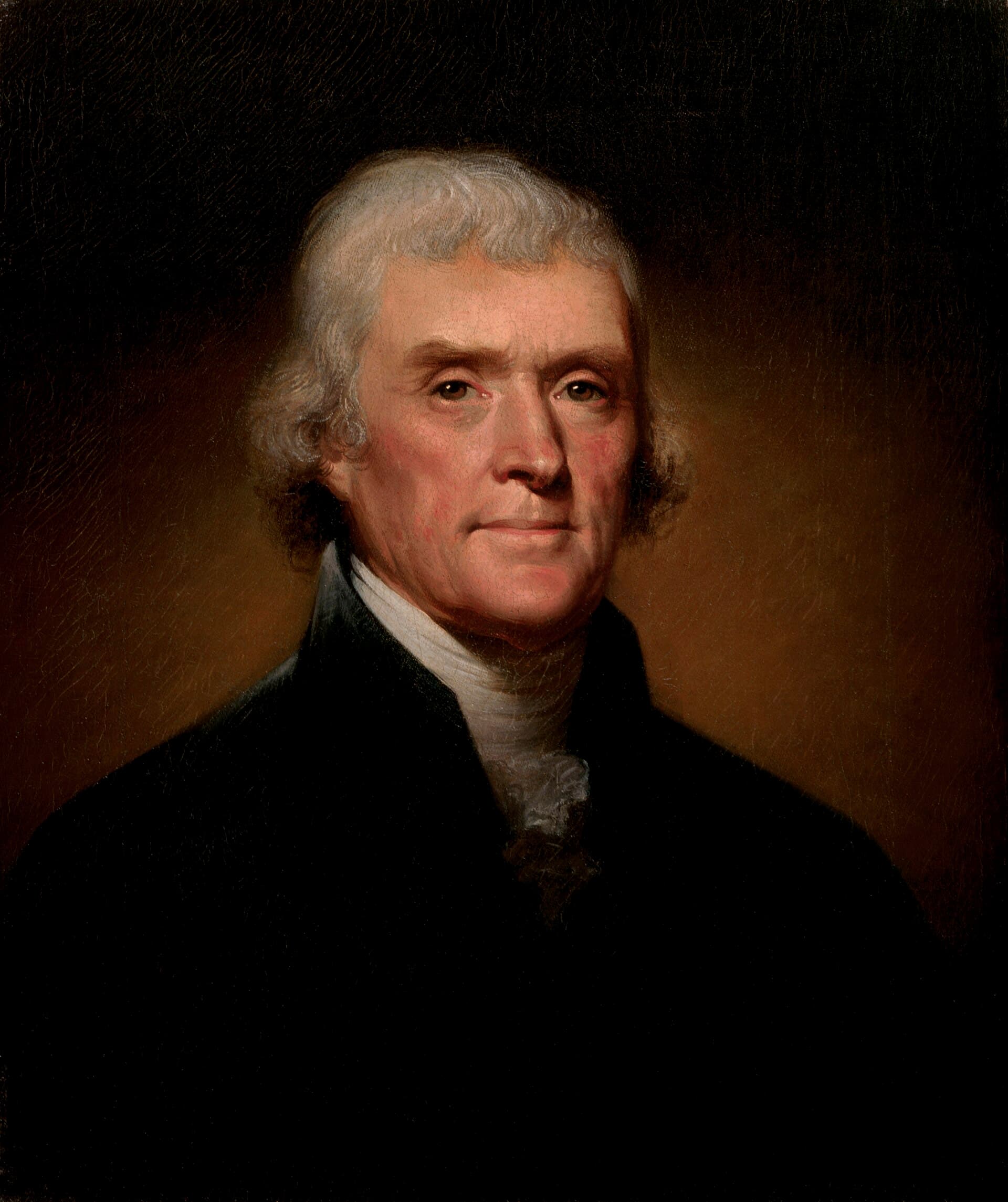
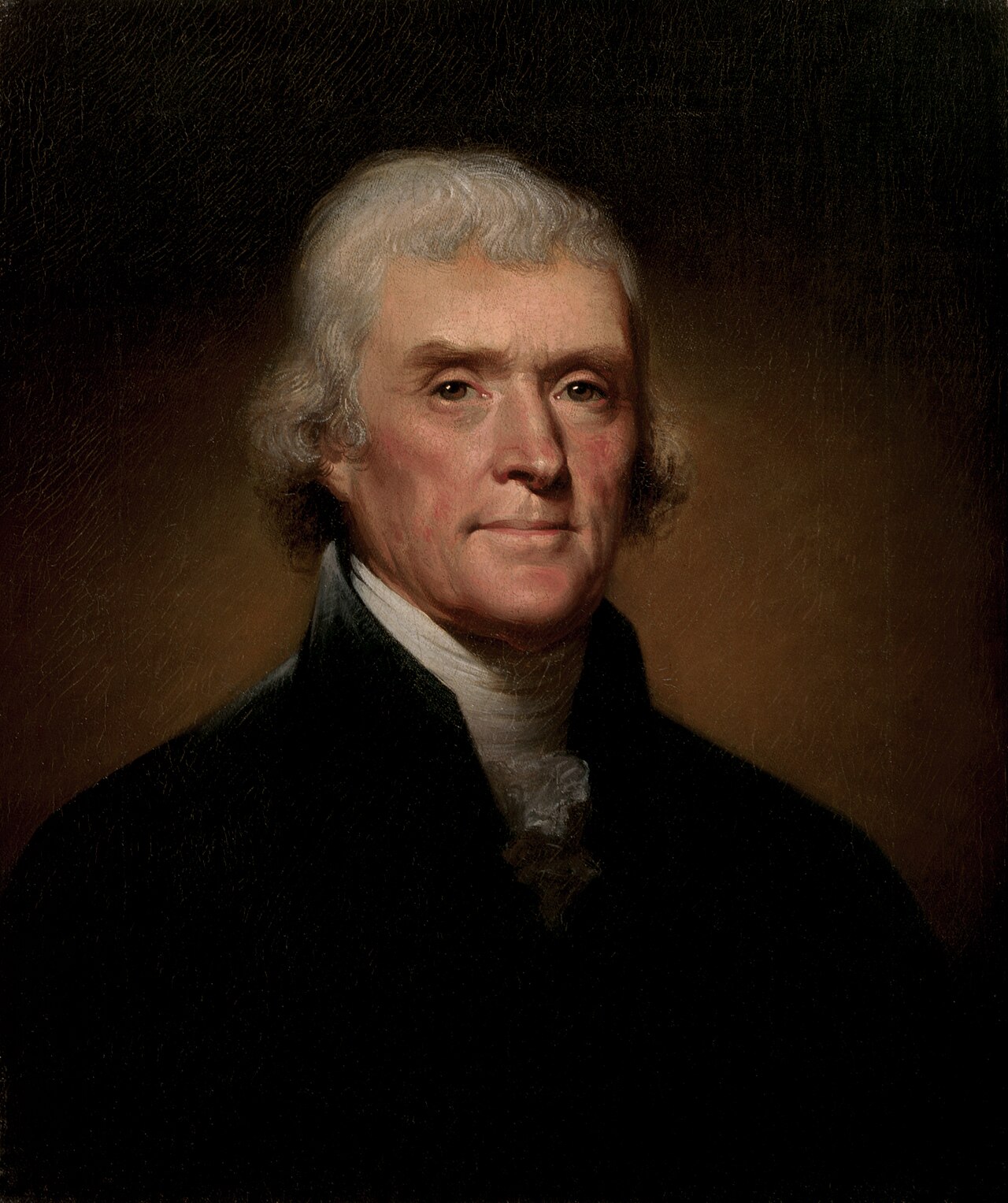
Portrait of Thomas Jefferson
The Architect of Possibility
Thomas Jefferson feels less like a politician and more like a long-range signal — someone tuned to a future that didn't exist yet, but insisted on behaving as if it could.
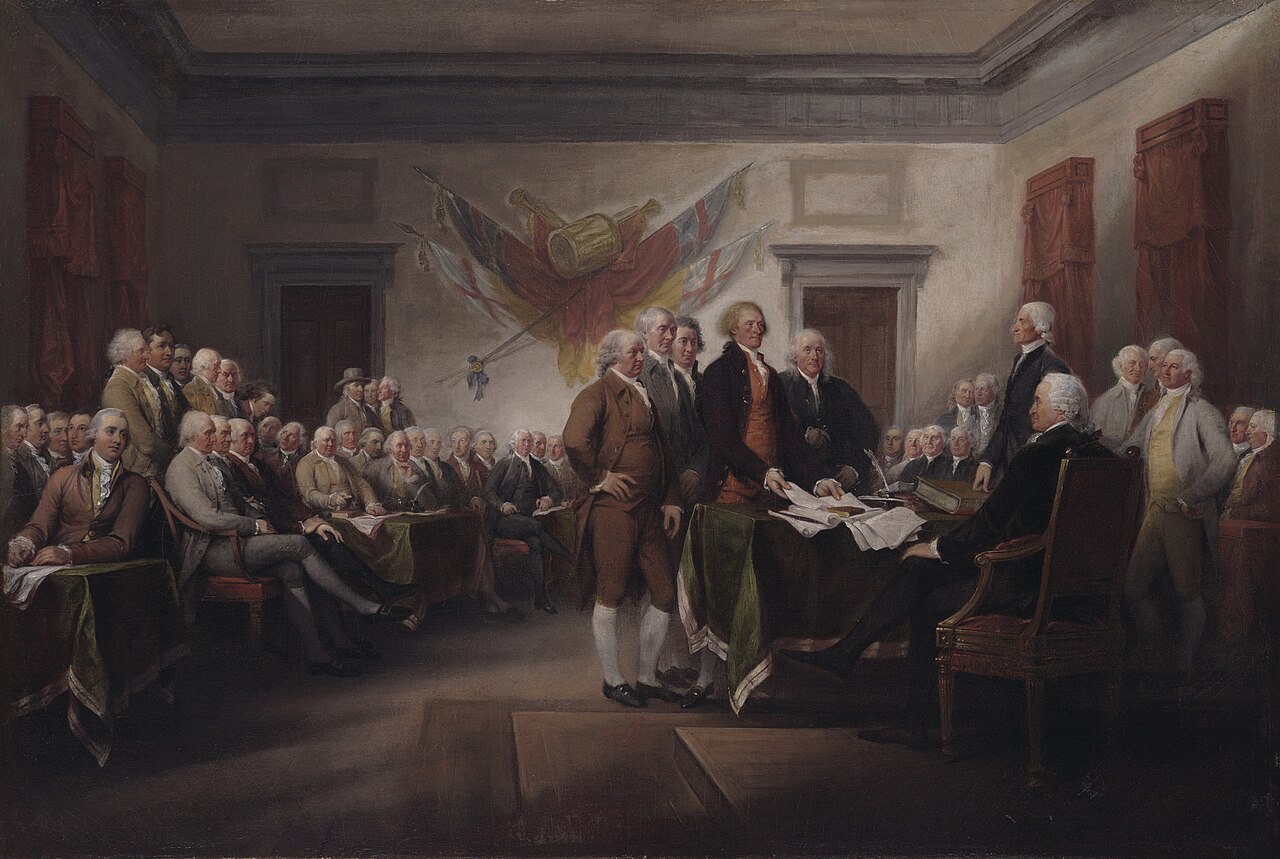
Born in 1743 in colonial Virginia, Jefferson would go on to draft the Declaration of Independence, serve as the third President of the United States, and design not just buildings, but entire frameworks of thought. His life was not about reacting to the present — it was about reshaping it according to an internal vision.
That's the INFJ signature at its most potent: introverted intuition (Ni) paired with extraverted feeling (Fe) — a private, abstract vision translated into something meant to guide humanity.
Jefferson wasn't just asking, what is?
He was asking, what should be?
The World Reimagined
Jefferson's defining trait is his obsession with invisible structure.
He believed in natural rights not because they were empirically proven, but because they felt like an underlying truth of reality. That's Ni: pattern-seeking beyond surface evidence, trusting internal coherence over external chaos.
The phrase “all men are created equal” is not a political compromise. It's a vision statement — a distilled intuition about how humanity ought to be organized.
And once Jefferson saw that pattern, he couldn't unsee it.
Ni users often build entire worlds in their heads. Jefferson did something rarer — he tried to install that world into reality.
Monticello is the physical proof. He redesigned it obsessively for over 40 years — demolishing wings, adding domes, revising floor plans — and never declared it finished. The house was an Ni project: always converging toward an ideal that kept shifting just ahead of completion.
Ideals for Humanity
Jefferson's vision wasn't cold or detached. It was deeply social.
He cared about how people ought to live together — education, liberty, civic participation. He founded the University of Virginia not just as an institution, but as a moral ecosystem. No chapel. No imposed doctrine. Just knowledge as a shared human good.
That's Fe at a philosophical level: not just connecting with individuals, but shaping the emotional and ethical architecture of society.
Even his writing reflects this. It's not aggressive. It persuades. It appeals to shared humanity.
Fe says: “This is what we could be, together.”
The Quiet Control
Beneath the vision and idealism, Jefferson had a precise internal logic.
His letters are careful. His arguments structured. He edited relentlessly, refining language until it matched his internal model.
This is introverted thinking (Ti) — not loud, not performative, but exacting.
He didn't just feel that equality was right. He constructed a system where it made sense.
The clearest expression of this is the Jefferson Bible. He literally took scissors to the New Testament, cut out every miracle and supernatural claim, and reassembled only Jesus's ethical teachings. The result was a private document he never published — a perfectly Ti act: stripping a text down to what survives internal logical scrutiny, regardless of what the world believed about it.
The Life of Contradiction
And then there's the tension. Because reality didn't match the vision.
Jefferson owned slaves. Lived in luxury. Designed beautiful spaces like Monticello while writing about freedom with his wife Martha and later his daughter Martha Jefferson Randolph.
This is where inferior extraverted sensing (Se) shows up — not as indulgence alone, but as a difficulty fully reconciling the immediate, physical world with the internal ideal.
He even wrote about it: “I tremble for my country when I reflect that God is just.” He knew. He saw the moral catastrophe of slavery with the same clarity that he saw natural rights — and still could not act. That is the inferior Se failure at its most devastating: the inability to close the gap between inner conviction and physical reality.
INFJs can hold two realities at once: the world as it is, and the world as it should be. Jefferson lived in that gap. And in that gap… contradictions grow.
Sally Hemings — The Unspoken Axis
No understanding of Jefferson is complete without Sally Hemings. She is not just a historical detail. She is the point where Jefferson's vision collides with reality.
What makes this even harder to look at directly: Sally was the half-sister of Martha Jefferson. Sally's mother, Betty Hemings, had been enslaved by Martha's father, John Wayles, who fathered several of her children — including Sally. When Wayles died, Martha inherited his estate and the Hemings family came to Monticello. The woman Jefferson later had a relationship with had grown up in the shadow of his wife's family.
An INFJ can believe in humanity while failing specific humans. Can articulate universal ethics while navigating personal complexity in silence.
Their relationship forces a harder question: Was Jefferson unaware of the contradiction? Or was he painfully aware — and unable to resolve it?
Ni doesn't always simplify. Sometimes it complicates, seeing too many layers at once.
Why INFJ Over INTJ or INTP
Why not INTJ?
Jefferson wasn't primarily a systems executor. He wasn't optimizing power structures — he was idealizing human ones. His focus was moral vision, not strategic dominance.
Why not INTP?
He wasn't exploring ideas for their own sake. His ideas had direction, purpose, and emotional weight. They were meant to shape society, not just understand it.
What separates the INFJ from other introverted types is purpose. Jefferson's ideas were never purely intellectual exercises — they were moral commitments. The vision had a destination: a better world, a more just society, a humanity capable of living up to its own ideals. INFJs don't just analyze the world. They try to redeem it.
Connected Figures
Further Reading
- Thomas Jefferson: The Art of Power — Jon MeachamA rich political biography that captures Jefferson as a masterful operator — the tension between his ideals and his hunger for power.
- American Sphinx: The Character of Thomas Jefferson — Joseph J. EllisProbes the contradictions at Jefferson's core — the man who wrote 'all men are created equal' while enslaving more than 600 people.
- The Hemingses of Monticello — Annette Gordon-ReedPulitzer Prize-winning account of the Hemings family — the indispensable corrective to any sanitized reading of Jefferson's private life.
- Jefferson and His Time (6 vols.) — Dumas MaloneThe definitive scholarly biography, monumental in scope; still the bedrock for primary sources on Jefferson's public career.
- The Enlightenment That Failed — Jonathan IsraelPlaces Jefferson's thought in the broader radical Enlightenment — useful for understanding the philosophical stakes behind his political choices.
