 Historical Figure MBTI
3 min read
#119 · 3-14-26 · The Founding Generation of USA
Martha Jefferson Randolph
DAUGHTER OF THOMAS JEFFERSON, ESTATE MANAGER, PRESERVER OF MONTICELLO
1772 — 1836
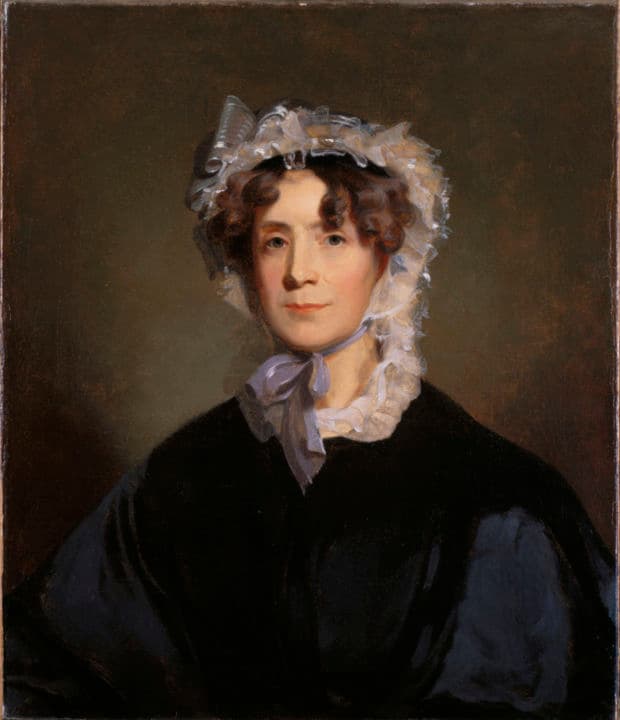
Portrait of Martha Jefferson Randolph
The Keeper of a World Already Built
Martha Jefferson Randolph — known as Patsy — did not inherit a blank slate.
She inherited a world.
Born in 1772 to Thomas Jefferson and Martha Jefferson, she grew up inside the intellectual and social elite of Virginia. But her life would not be defined by philosophy or revolution. It would be defined by continuity.
When Jefferson aged, when debts mounted, when the structure of Monticello began to strain under its own weight — Patsy became the one who held it together.
Not by redesigning it.
But by carrying it forward.
Inheritance as Identity
At her core, Martha reads as introverted sensing (Si) — a psychology rooted in preservation, responsibility, and inherited structure.
She didn’t question the framework she was born into. She maintained it.
- She inherited land, wealth, and enslaved people
- She managed estates like Edgehill
- She upheld family legacy even as it became financially unsustainable
Si doesn’t ask, “Is this system ideal?” It asks, “What is my role within what already exists?”
And then it fulfills that role—often at great personal cost.
Moral Awareness, Social Boundaries
Martha was not indifferent to the morality of slavery.
- She expressed a wish that enslaved people were free.
- She spoke against cruelty.
- She supported gradual abolition efforts.
That is extraverted feeling (Fe) — a sensitivity to human suffering and social ethics.
But Fe has a limit:
It often operates within what is socially and structurally possible
So her empathy did not translate into radical change. Instead, it became:
- attempts to keep enslaved families together
- selective manumission (freeing some individuals)
- emotional discomfort… without systemic disruption
Fe says: “This is wrong.”
But also: “I must still function within this world.”
The Fracture: Duty vs Humanity
After Jefferson's death, Martha and her husband Thomas Mann Randolph Jr. faced mounting debt.
And the system she inherited gave her only one real resource:
Human beings as property.
So she:
- Sold over 100 enslaved people
- Hired them out for income
- Relied on their labor to survive financially
Even while believing slavery was wrong.
This is the ISFJ fracture point:
When duty to structure overrides moral discomfort
Not because she lacked empathy—but because her identity was tied to holding the structure together.
When Care Becomes Control
And then we reach the hardest truth.
Martha didn’t just passively benefit from slavery. She enforced it.
There are accounts of her physically punishing enslaved people.
This is where the ISFJ shadow emerges:
When responsibility becomes rigid…
when structure must be maintained at all costs…
Care can turn into control.
And control, in that system, meant violence.
The Psychological Verdict
Why Not ISFP?
While there is emotional depth, her life is not guided by personal values breaking away from structure. Instead, it is defined by fulfilling inherited roles, even when they conflict with her feelings.
Why Not INFJ?
There’s little evidence of abstract, future-reimagining vision. She does not attempt to redesign society — she works within it.
ISFJs don’t reshape systems. They sustain them. Even when those systems are flawed.
Connected Figures
Further Reading
- The Hemingses of Monticello: An American Family — Annette Gordon-ReedPulitzer Prize-winning account of the Hemings family and their entanglement with the Jeffersons — essential context for Martha's world.
- Jefferson's Daughters: Three Sisters, White and Black, in a Young America — Catherine KerrisonTraces the parallel lives of Martha Jefferson Randolph and her Hemings half-sisters, illuminating how race and inheritance shaped their fates.
- The Domestic Life of Thomas Jefferson — Sarah N. RandolphWritten by Martha's granddaughter — a primary-source-adjacent portrait of Monticello family life, with Martha at its center.
- Thomas Jefferson: An Intimate History — Fawn BrodiePlaces Martha in the emotional and domestic orbit of her father's long public career.
