 Historical Figure MBTI
4 min read
#120 · 3-14-26 · The Founding Generation of USA
Thomas Mann Randolph Jr.
GOVERNOR OF VIRGINIA, PLANTER, SOLDIER, AND VOLATILE REFORMER
1768 — 1828
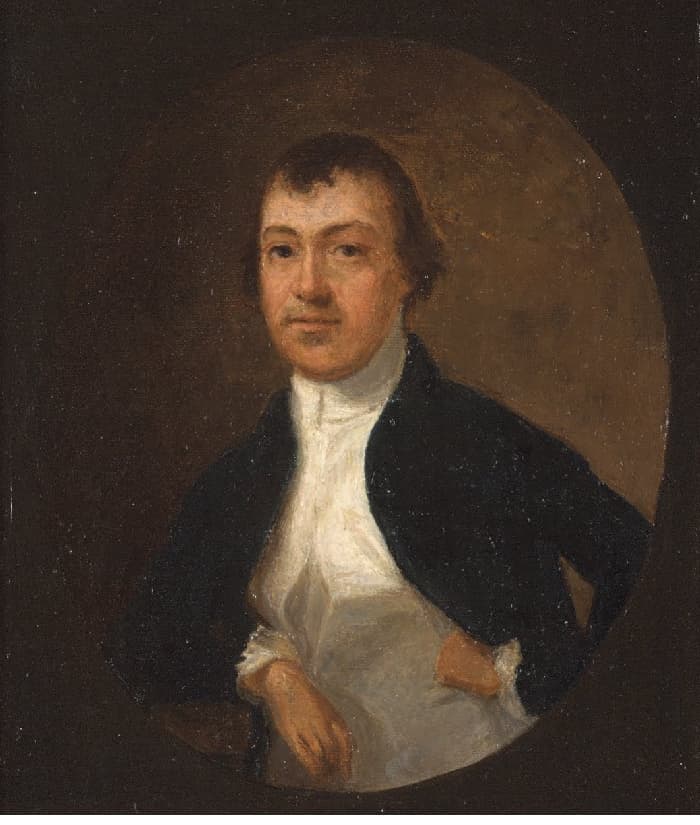
Portrait of Thomas Mann Randolph Jr.
The Man Who Acted Before He Stabilized
Thomas Mann Randolph Jr. was born into privilege, education, and expectation — and for a moment, it seemed like he would fulfill all of it.
He studied at the University of Edinburgh, engaged with Enlightenment ideas, became a respected amateur botanist, and rose to become Governor of Virginia.
On paper, this reads like the making of a disciplined intellectual. In reality… his life tells a different story.
Action First, Reflection Later
Randolph’s defining trait is extraverted sensing (Se) — a psychology rooted in immediacy, reaction, and engagement with the present moment.
He:
- Jumped into politics and rose quickly
- Took on roles in government, military, and estate management
- Reacted strongly in public conflicts (nearly dueling, attacking officials in newspapers)
This is not someone sitting back and theorizing. This is someone in the arena, constantly responding to what’s happening right now.
Se doesn’t wait for perfect alignment. It moves.
Capable, but Not Anchored
Randolph was not unintelligent. He studied in Edinburgh, engaged in botany, and participated in political debate. This reflects introverted thinking (Ti) — internal reasoning, analytical ability, understanding systems.
But here’s the distinction:
His thinking was situational, not structural
He could:
- understand ideas
- argue positions
- engage intellectually
But he did not:
- build lasting frameworks
- sustain disciplined execution
- anchor himself in long-term systems
Ti without structure becomes sharp—but inconsistent.
Social Engagement Without Control
Randolph clearly operated in the social sphere: politics, public criticism, interpersonal conflict. But his extraverted feeling (Fe) was unstable.
Instead of building alliances and maintaining reputation, he:
- lashed out publicly
- damaged relationships
- alienated political support
The moment he virulently attacked figures like Henry Clay in newspapers, his career effectively ended.
That’s classic tertiary Fe:
engaged, but poorly regulated
No Long-Term Containment
Randolph had ideas — some even progressive: Supported education and infrastructure; Advocated for broader political representation; Proposed gradual emancipation. But he could see change, but not sustain a path toward it.
That’s weak introverted intuition (Ni):
- Poor long-term planning
- Lack of strategic restraint
- Difficulty integrating present action with future consequence
So instead of building toward reform, he reacted, pushed, and then destabilized himself.
The Pattern Across His Life
This is where type becomes undeniable. Across politics, marriage, finances, and reputation, we see the same cycle:
- Opportunity appears
- He engages intensely
- Performs competently (at first)
- Loses control (emotionally or behaviorally)
- Damages relationships or structure
- Collapses or exits
This is not randomness.
This is Se-dominant energy without sufficient regulation.
The Slavery Contradiction
His role in enforcing discipline—like advocating whipping in the nailery—feels cold, pragmatic, outcome-focused.
That aligns with:
Ti over Fi
He wasn’t operating from internal moral conviction (Fi), but from “what works” logic within a system. Even his support for emancipation wasn’t purely moral idealism. It reads more like structural reform, practical adjustment, and system-level reasoning.
Not deep emotional identification.
The Psychological Verdict
Why Not ENTP?
ENTPs debate, explore, and intellectually play with systems. Randolph reacted quickly, escalated conflicts, and failed to maintain conceptual consistency. This is Se immediacy, not Ne exploration.
Why Not ENTJ?
ENTJs are defined by strategic implementation and long-term structural control. Randolph step into power but could not hold it or stabilize it.
Connected Figures
Further Reading
- Jefferson and His Time (6 vols.) — Dumas MaloneThe definitive biography of Jefferson; Randolph appears throughout as a central if turbulent figure in the Monticello household.
- The Hemingses of Monticello: An American Family — Annette Gordon-ReedPulitzer Prize-winning account of life at Monticello; covers the overlapping worlds of the Randolphs and the Hemings family in close detail.
- The Women Jefferson Loved — Virginia ScharffExamines the women — including Martha Jefferson Randolph — who shaped Jefferson's world, with Randolph as a recurring presence and source of family strain.
