 Historical Figure MBTI
4 min read
#183 · 3-19-26 · Ancient Athens
Dionysius I of Syracuse
The Strategist Who Seized the City
r. 405 – 367 BCE
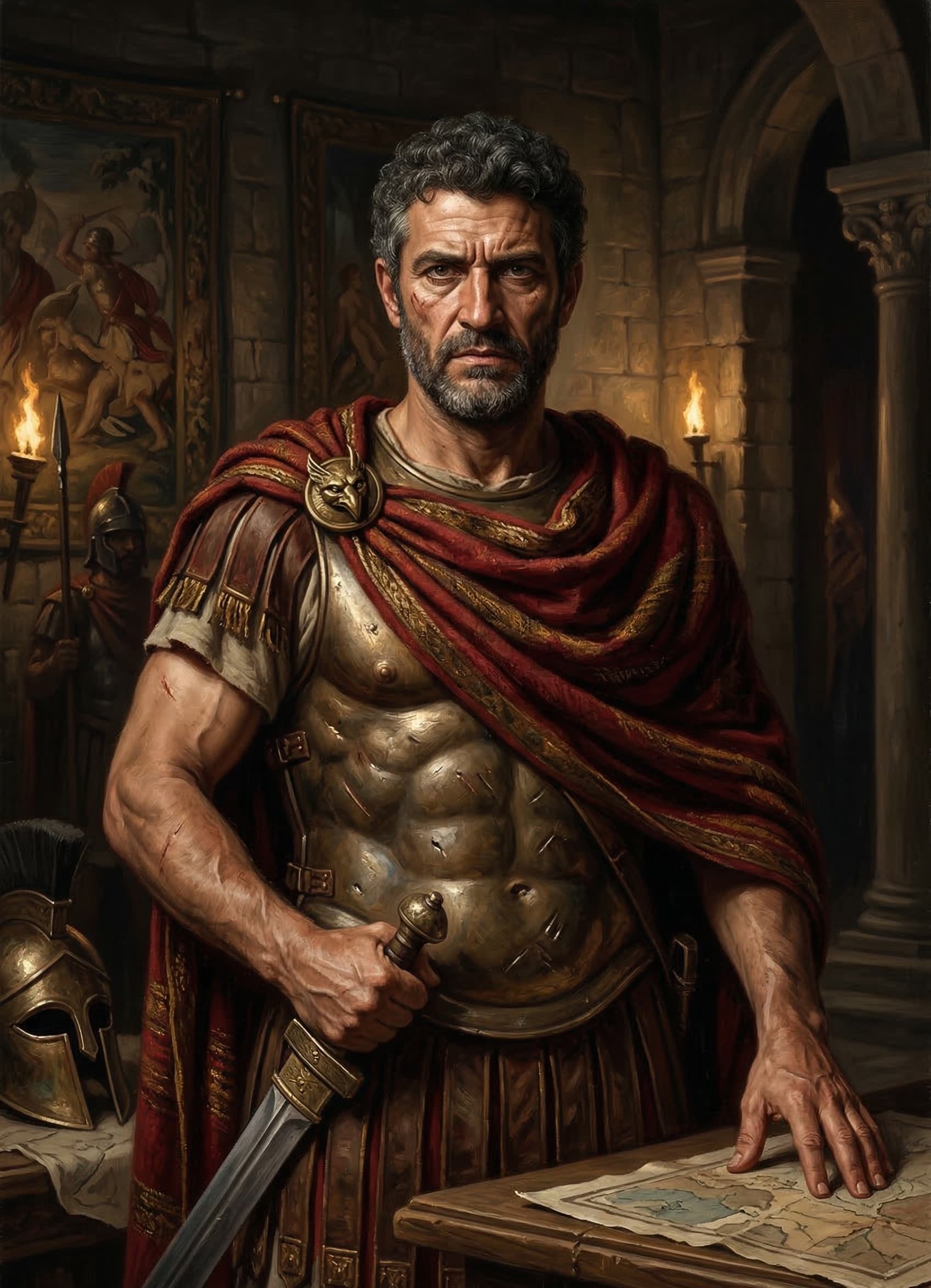
AI-assisted portrait of Dionysius I of Syracuse
The Architecture of Control
Dionysius I did not inherit power. He took it.
Emerging during a period of instability and external threat, he rose within Syracuse not through lineage alone, but through calculated positioning, military command, and an acute understanding of political leverage. What began as a role in defense against Carthage became a pathway to absolute control.
Once in power, he did not hesitate.
He fortified the city, expanded its military capabilities, and consolidated authority with precision—transforming Syracuse into one of the most formidable powers in the Greek world. His rule was not defined by ideology or philosophical aspiration, but by control, security, and long-term dominance.
He did not seek to imagine a better system. He enforced one.
The Psychological Verdict
Dionysius I is often framed as a tyrant, but this alone does not define his psychological structure. What stands out is not cruelty, but calculation—a consistent pattern of strategic execution aimed at securing and maintaining power.
He reads most clearly as ENTJ.
Te — Dominant
Dionysius’ rise is fundamentally pragmatic. He identifies opportunity within chaos and acts decisively to convert it into control. His leadership is defined by organization, enforcement, and large-scale coordination—from military campaigns to the construction of defensive systems like the fortifications of Syracuse.
This is Te at its core: structuring the external world for effectiveness. Not theorizing power. Applying it.
Ni — Auxiliary
His actions are not merely reactive. Dionysius demonstrates long-term strategic awareness—anticipating threats, consolidating resources, and shaping Syracuse into a durable stronghold. His rule reflects an understanding of how present decisions influence future stability.
This is Ni in support of Te: vision guiding execution. Not scattered action. Directed control.
Se — Tertiary
Dionysius is not detached from reality. He engages directly with the physical and political environment—warfare, fortification, and immediate tactical decisions. There is a responsiveness to present conditions, but it is subordinate to his broader strategic goals.
This reflects tertiary Se: situational engagement in service of vision.
Fi — Inferior
What is notably absent is any visible concern for internal moral alignment or emotional resonance. Dionysius’ decisions prioritize control and survival over ethical consistency or relational harmony. His rule is effective, but not guided by an expressed personal value system.
This suggests inferior Fi: a suppressed or secondary relationship to internal values.
Analysis
Why not ESTP?
At a glance, Dionysius’ military leadership and direct engagement with warfare could suggest ESTP—a type often associated with action, adaptability, and dominance in real-time environments. But the distinction lies in orientation.
ESTPs operate through immediate opportunity—responding to the present, adapting quickly, and leveraging what is directly in front of them. Their strength is in tactical engagement.
Dionysius does more than react. He consolidates.
His actions reflect long-term structuring—fortifying Syracuse, centralizing power, and building a system designed to endure beyond the moment. His decisions are not just about winning battles, but about securing control over time.
This is not Se-driven opportunism. It is Ni-guided strategy.
The Rule That Held
Dionysius I did not leave behind a philosophy. He left behind a state.
Under his control, Syracuse became fortified, feared, and stable—not through consensus, but through structure. His legacy is not one of ideas, but of outcomes.
He did not ask what the city could be. He decided what it would become.
Not the ruler who inherited power. But the one who made it permanent.
Connected Figures
Further Reading
- Dionysius I: War-Lord of Sicily — Brian CavenThe most thorough modern biography of Dionysius I, covering his rise, military campaigns, and political consolidation.
- The Ancient Greeks: A Critical History — John V. A. FineProvides essential historical context for the Sicilian Greeks and the Carthaginian wars that shaped Dionysius' career.
- Plato and the Tyrant: The Legacy of Syracuse — Luc BrissonExamines Plato's fateful visits to the Syracusan court and his fraught relationships with both Dionysii.
- Sicily: Three Thousand Years of Human History — Sandra BenjaminA wide-angle narrative placing Dionysius within the longer arc of Sicilian political history.
