 Historical Figure MBTI
4 min read
#181 · 3-19-26 · Ancient Athens
Dionysius II of Syracuse
The Tyrant Who Wanted to Be a Philosopher
r. 367 – 357 BCE, 346 – 344 BCE
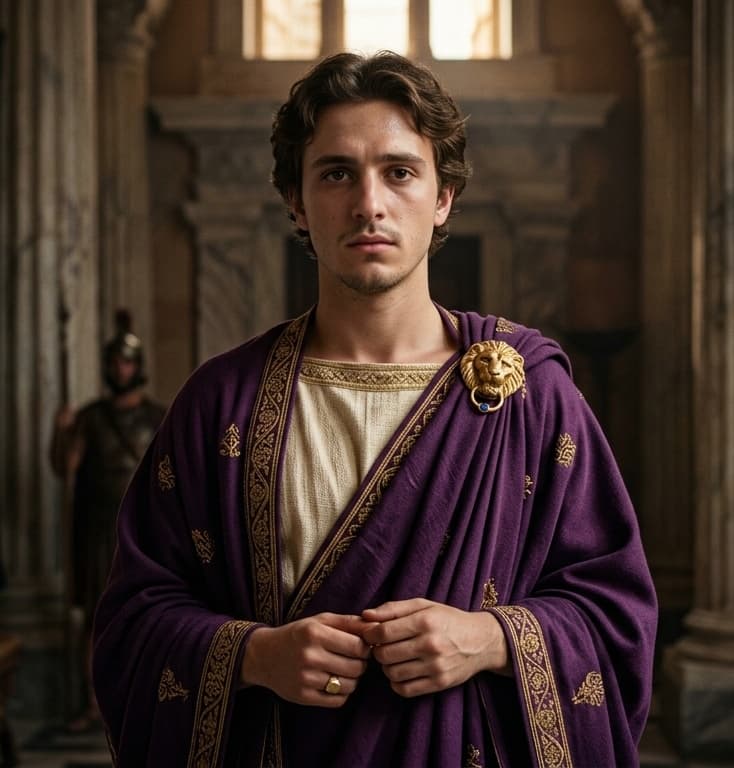
AI-assisted portrait of Dionysius II of Syracuse
The Architecture of Aspiration
Dionysius II did not begin as a thinker. He became one—or tried to.
The son of Dionysius the Elder, he inherited not only power, but a political structure built on control, fear, and strategic force. Unlike his father, whose rule was defined by discipline and calculation, Dionysius II entered power without the same grounding.
He was young. Impressionable. Open.
When Plato arrived in Syracuse, Dionysius II was captivated—not simply by the man, but by the possibility he represented. A ruler who could transcend tyranny. A city shaped not by force, but by philosophy.
For a moment, he believed in it. But belief, for Dionysius, was not stable. It moved.
The Psychological Verdict
Dionysius II is often remembered as inconsistent—at times idealistic, at times paranoid, at times indulgent. But this inconsistency is not random. It reflects a pattern: a personality driven by possibility, but lacking the structure to sustain it.
He reads most clearly as ENFP.
Ne — Dominant
Dionysius is drawn to what could be. His fascination with Plato is not rooted in disciplined study, but in inspiration—the idea that he could become a philosopher-king, that Syracuse could be transformed, that his identity itself could shift into something greater.
This is Ne: attraction to possibility, to reinvention, to alternative futures. But Ne does not anchor. It expands.
Fi — Auxiliary
His motivations appear internally driven, but not externally consistent. Dionysius seems to act based on how things feel in the moment—drawn toward ideals, then repelled when they no longer align with his internal state. His relationship with Plato reflects this: admiration, followed by tension, followed by rejection.
This suggests Fi: a personal, shifting value system that resists external imposition. He does not follow structure. He follows resonance.
Te — Tertiary
Despite his position, Dionysius struggles with execution. He has access to power, resources, and guidance, yet fails to translate philosophical ideals into stable governance. His attempts at reform lack consistency, suggesting a weaker, more situational use of Te.
Not absent. But unreliable.
Si — Inferior
What is notably absent is grounding. Dionysius does not anchor himself in tradition, discipline, or accumulated wisdom. Unlike his father, who maintained control through structured systems, Dionysius appears detached from precedent.
This reflects inferior Si: difficulty stabilizing behavior through past frameworks, leading to repetition of mistakes rather than learning from them.
Analysis
Why not ENTP?
Dionysius’ engagement with philosophy might suggest ENTP—a figure exploring ideas, debating, and intellectually engaging with others. But the orientation is different.
ENTPs explore ideas for their own sake—they test, challenge, and refine concepts through external interaction. Their engagement is analytical.
Dionysius is not analyzing philosophy. He is identifying with it.
His interest in Plato is not driven by curiosity, but by aspiration—by the desire to become what philosophy represents. This is not Ne–Ti. It is Ne–Fi.
The Failed Transformation
Dionysius II represents a rare kind of figure: Not one who lacked access to philosophy. But one who could not sustain it.
He saw the possibility of becoming something greater—a ruler shaped by wisdom rather than power. But possibility alone is not enough. Without structure, without discipline, without grounding, it dissolves.
And so he remains not as a philosopher. But as the space where one almost emerged.
Not the king who ruled with philosophy. But the one who believed he could.
Connected Figures
Further Reading
- Plato: A Life — Robin WaterfieldTraces Plato's three visits to Syracuse and his complicated relationship with Dionysius II in close biographical detail.
- Dionysius I: Warlord of Sicily — Brian CavenThe definitive study of the father — essential context for understanding what Dionysius II inherited and squandered.
- Plato's Epistles — Plato (trans. Glenn R. Morrow)The Seventh Letter in particular is Plato's own account of his dealings with the Syracusan court, including Dionysius II.
- A History of Sicily — M.I. Finley, Denis Mack Smith, and Christopher DugganSituates the Dionysian dynasty within the broader sweep of Sicilian history and Greek colonial politics.
