 Historical Figure MBTI
6 min read
#171 · 3-19-26 · Ancient Athens
Plato
PHILOSOPHER, FOUNDER OF THE ACADEMY, AND VISIONARY OF IDEAL FORMS.
c. 427 — 347 BCE
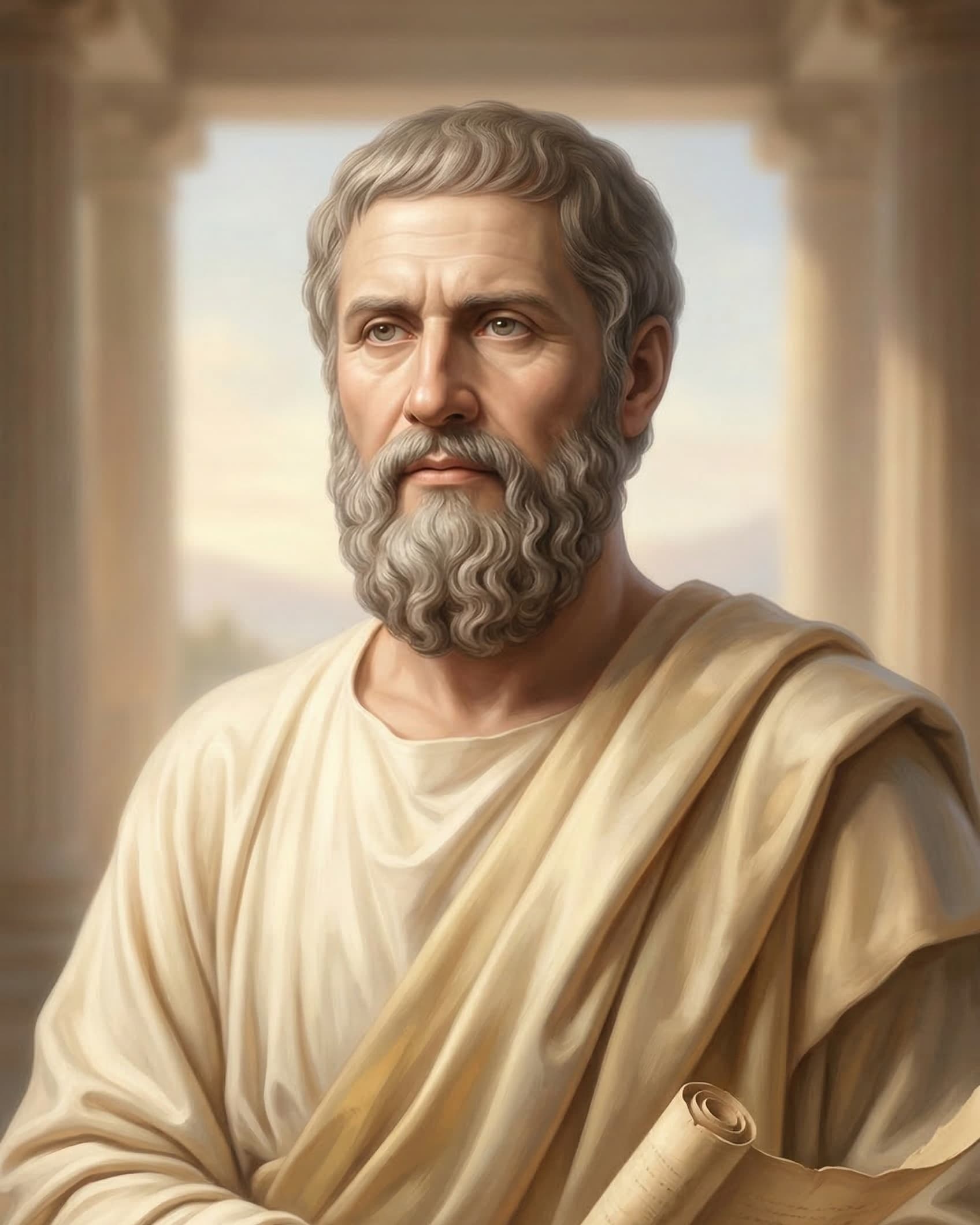
AI-assisted portrait of Plato
The Architect of the Invisible
Born around 427 BCE into an aristocratic Athenian family, Plato grew up surrounded by politics, power, and instability. But it was not the machinery of the state that defined him — it was the loss of a man.
The execution of Socrates did not simply mark the death of a teacher. It exposed, to Plato, a fracture in reality itself: a world where truth could be overruled by opinion, where the just could be condemned, and where the visible order of society concealed something deeply misaligned beneath it.
Plato did not respond by withdrawing. He responded by building.
Through works like The Republic, Phaedo, Symposium, and Timaeus, he constructed not just arguments, but entire frameworks of existence — dialogues that moved from ethics to metaphysics, from politics to the nature of the soul. Again and again, he returned to the same question: What is real — and how should we live in accordance with it?
His answer was not found in the world as it appeared, but in what lay behind it.
The Psychological Verdict
Plato’s thought is unified by a singular movement: away from surface reality, and toward an underlying order that gives it meaning. This orientation aligns most consistently with INFJ.
Not a philosopher of endless exploration, but of convergence — of drawing disparate observations into a single, coherent vision of truth and human life.
Ni — Dominant
At the core of Plato’s philosophy is the conviction that reality is not what it seems. The Theory of Forms posited that the world we perceive is only a shadow of a higher, unchanging reality. Justice, beauty, goodness — these exist as ideal forms, more real than anything we encounter through the senses.
This is Ni in its purest expression: compressing the world into invisible, essential truths that unify everything beneath them.
In The Republic, this takes narrative form through the Allegory of the Cave — a metaphor not just for knowledge, but for perception itself. Most remain with shadows. The philosopher turns, ascends, and sees. Not many truths. One.
Fe — Auxiliary
Plato’s philosophy is not content to remain in abstraction. It turns outward — toward the shaping of human life. In The Republic, he outlines a vision of the ideal state, guided by philosopher-kings who have seen truth and are therefore capable of leading others toward it.
This is not governance for efficiency. It is guidance for alignment. Plato is concerned with how people live, how societies cohere, and how individuals can be brought into right relationship with what is good.
Truth, for Plato, is something to be shared and embodied.
Ti — Tertiary
Plato’s dialogues demonstrate careful, structured reasoning. Through the voice of Socrates, arguments are examined, definitions refined, and contradictions exposed.
But this Ti is always in service of something larger. Logic is not the destination. It is the path. Each dialogue moves toward clarification — not to open possibilities, but to narrow them, to approach something more precise, more essential.
Se — Inferior
Plato’s relationship with the sensory world is one of distance and distrust. The physical realm is seen as a realm of appearances, change, and imperfection. The senses mislead. The visible distracts.
In contrast, true knowledge lies beyond what can be seen. This reflects inferior Se — a tendency to devalue immediate experience in favor of deeper, unseen reality.
Analysis
Why not INTJ?
While Plato builds structured systems, his focus is not on execution, efficiency, or control. His work is saturated with moral vision, symbolic narrative, and concern for the soul. The aim is not to organize the world for output, but to align it with what is good. This is not structure for its own sake. It is structure in service of meaning.
Why not INTP?
Plato does not remain in open-ended inquiry. His dialogues may begin in questioning, but they move toward resolution — toward definitions, toward conclusions, toward a unified vision of reality. He is not exploring possibilities indefinitely. He is converging on truth.
The Academy
Plato’s vision did not remain in writing. He founded the Academy — one of the first institutions of higher learning in the Western world — as a place where philosophy could be pursued, preserved, and passed on.
It was not merely a school, but an extension of his belief that truth, once seen, carries responsibility. To know is to teach. To see is to guide. He did not just describe a better world. He began to build it.
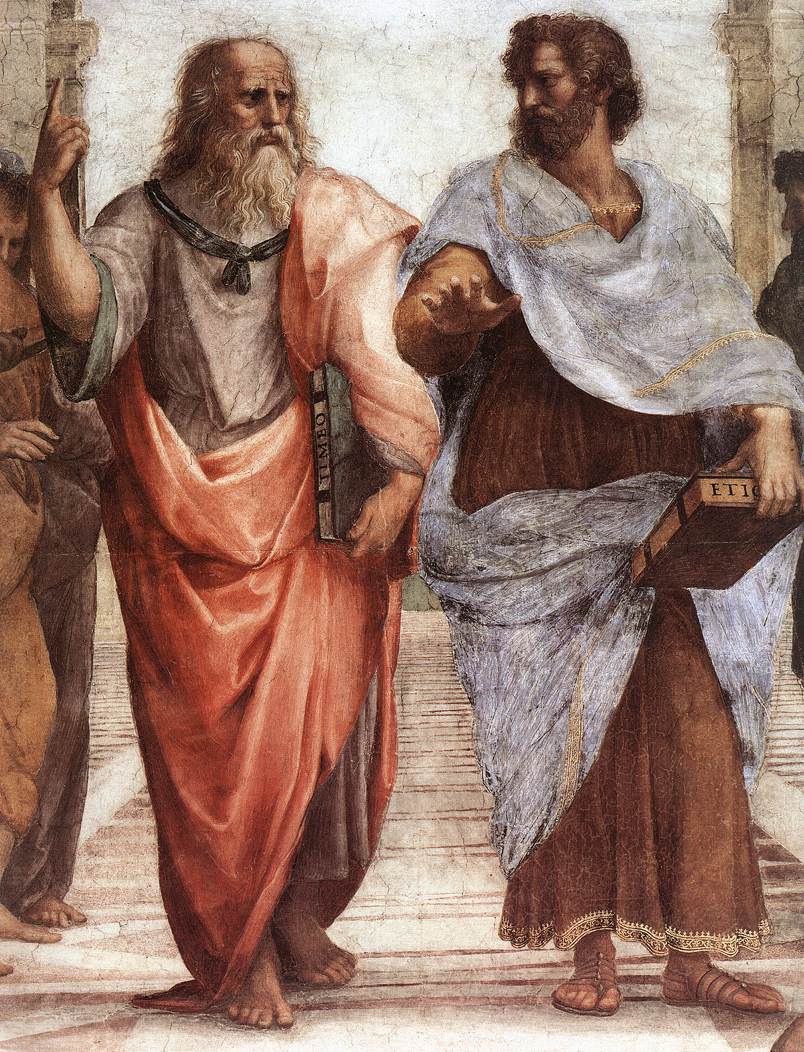
Not the world as it is — but the world as it ought to be.
Connected Figures
Further Reading
- Plato: Complete Works — ed. John M. CooperThe standard English edition — all dialogues and letters in one volume, indispensable as the primary source.
- Plato — C. J. RoweA lucid and compact introduction to the dialogues and their philosophical stakes.
- The Cambridge Companion to Plato — ed. Richard KrautA wide-ranging collection of scholarly essays covering metaphysics, ethics, politics, and the dialogues' dramatic form.
- Plato: A Very Short Introduction — Julia AnnasAccessible and sharp — an ideal first encounter with how modern scholars read Plato's arguments.
