 Historical Figure MBTI
3 min read
#154 · 3-17-26 · The Young Republic of USA
Jane Craig Biddle
Not the system. But the life that continues within it.
1793 — 1856
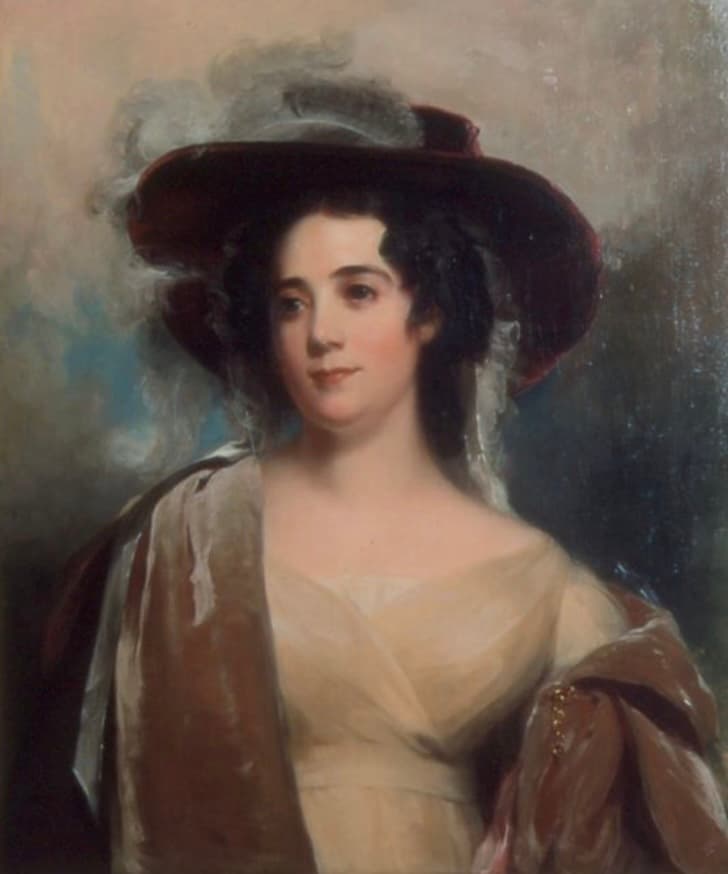
Portrait of Jane Craig Biddle
The Quiet Household
Jane Craig Biddle does not appear in history as a force.
She appears as a presence.
Married to Nicholas Biddle—one of the most intellectually formidable and publicly contested figures of his time—Jane's life unfolded largely outside the arena of financial systems and political conflict. While her husband engaged in abstract structures and national debates, she remained grounded in the sphere that required something else entirely: steadiness, care, and continuity.
In elite Philadelphia society, this role was not insignificant. It required the ability to maintain a household that reflected order, propriety, and quiet dignity—especially when the name attached to it was under scrutiny. Jane did not step forward to shape public discourse. She ensured that something stable existed behind it.
She did not define the system. She sustained the life within it.
The Psychological Verdict
Jane Craig Biddle is not widely documented, but the pattern of her role—private, consistent, relationally grounded—points toward a clear orientation.
Her cognition reflects preservation of stability, attentiveness to others, and a quiet commitment to duty—hallmarks of Si–Fe.
She was likely an ISFJ.
Si — Dominant
Jane's life appears rooted in continuity. She occupied a role that required maintaining structure over time—home, routine, social expectation—and did so without visible deviation. There is no indication of reinvention or outward expansion; instead, her presence reflects consistency and reliability.
This is dominant Si: trust in what is known, lived, and sustained.
Fe — Auxiliary
Her influence was relational, not ideological. Within her social sphere, Jane would have been responsible for maintaining harmony, hosting, and ensuring that interactions remained smooth and appropriate. Even in the absence of extensive records, this pattern aligns with how she is positioned historically: not as a disruptor, but as a stabilizer of relationships.
This reflects Fe: care expressed through attentiveness, cohesion, and social awareness.
Ti — Tertiary
Jane does not appear as an outwardly analytical figure, but there is likely an internal sense of order guiding her actions. She did not act randomly or purely reactively—her steadiness suggests an underlying personal framework, even if it remained unspoken.
Ne — Inferior
The unpredictable, shifting nature of her husband's public conflicts likely contrasted with her preferred mode of stability. Rather than engaging with new possibilities or external complexity, her role appears to have been maintaining what was already established—keeping life coherent amid uncertainty.
This reflects inferior Ne: discomfort with instability, preference for the familiar.
Why not ESFJ?
Si over Fe (not ESFJ)
ESFJs also lead with Fe, but their energy is more outwardly expressive and socially directive. Jane does not appear this way. There is no strong indication that she led social movements, coordinated public responses, or actively shaped group dynamics. Her presence reads as quieter, more contained—focused on maintaining rather than mobilizing. This is auxiliary Fe, not dominant Fe.
Connected Figures
Further Reading
- American Lion: Andrew Jackson in the White House — Jon MeachamCovers the Bank War that put Jane's husband under constant public scrutiny during their marriage.
- The Life of Andrew Jackson — Robert V. ReminiDetails Nicholas Biddle's fight with Jackson, the backdrop against which Jane maintained the household.
- What Hath God Wrought: The Transformation of America, 1815-1848 — Daniel Walker HoweFrames the Philadelphia banking elite Jane belonged to within the broader Jacksonian financial conflict.
