 Historical Figure MBTI
4 min read
#153 · 3-17-26 · The Young Republic of USA
Nicholas Biddle
Not a man of motion. A man of structure.
1786 — 1844
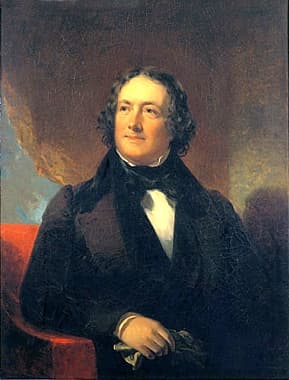
Portrait of Nicholas Biddle
The Banker of Order
Nicholas Biddle did not enter politics to participate.
He entered it to stabilize.
Born in 1786 into a prominent Philadelphia family, Biddle was shaped early by intellect, discipline, and exposure to elite institutions. A prodigy by most accounts, he graduated from the University of Pennsylvania at a remarkably young age and moved quickly into roles that demanded not charisma, but precision—editing, diplomacy, financial administration.
Where others saw politics as conflict, Biddle saw it as imbalance. And imbalance, to him, required correction.
As president of the Second Bank of the United States, he approached finance not as a reactive system, but as something that could—and should—be deliberately structured. Currency, credit, national stability—these were not abstract concerns, but components of a larger architecture he believed he understood.
Biddle did not simply manage the system. He believed he knew how it should function.
The Psychological Verdict
Nicholas Biddle is sometimes interpreted as ENTJ due to his authority and leadership, or INTP due to his intellect. But a closer look at how his thinking formed—internally structured, future-oriented, and increasingly rigid under pressure—points elsewhere.
His cognition reflects long-range conceptual vision supported by structured execution—Ni–Te, not Te-first command or Ti-based exploration.
He was likely an INTJ.
Ni — Dominant
Biddle's thinking was fundamentally architectural. He did not approach banking as a series of isolated decisions, but as a system governed by underlying principles. His work at the Bank reflects a clear internal model of how financial stability should be maintained—how credit should be regulated, how national consistency should be preserved.
This is Ni: compressing complexity into a singular, coherent framework.
He wasn't reacting to economic conditions. He was applying a vision of how the system ought to operate.
Te — Auxiliary
Biddle translated this vision into structured action. He implemented policies, enforced discipline within the Bank, and sought to maintain national financial order through coordinated execution. His leadership was not improvisational—it was systematic, controlled, and directed toward maintaining stability.
This reflects Te: organizing external systems according to internal logic.
Fi — Tertiary
Biddle's convictions were not merely technical—they were personal. He held a firm belief in the necessity of the Bank and the correctness of his approach, even as opposition intensified. There is a quiet but unmistakable sense of internal alignment—he did not easily bend or compromise when his core framework was challenged.
This suggests tertiary Fi: values held internally, expressed through steadfastness rather than outward emotion.
Se — Inferior
Biddle struggled when forced into reactive, real-time conflict. His confrontation with Andrew Jackson—particularly during the Bank War—revealed a gap between his structured vision and the unpredictable nature of political reality. He did not adapt fluidly; instead, he doubled down on his existing approach.
This reflects inferior Se: difficulty adjusting to rapidly shifting external dynamics.
Why not ENTJ or INTP?
Ni over Te–Ni (not ENTJ)
ENTJs lead with Te–Ni, acting outwardly to organize and control systems. Biddle's process appears reversed. His actions stemmed from an internal vision first, which he then implemented. His authority came less from command and more from the coherence of his framework. He was not primarily directing from the outside. He was applying something already fully formed within. This is Ni–Te.
Ni over Ti–Ne (not INTP)
INTPs lead with Ti, exploring systems through open-ended analysis. Biddle was not exploratory. He did not continuously revise his framework in response to new data. Instead, his model became more fixed over time, even in the face of opposition. His goal was not to understand endlessly, but to apply what he believed to be correct. This is not Ti–Ne. This is convergent, decisive Ni.
Connected Figures
Further Reading
- Nicholas Biddle: Nationalist and Public Banker, 1786–1844 — Thomas Payne GovanThe definitive biography — traces Biddle's intellectual formation, Bank presidency, and the Bank War in full.
- The Age of Jackson — Arthur M. Schlesinger Jr.Pulitzer Prize-winning account of Jacksonian democracy; frames the Bank War as a populist-versus-elite clash with Biddle as the establishment's champion.
- Andrew Jackson and the Bank War — Robert V. ReminiA concise study of the political conflict that ended the Second Bank; Biddle is a central figure throughout.
- The Jacksonian Economy — Peter TeminReassesses the economic consequences of killing the Bank — essential context for judging whether Biddle's warnings were vindicated.
