 Historical Figure MBTI
4 min read
#145 · 3-17-26 · The Young Republic of USA
Andrew Jackson
Force, not framework. Presence, not prediction.
1767 — 1845
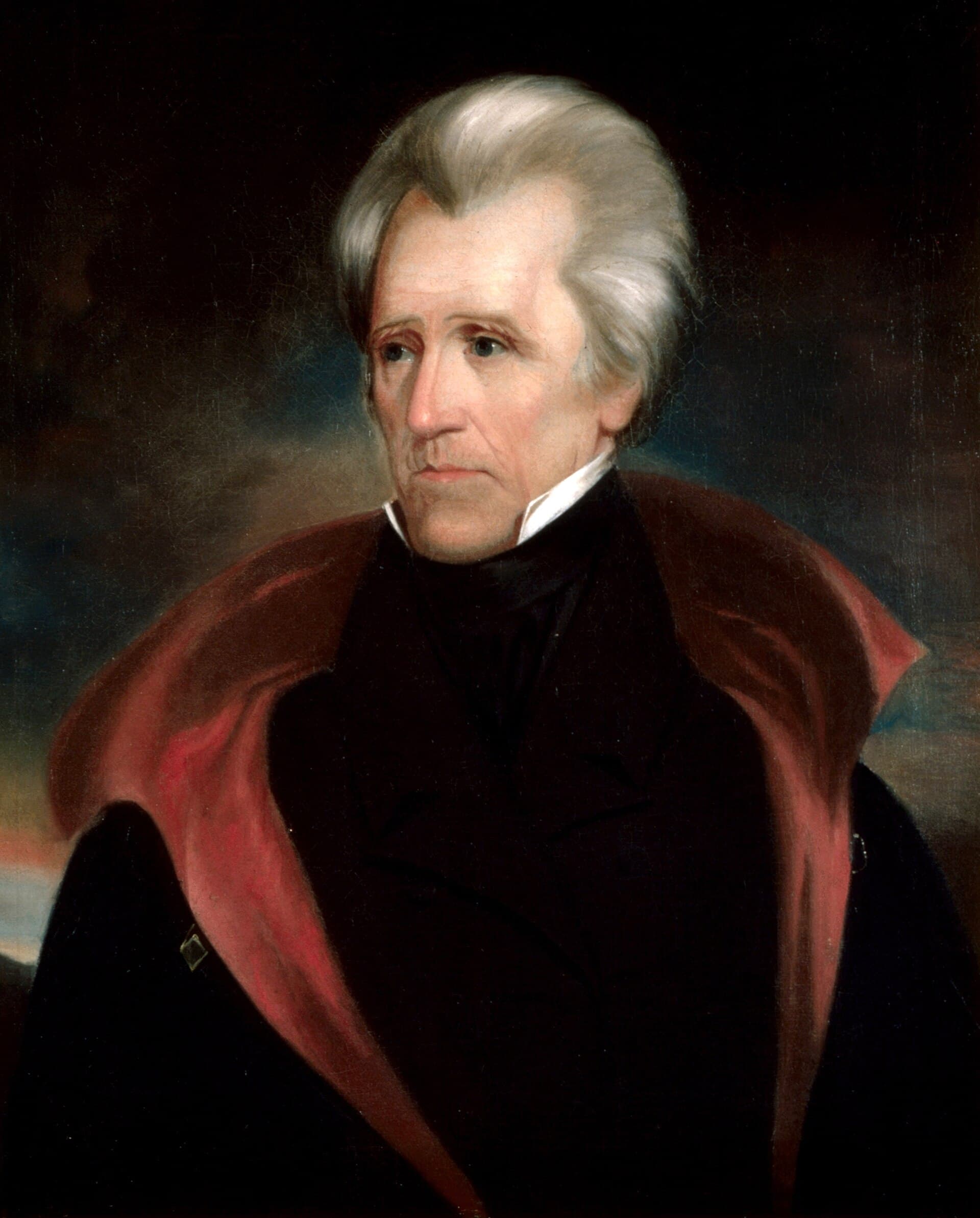
Portrait of Andrew Jackson
The Iron General
Andrew Jackson did not enter history as a theorist, a philosopher, or a quiet architect of systems. He arrived as force.
Born in 1767 on the American frontier, Jackson's early life was marked by instability, violence, and survival. Orphaned during the Revolutionary War and hardened by personal loss, he grew into a man who trusted action over abstraction, instinct over deliberation. Where others debated, Jackson moved.
His rise was not elegant—it was kinetic. Military victories, most notably at New Orleans, were not the result of carefully constructed ideological frameworks but decisive, real-time command. He read the terrain, the moment, the opponent—and acted. This same energy carried into his presidency, where he reshaped American politics through sheer presence, often bypassing established norms in favor of direct, forceful execution.
Jackson was not trying to understand the system. He was trying to dominate the moment within it.
The Psychological Verdict
Andrew Jackson is often typed as ENTJ due to his leadership and commanding presence. But a closer look at how he operated—not just what he achieved—points to a different conclusion:
His cognition was not driven by long-range strategic abstraction (Ni–Te), but by immediate engagement with reality—responding, adapting, and acting in real time with striking decisiveness.
He was likely an ESTP.
Se — Dominant
Jackson's defining trait was his immersion in the present moment. He thrived in environments that required rapid response—battlefields, duels, political confrontations.
His leadership style was not built on distant planning but on reading situations as they unfolded and making bold, often risky decisions on the spot. This is classic Se: direct engagement with reality, trust in instinct, and a willingness to act without over-deliberation.
His life is filled with examples of physical courage and immediacy—duels fought, orders given in the heat of battle, decisions made with incomplete information but absolute conviction. He did not hesitate. He moved.
Ti — Auxiliary
Beneath this action-oriented surface was a sharp, internal sense of logic. Jackson's decision-making, while impulsive in timing, was not chaotic. He operated from a personal framework of what made sense—who was right, who was wrong, what justified action.
This wasn't externally structured efficiency (Te), but internally consistent reasoning (Ti), often tied to honor, fairness, and personal codes. He could be rigid, even stubborn—not because of long-term strategic vision, but because his internal logic had already settled the matter.
Fe — Tertiary
Jackson's connection to "the people" was not incidental—it was emotional. He positioned himself as a representative of the common man, and this wasn't purely strategic. There was a genuine attunement to public sentiment, a sense of shared identity with his supporters.
His charisma was not polished, but it was potent—direct, emotionally resonant, and often polarizing. Loyalty was rewarded intensely; perceived betrayal was met with equally intense retaliation.
Ni — Inferior
Jackson did not operate from a place of long-term abstraction or strategic foresight. While he could pursue goals with determination, his approach lacked the detached, future-oriented synthesis seen in Ni-dominant types.
Decisions were often made in the immediacy of the situation, sometimes without full consideration of long-term consequences. The focus was on what needed to be done now, not what system would endure decades later.
Why not ENTJ?
Se over Te–Ni
ENTJs lead with Te supported by Ni—they build systems, think in long arcs, and execute toward structured, future-oriented goals. Their power comes from strategic architecture. Jackson's power came from presence. He did not construct elaborate long-term frameworks or operate through impersonal systems. Instead, he engaged directly, often bypassing structure altogether in favor of immediate action.
His decisions were not the output of detached strategic planning, but of situational awareness and personal conviction. This is not Te–Ni. This is Se–Ti.
Connected Figures
Further Reading
- Andrew Jackson: His Life and Times — H. W. BrandsThe most readable modern biography — traces Jackson from frontier orphan to president with close attention to character.
- American Lion: Andrew Jackson in the White House — Jon MeachamPulitzer Prize-winning account of his presidency, drawing on private letters and diary sources to reconstruct his decision-making.
- The Age of Jackson — Arthur M. Schlesinger Jr.The classic 1945 study that shaped how a generation understood Jacksonian democracy and its democratic impulse.
- Andrew Jackson and the Bank War — Robert V. ReminiA focused account of the defining economic clash of his presidency — and what it reveals about Jackson's governing style.
- The Rise of Andrew Jackson: Myth, Manipulation, and the Making of Modern Politics — David S. Heidler & Jeanne T. HeidlerA revisionist look at how Jackson's image was constructed and weaponized — essential context for understanding Jacksonian populism.
