 Historical Figure MBTI
3 min read
#144 · 3-16-26 · The Young Republic of USA
Lucretia Hart Clay
The Private Counterpoint and inwardly anchored partner to Henry Clay.
1781 — 1864
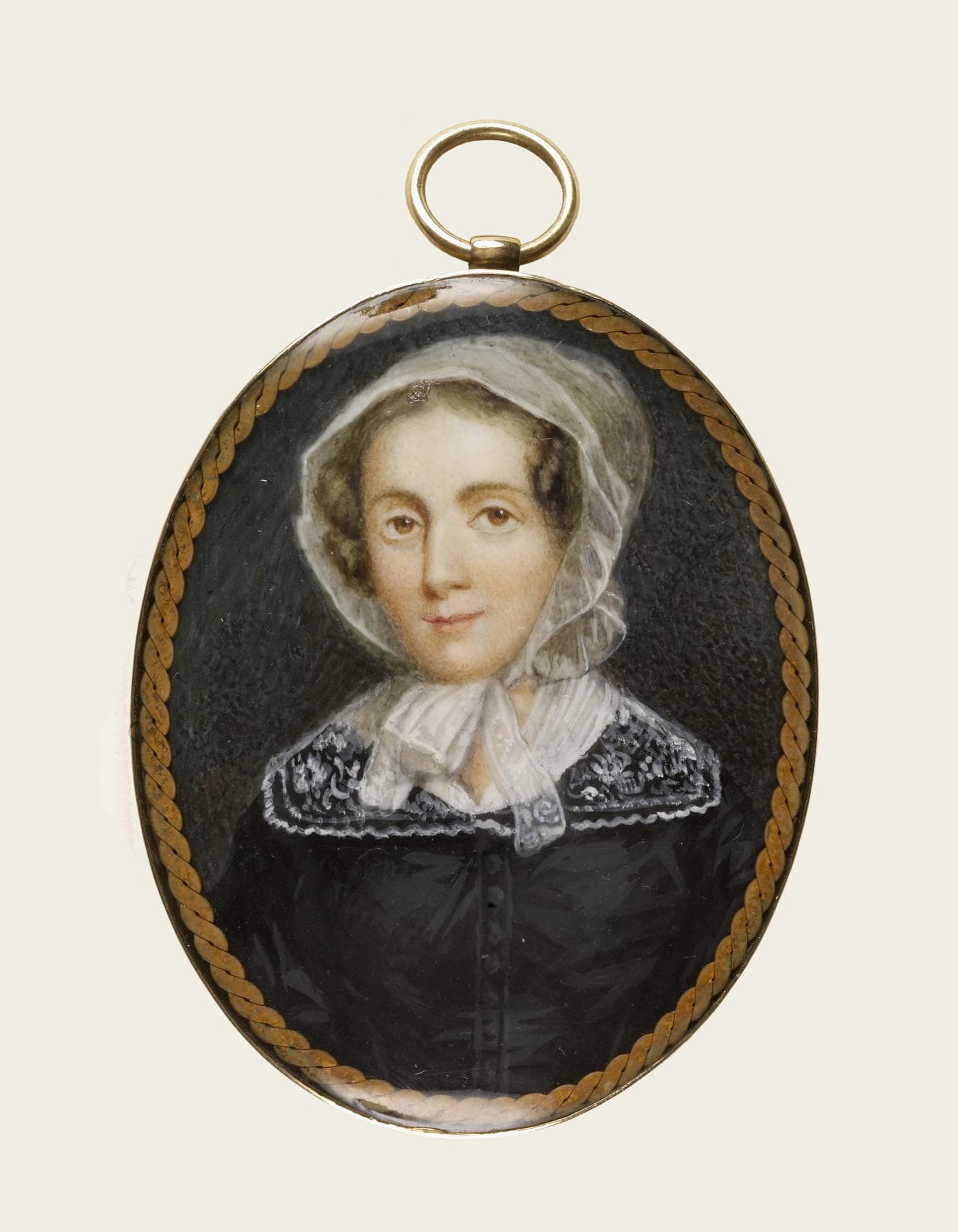
Portrait of Lucretia Hart Clay
The Private Counterpoint
Lucretia Hart Clay exists in quiet contrast to her husband, Henry Clay — a man defined by presence, persuasion, and public life. Where he moved through crowds and negotiations, she remained largely within the private sphere, her life marked not by visibility, but by restraint.
Accounts of Lucretia often emphasize her simplicity, modesty, and lack of interest in social display. In an era where political spouses were expected to host, engage, and participate in the social machinery of power, she stood apart — not in defiance, but in disinterest.
She was not drawn to the stage. She remained herself, regardless of it.
The Psychological Verdict
Lucretia Hart Clay is best understood, tentatively, as an INFP — a type defined by inwardly anchored values, personal authenticity, and a quiet resistance to external expectations.
The available historical material is limited, but the consistency of her portrayal — particularly her detachment from social performance and preference for a more private, grounded life — suggests a personality oriented toward internal alignment rather than outward participation.
This is not a loud presence. It is a shaping one.
Fi — Dominant
Lucretia’s defining trait is her inward consistency. She does not appear to have adapted herself to fit the expectations of her position, nor to have sought validation through social engagement.
Instead, she maintained a steady, personal way of being — modest, reserved, and uninterested in performative roles. This reflects dominant Fi: a focus on internal values and authenticity over external approval.
She did not shape herself to the environment. She remained aligned with herself within it.
Ne — Auxiliary
While not outwardly expressive or exploratory in a visible sense, there is a subtle openness in her resistance to rigid social expectations. She did not fully conform to the role expected of her, suggesting a degree of flexibility and independence in how she approached her life.
This aligns with auxiliary Ne: not necessarily expansive or idea-driven, but present as a quiet alternative to strict adherence — an openness to living differently than prescribed.
Si — Tertiary
Lucretia’s lifestyle appears grounded and consistent. Her preference for simplicity and routine suggests a comfort with the familiar and the stable.
This reflects tertiary Si: a grounding influence that supports her inward values without defining them.
Te — Inferior
There is little indication of engagement with external systems, structure, or efficiency-driven execution. Lucretia does not appear to have been concerned with organizing, directing, or managing the external world in a visible way.
This aligns with inferior Te: present, but not a driving force.
Why not ISFJ?
Fi over Fe
Given her modesty and domestic orientation, ISFJ is a natural alternative. However, ISFJs tend to express their care through active participation in social roles — hosting, organizing, and maintaining relational harmony in visible ways. Lucretia’s pattern is different. She does not appear to lean into these expectations, but rather to remain somewhat removed from them.
Not role-first. Self-first. This suggests Fi over Fe.
Connected Figures
Further Reading
- Henry Clay: Statesman for the Union — Robert V. ReminiCovers the fifty-year marriage and Lucretia's deliberate distance from her husband's public performances.
- What Hath God Wrought: The Transformation of America, 1815-1848 — Daniel Walker HoweSets Lucretia's modest, domestic-centered life against the social expectations placed on political wives.
- American Lion: Andrew Jackson in the White House — Jon MeachamIlluminates the Clay-Jackson rivalry that dominated the political world Lucretia largely avoided.
