 Historical Figure MBTI
4 min read
#143 · 3-16-26 · The Young Republic of USA
Henry Clay
The Great Compromiser and persuasive statesman who guided the Union through sectional divide.
1777 — 1852
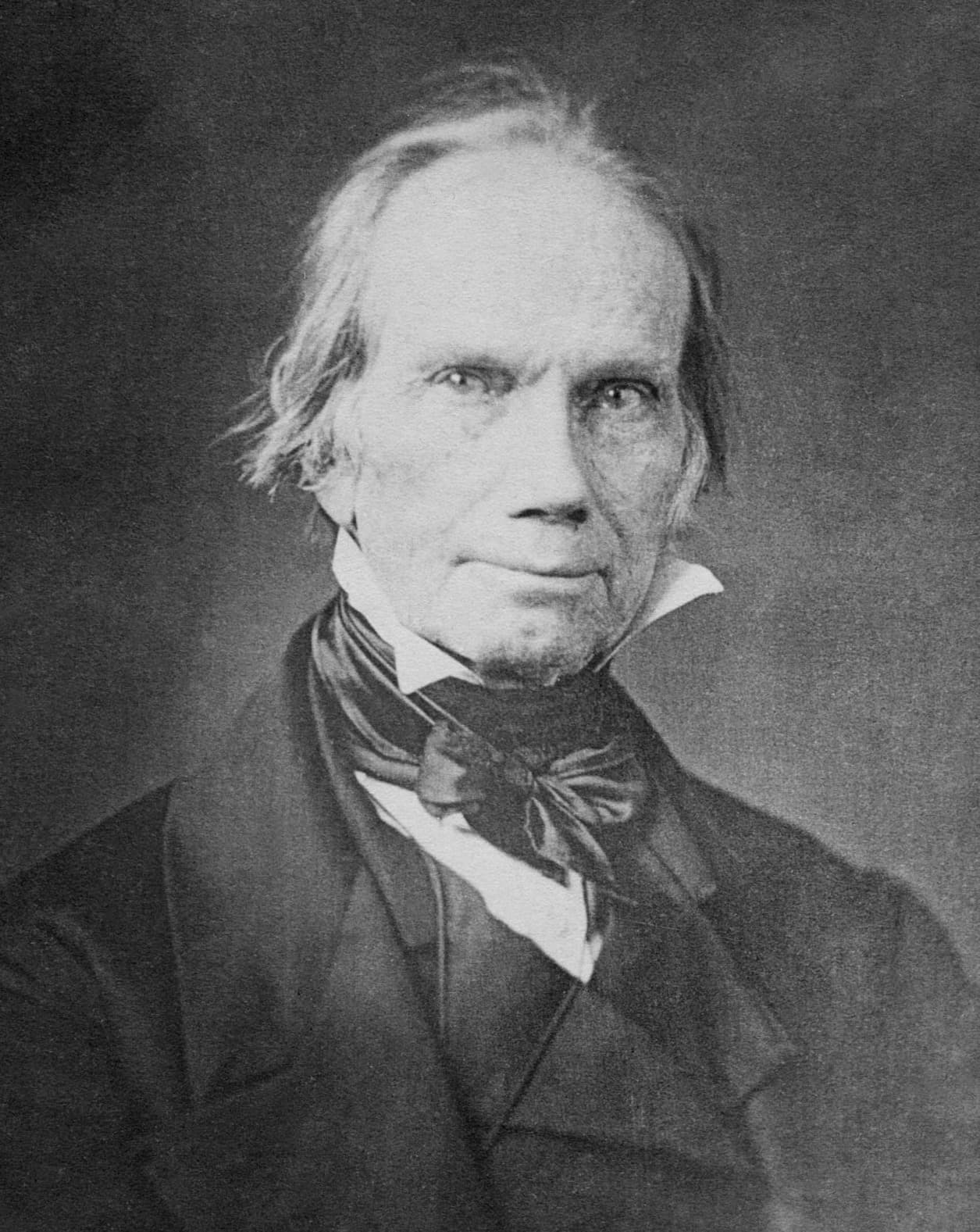
Portrait of Henry Clay
The Great Compromiser
Henry Clay does not enter American history as a theorist or a quiet statesman. He enters it as a presence — commanding, persuasive, and deeply embedded in the living current of politics.
Born in 1777, Clay rose from modest beginnings to become one of the most influential political figures of the early United States. As Speaker of the House and later a leading statesman, he became known as the “Great Compromiser,” shaping pivotal agreements such as the Missouri Compromise and the Compromise of 1850.
But what defines Clay is not just the outcomes he helped produce. It is how he moved people.
He operated in a world of tension — sectional divides, competing interests, fragile alliances — and his role was not to impose a system or retreat into principle, but to bring opposing sides into alignment. His power lay in persuasion, presence, and the ability to read a room not as it was, but as it could be guided to become.
He did not stand outside the system. He held it together.
The Psychological Verdict
Henry Clay is best understood as an ENFJ — a type defined by relational influence, vision-oriented leadership, and the ability to shape collective direction through people rather than structure alone.
His career reflects a consistent pattern: not detached analysis, not rigid adherence to system, but active engagement with individuals and groups to move them toward agreement, cohesion, and forward motion.
Fe — Dominant
Clay’s defining trait is his command of the interpersonal field. He was not simply persuasive in the rhetorical sense; he was attuned — aware of competing interests, emotional undercurrents, and the shifting dynamics between factions.
His effectiveness came from engaging others directly, building rapport, and guiding conversation toward resolution. This is dominant Fe: influence through connection, leadership through relationship, and a focus on maintaining and restoring social cohesion at scale.
He did not force agreement. He facilitated it.
Ni — Auxiliary
Behind this relational fluency is a clear sense of direction. Clay’s compromises were not random or purely reactive; they were oriented toward preserving the Union and navigating long-term instability.
This reflects auxiliary Ni: an ability to perceive underlying trajectories and guide action toward a future outcome. He was not just responding to conflict — he was working to prevent its escalation.
His leadership was not only present-focused. It was future-aware.
Se — Tertiary
Clay’s presence was immediate and charismatic. Accounts of him consistently describe his energy, his ability to command attention, and his effectiveness in live interaction.
This aligns with tertiary Se: a grounded engagement with the moment, used in service of his broader relational and visionary goals. He could read the room, adjust in real time, and act decisively within unfolding situations.
Ti — Inferior
There is little indication that Clay operated from detached, internally structured logic. His decisions were not driven by abstract consistency or theoretical purity, but by what would work in practice — what would bring people together and move the situation forward.
This aligns with inferior Ti: present, but secondary to relational and strategic concerns.
Why not ENTJ?
Fe over Te
Given his leadership and political influence, ENTJ is a natural alternative. But ENTJs tend to operate through systems, structure, and directive control — imposing order, optimizing processes, and driving outcomes through external organization. Clay’s approach is different. He did not dominate through structure. He navigated through people.
Not command-first. Connection-first.
Connected Figures
Further Reading
- Henry Clay: The Essential American — David S. Heidler and Jeanne T. HeidlerThe definitive modern biography — thorough on Clay's political life, personal relationships, and his role in the three great compromises.
- The Life of Henry Clay — Carl SchurzA classic 19th-century political biography, available in the public domain, written by a statesman who understood the era from the inside.
- American Lion: Andrew Jackson in the White House — Jon MeachamEssential context for understanding Clay through his most defining rivalry — Jackson and Clay as the twin poles of the Jacksonian period.
- What Hath God Wrought: The Transformation of America, 1815–1848 — Daniel Walker HowePulitzer-winning history of the era in which Clay was central — the American System, the compromises, and the road to the Civil War.
