 Historical Figure MBTI
3 min read
#152 · 3-17-26 · The Young Republic of USA
John Eaton
Not the architect. But the man who chose—and stayed.
1790 — 1856
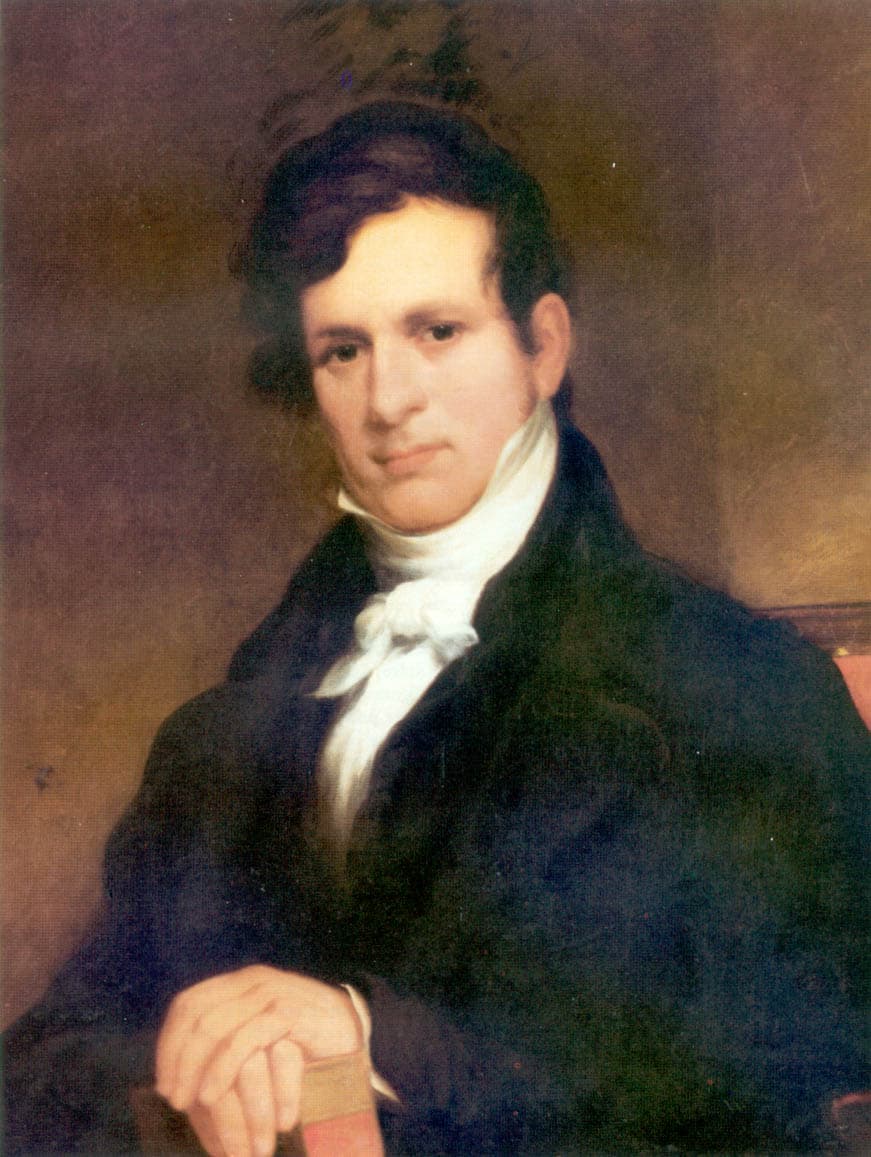
Portrait of John Eaton
The Loyal Companion
John Eaton did not rise through theory.
He rose through proximity.
Born in 1790, Eaton became one of Andrew Jackson's closest allies—not by constructing ideological frameworks or navigating systems from a distance, but by being there. In war, in politics, in life—he aligned himself with Jackson not as an abstract supporter, but as a present, engaged companion.
He wrote Jackson's biography. He served beside him. He moved with him. His loyalty was not conceptual. It was lived.
And that same immediacy defined the most consequential decision of his life: his relationship with Peggy Eaton. Their marriage, controversial and socially explosive, was not a calculated political move. It was personal, direct, and rooted in feeling rather than long-term strategy.
Eaton did not step back to consider how the system would react. He stepped forward into what felt right.
The Psychological Verdict
John Eaton is rarely typed, often reduced to his role within the Petticoat Affair. But when we look at how he operated—his loyalty, his decisiveness, and his present-focused choices—a pattern begins to emerge.
His cognition reflects action grounded in personal feeling and immediate reality—hallmarks of Se–Fi, not Te-driven strategy or Si-based preservation.
He was likely an ESFP.
Se — Dominant
Eaton's life was defined by direct engagement. He aligned himself closely with Jackson, participating in events as they unfolded rather than observing or theorizing from a distance. His decisions were made in real time, based on the situation in front of him.
His marriage to Peggy Eaton is a clear example: immediate, decisive, and unconcerned with how it would ripple through broader political systems.
This is dominant Se—responsive, present, and action-oriented.
Fi — Auxiliary
Beneath this action was a strong personal loyalty. Eaton's attachment to both Jackson and Peggy reflects an internally guided value system. He did not abandon Peggy under pressure, nor did he recalibrate his choices to align with social expectations.
He stayed. This is Fi: personal conviction over collective approval.
Te — Tertiary
Eaton was capable in structured roles—serving as Secretary of War—but this does not appear to be his natural mode of thinking. His actions were not driven by system optimization or long-term planning, but by immediate engagement and personal alignment.
When structure was required, he could operate within it, but it did not define him.
Ni — Inferior
Eaton does not appear to have prioritized long-term abstraction or future consequences. The political fallout of his marriage—while significant—does not seem to have shaped his initial decision-making. His focus remained on the present relationship, not the extended implications.
This reflects inferior Ni: limited emphasis on distant outcomes or symbolic interpretation.
Why not ESTJ or ESFJ?
Fi over Te–Si (not ESTJ)
ESTJs lead with Te–Si—they prioritize structure, order, and established systems. Eaton did not act this way. His choices, particularly in his personal life, disrupted social and political order rather than reinforcing it. He did not defer to norms or optimize for stability—he followed his immediate reality and personal commitments. This is not Te–Si.
Fi over Fe–Si (not ESFJ)
ESFJs lead with Fe–Si, aligning with social expectations and maintaining group harmony. Eaton moved against it. He did not adjust his behavior to preserve social cohesion, even when faced with widespread backlash. His loyalty to Peggy was not negotiable, and he did not seek to reconcile his choices with broader societal approval. This is not Fe-driven alignment. This is Fi-driven conviction.
Connected Figures
Further Reading
- The Petticoat Affair: Manners, Mutiny, and Sex in Andrew Jackson's White House — John F. MarszalekThe definitive account of Eaton's marriage to Peggy and the cabinet crisis it triggered.
- American Lion: Andrew Jackson in the White House — Jon MeachamShows how Jackson's fierce defense of Eaton's marriage reshaped his entire cabinet.
- Andrew Jackson and the Course of American Empire, 1767-1821 — Robert V. ReminiDetails the wartime friendship between Jackson and Eaton that preceded Eaton's biography of the president.
- What Hath God Wrought: The Transformation of America, 1815-1848 — Daniel Walker HowePlaces the Petticoat Affair within the social and political upheavals of the Jacksonian era.
