 Historical Figure MBTI
3 min read
#150 · 3-17-26 · The Young Republic of USA
Floride Calhoun
Not the architect. But the line no one could cross.
1792 — 1866
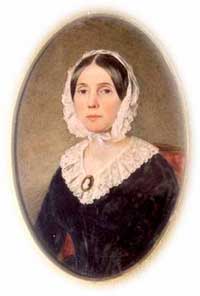
Portrait of Floride Calhoun
The Keeper of the Circle
Floride Calhoun did not shape policy.
She shaped the room in which it was received.
Born in 1792 into a prominent South Carolina family, Floride entered public life through marriage to John C. Calhoun—but unlike her husband, whose influence moved through doctrine and theory, hers moved through presence. Washington society was not a backdrop; it was an arena of perception, reputation, and alignment, and Floride understood it intimately.
Nowhere was this clearer than during the Petticoat Affair, where social lines became political fault lines. Floride did not approach the situation abstractly or privately—she took a visible, coordinated stance, leading the effort to socially exclude Peggy Eaton. This was not passive participation. It was active, collective enforcement of norms.
She did not argue the system. She upheld it.
The Psychological Verdict
Floride Calhoun is sometimes interpreted as rigid or simply traditional, which can lead to typings like ISFJ. But a closer look at how she engaged with others—publicly, relationally, and in real time—suggests something more outward.
Her behavior reflects active social coordination, external emotional attunement, and a willingness to take visible leadership in maintaining group norms—hallmarks of Fe–Si.
She was likely an ESFJ.
Fe — Dominant
Floride's defining trait was her orientation toward the social environment. She was not merely aware of social expectations—she actively maintained them. During the Petticoat Affair, she coordinated with other women, reinforced shared standards, and helped shape the collective response.
This is dominant Fe: organizing people around a shared emotional and moral framework.
Her influence was not quiet or behind the scenes. It was visible, relational, and group-oriented.
Si — Auxiliary
Her actions were grounded in tradition. The norms she upheld were not invented in the moment—they were inherited, internalized, and reinforced. She believed in established standards of propriety and social order, and she acted to preserve them when they were challenged.
This reflects Si: a reliance on what is known, trusted, and historically validated.
Ne — Tertiary
While not exploratory in nature, there is a reactive awareness of alternatives. Floride could recognize when norms were being disrupted and respond to that disruption, but she did not seek to expand or reinterpret the system. Possibility was something to manage, not pursue.
This suggests tertiary Ne: present, but not leading.
Ti — Inferior
Floride's approach was not analytical or detached. Her decisions were not based on internal logical frameworks, but on shared values and social coherence. She did not step back to question the system's logic—she acted within it, reinforcing its emotional and cultural structure.
This reflects inferior Ti: logic is secondary to relational alignment.
Why not ISFJ?
Fe over Si–Fe
ISFJs also value tradition and care, but their expression is more private and stabilizing than outwardly directive. Floride did more than maintain—she mobilized. Her role in the Petticoat Affair was not passive adherence, but active leadership within the social sphere. She coordinated, enforced, and publicly aligned others—behavior that reflects dominant Fe rather than auxiliary Fe. This is not quiet preservation. This is visible social orchestration.
Connected Figures
Further Reading
- The Petticoat Affair: Manners, Mutiny, and Sex in Andrew Jackson's White House — John F. MarszalekThe definitive study of the social crisis Floride helped ignite, tracing its political consequences in detail.
- American Lion: Andrew Jackson in the White House — Jon MeachamPulitzer Prize–winning biography that devotes substantial attention to the Eaton affair and the Calhoun circle.
- John C. Calhoun: American Heretic — Robert ElderA major modern biography of her husband that situates Floride's social conduct in the wider arc of Calhoun's political fall.
- The Rise of Andrew Jackson: Myth, Manipulation, and the Making of Modern Politics — David S. Heidler & Jeanne T. HeidlerContextualizes how social power and political power intertwined in the early Republic.
