 Historical Figure MBTI
4 min read
#151 · 3-17-26 · The Young Republic of USA
Peggy Eaton
Not a strategist. But the spark that revealed the structure.
1799 — 1879
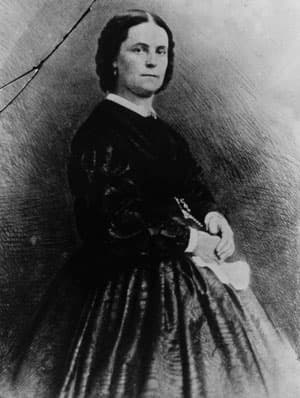
Portrait of Peggy Eaton
The Woman at the Center
Peggy Eaton did not set out to become a political crisis.
She became one anyway.
Born Margaret O'Neale in 1799, the daughter of a Washington tavern keeper, Peggy grew up in an environment filled with conversation, movement, and attention. Unlike many women of her time, she was not raised in quiet domestic isolation, but in a socially fluid space where politicians, soldiers, and travelers passed through daily. She learned early how to engage, how to respond, how to be seen.
And she was.
Described as lively, charming, and socially bold, Peggy moved through Washington society with a presence that drew both fascination and suspicion. Her marriage to John Eaton—following the death of her first husband—sparked outrage, not only for its timing, but for what she represented: a woman who did not conform to expected restraint.
What followed became known as the Petticoat Affair—a social conflict that escalated into a political rupture at the highest levels of government. But at the center of it all was not a strategist, or a system-builder, or a moral theorist.
It was a woman who lived openly, expressively, and unapologetically in the moment.
The Psychological Verdict
Peggy Eaton is often reduced to scandal—typed through reputation rather than behavior, sometimes framed as manipulative or morally ambiguous. But a closer look at how she actually moved through the world suggests something far more immediate and human.
Her cognition reflects direct engagement with her environment, emotional expressiveness, and a present-moment orientation—hallmarks of Se–Fi, not Fe-driven conformity or Ni-based interpretation.
She was likely an ESFP.
Se — Dominant
Peggy's defining trait was her presence. She did not withdraw, observe from a distance, or carefully curate an image over time. She engaged directly—socially, emotionally, physically—with the world around her. Her upbringing in a tavern environment sharpened this instinct: respond quickly, adapt fluidly, stay engaged.
She lived in the immediacy of experience.
This is dominant Se: immersion in the present, comfort with attention, and a natural responsiveness to social energy.
Fi — Auxiliary
Beneath that outward expressiveness was a strong internal sense of self. Peggy did not conform easily to external expectations, even when the consequences were severe. Her choices—particularly in marriage and social conduct—reflect a personal value system that did not bend to collective pressure.
This is Fi: internally guided, identity-driven, and resistant to imposed standards. She was not trying to align with the group. She was living according to her own sense of what felt right.
Te — Tertiary
Peggy was not a system-builder, but she was not without assertiveness. There is a directness in how she navigated conflict—an ability to stand her ground and engage outwardly when challenged.
This suggests tertiary Te: present in moments of pressure, but not a defining mode of operation.
Ni — Inferior
Peggy did not appear to operate from long-term abstraction or symbolic interpretation. The broader implications of her actions—how they would ripple through political systems—were not her focus. She acted within the immediacy of her life, not from a detached, future-oriented perspective.
This reflects inferior Ni: limited emphasis on long-range synthesis or hidden meaning.
Why not ESFJ or ENFP?
Fi over Fe (not ESFJ)
ESFJs lead with Fe–Si—they align with social expectations and maintain group harmony. Peggy disrupted it. She did not adapt herself to fit established norms, nor did she prioritize collective approval. In fact, much of the backlash she faced stemmed from her refusal—or inability—to conform to those expectations. This is not Fe-driven alignment. It is Fi-driven authenticity.
Se over Ne (not ENFP)
ENFP suggests a more abstract, idea-driven engagement with the world—exploring meaning, identity, and possibility. Peggy does not present this way. Her energy is grounded, immediate, and experiential. She is not theorizing about life—she is living it, directly and visibly. This is Se, not Ne.
Connected Figures
Further Reading
- The Petticoat Affair: Manners, Mutiny, and Sex in Andrew Jackson's White House — John F. MarszalekThe definitive account of the cabinet crisis that Peggy Eaton unwittingly triggered.
- Andrew Jackson: His Life and Times — H. W. BrandsA comprehensive biography with substantial coverage of the Eaton affair and Jackson's reaction.
- American Lion: Andrew Jackson in the White House — Jon MeachamPulitzer Prize-winning study of Jackson's presidency — analyzes how the Petticoat Affair reshaped his inner circle.
