 Historical Figure MBTI
3 min read
#128 · 3-15-26 · The Founding Generation of USA
Julia Stockton Rush
First Lady of Pennsylvania · Devoted Partner · Steady Presence through Revolution and Reform
1759 — 1848
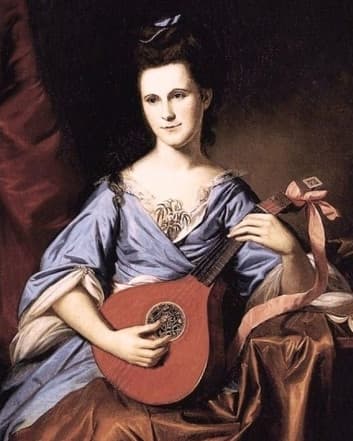
Portrait of Julia Stockton Rush
The Steady Presence
Julia Stockton Rush did not seek the center of history.
She sustained it.
Born in 1759 into the prominent Stockton family of New Jersey, Julia entered a world of political upheaval and intellectual ambition. Through her marriage to Benjamin Rush, she was drawn directly into the orbit of revolutionary change — a life defined not by stability, but by constant movement, uncertainty, and public responsibility.
Yet within that instability, Julia remained consistent.
While Benjamin moved across causes and ideas, Julia provided continuity, care, and grounding. She managed the household, raised their children, and maintained the rhythms of daily life even as the world around them shifted dramatically.
Her role was not passive. It was foundational.
Julia Stockton Rush is often left untyped or generalized as simply “supportive.” But her behavioral pattern reflects a clear orientation: She was an ISFJ. Not a public driver of change — but a quiet preserver of stability within it.
Consistency and Reliability
Julia’s strength was her consistency over time.
She created structure in an otherwise unpredictable environment — maintaining the household, upholding responsibilities, and ensuring that daily life continued despite the pressures surrounding her family.
Her presence reflects a deep respect for routine, duty, and continuity. She did not need novelty or expansion. She focused on what needed to be maintained, again and again.
This is Si: care expressed through reliability.
Relational Care
Julia’s care was not mechanical. It was relational and attentive.
She supported her husband not through argument or direction, but through emotional presence and responsiveness — understanding what was needed, and providing it without drawing attention to herself.
Her life reflects a quiet prioritization of others — family, stability, and well-being — expressed through consistent action rather than overt influence.
This is Fe supporting Si: care that sustains, rather than reshapes.
Internal Clarity
Julia likely held her own internal understanding of the world, but it was not outwardly emphasized.
Her role did not require public analysis or intellectual assertion. Instead, her thinking remained internal and supportive, helping her navigate responsibilities with quiet clarity.
This reflects tertiary Ti: present, but not the defining feature.
The Anchored Present
Julia’s life does not suggest a strong pull toward novelty or possibility.
Rather than exploring new directions, she remained grounded in what was known, trusted, and necessary. Large-scale change came from the outside — from her husband’s work, from the Revolution — not from her own orientation.
This aligns with inferior Ne: less drawn to what could be, more anchored in what is.
Why ISFJ Over ESFJ
Why not ESFJ?
ESFJs lead socially. Julia supported quietly. There is little indication that she sought to organize or direct broader social networks, host influence-driven gatherings, or position herself as a central relational figure in public life. Her impact appears more contained, more private — focused on family and immediate responsibilities, rather than outward social leadership.
An ESFJ shapes the social environment. Julia maintained the personal one.
Connected Figures
Further Reading
- Rush: Revolution, Madness, and the Visionary Doctor Who Became a Founding Father — Stephen FriedThe definitive biography of Benjamin Rush, tracing the household Julia Stockton Rush anchored through his turbulent public career.
- Founding Mothers: The Women Who Raised Our Nation — Cokie RobertsPlaces Julia among the founding-era wives whose correspondence and domestic labor sustained the movement.
- Liberty's Daughters: The Revolutionary Experience of American Women, 1750-1800 — Mary Beth NortonContext for the demands placed on a physician's wife like Julia during the Revolution and its aftermath.
