 Historical Figure MBTI
4 min read
#129 · 3-15-26 · The Founding Generation of USA
Samuel Adams
Revolutionary Leader · Political Organizer · Moral Force behind American Independence
1722 — 1803
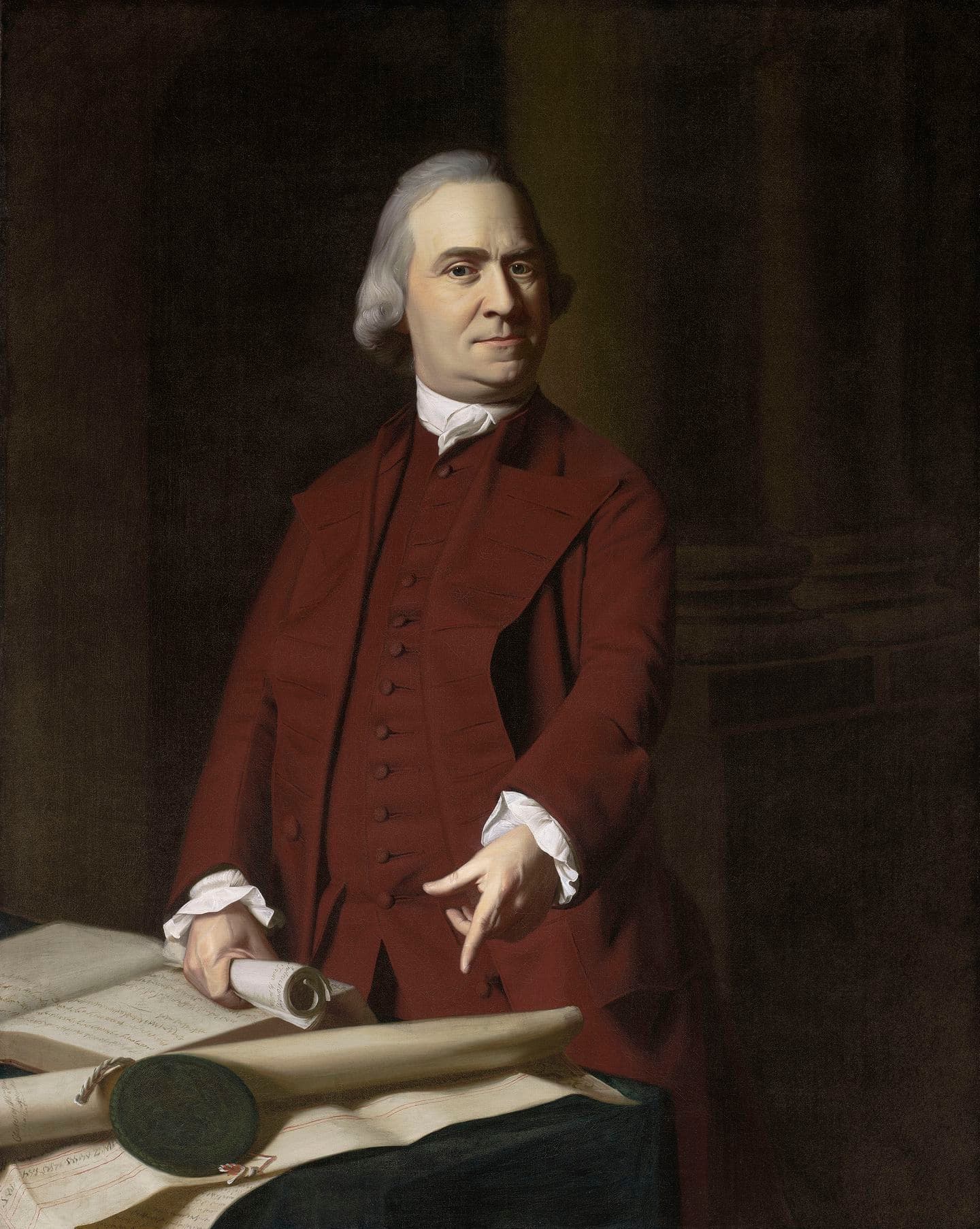
Portrait of Samuel Adams
The Quiet Flame
Samuel Adams did not appear, at first glance, to be a revolutionary force.
In private, he was described as gentle — a man of “suavity of temper” and “dignified manners,” reserved among strangers but warm and companionable among friends. He preferred thoughtful conversation, shared stories, and the quiet rhythms of daily devotion.
He ate little. Slept little. Thought much.
He had no interest in wealth, openly embracing poverty as a consequence of principle. Where others sought advancement, Adams seemed almost indifferent to personal gain — guided instead by a deeper sense of purpose.
And yet, this same man became one of the central forces behind the American Revolution. Not through volume. But through conviction.
Samuel Adams is often perceived through his public role — a passionate agitator, a political organizer — but his private life reveals a different foundation: He was an INFJ. Not driven by control or expansion — but by a deep, internal vision of moral order.
The Internal Sense of Direction
At his core, Adams was guided by a singular, internal sense of direction.
His actions were not reactive or opportunistic. They were rooted in a long-term understanding of what liberty meant — and what it required. He did not simply oppose British authority; he interpreted it as part of a larger pattern of moral and political decay.
Once that vision crystallized, he committed to it fully.
This is Ni: not exploring many paths, but seeing one clearly and following it with conviction.
Alignment and Persuasion
Despite his private reserve, Adams was deeply attuned to people.
He was known as a mediator in his community, able to smooth over disputes and maintain harmony. His influence was not domineering, but relational and persuasive — guiding others toward alignment rather than forcing them into it.
Even his political work reflects this. He did not lead through authority alone, but through shared sentiment, collective identity, and moral appeal.
This is Fe in support of Ni: vision translated into human connection and influence.
The Supportive Clarity
Adams possessed a quiet internal clarity.
His reasoning was structured, but not displayed for its own sake. He held consistent principles and could articulate them when needed, but his focus was not on intellectual debate or system-building.
Instead, his thinking served to refine and support his convictions, not replace them. This reflects tertiary Ti providing internal structure to his vision.
Material Indifference
Adams showed little attachment to material reality.
He was described as indifferent to wealth, even embracing poverty as a point of pride. His habits — eating little, sleeping little — reflect a detachment from physical comfort, not a pursuit of it.
Even in practical matters, such as his role as a tax collector, he was notably ineffective — not due to incompetence, but due to lenience and disinterest in enforcement.
The physical world is secondary to meaning. This detachment from sensory reality is characteristic of inferior Se.
Why INFJ Over ESTJ or ENTJ
Why not ESTJ?
ESTJs enforce structure. Adams softened it. While he held roles that required practical execution, he was known to be lenient and disinterested in strict enforcement. This runs counter to Te–Si efficiency. An ESTJ upholds systems through discipline; Adams upheld principles that often conflicted with the system.
Why not ENTJ?
ENTJs drive outcomes. Adams guided conviction. His style was not forceful, strategic dominance. He did not seek control or expansion of power. His influence came through moral persuasion, relational trust, and ideological consistency rather than strategic command.
An ENTJ imposes direction onto the world. Adams held to a direction within himself, and moved the world by aligning others to it.
Connected Figures
Further Reading
- Samuel Adams: A Life — Ira StollA concise, sympathetic biography tracing Adams from Boston tax collector to father of the Revolution.
- Samuel Adams: Father of the American Revolution — Mark PulsFocuses on Adams's organizational genius and the grassroots network that made the patriot movement possible.
- The Founders on the Founders: Word Portraits from the American Revolutionary Era — John P. Kaminski (ed.)Collects contemporary observations of Revolutionary figures, including revealing portraits of Adams by allies and opponents alike.
- American Scripture: Making the Declaration of Independence — Pauline MaierPlaces Samuel Adams and the Continental Congress in the broader context of colonial resolutions and Revolutionary ideology.
