 Historical Figure MBTI
3 min read
#39 · 2-13-26 · The Age of Chivalry
Louis VII of France
Conscientious King · Steward of Continuity
1120 — 1180
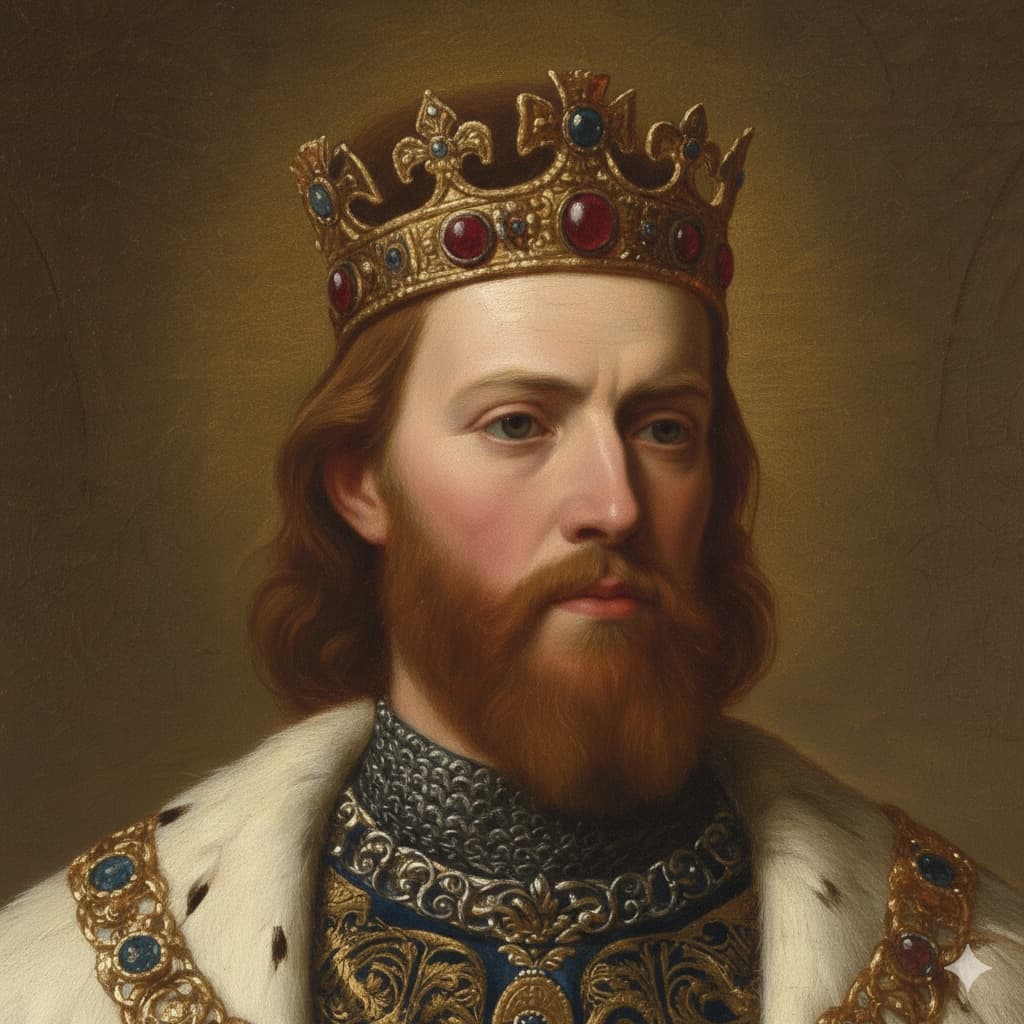
AI-assisted Portrait of Louis VII of France.
The King Who Was Meant for the Church
Born in 1120 to King Louis VI of France, Louis VII was not raised for conquest. As the younger son, he was originally intended for ecclesiastical life. His early education centered on theology, scripture, and moral instruction — training not for dominance, but for devotion.
When his elder brother died unexpectedly, Louis inherited the throne. He did not grow into kingship through ambition. He stepped into it through obligation. His reign would span over four decades — defined not by sweeping expansion or architectural reinvention, but by conscientious rule, moral seriousness, and steady preservation of Capetian authority.
Louis VII aligns most clearly with ISFJ: a governing pattern of preservation over vision, duty over restructuring, and conscientious stewardship over strategic expansion.
He did not seek to transform France into something new. He sought to guard what it already was.
Si — Dominant
Louis governed through continuity. His rule focused on stabilizing royal authority within existing structures rather than redesigning them. He respected tradition, leaned on precedent, and moved cautiously within established frameworks.
Even his decision to join the Second Crusade was not driven by grand geopolitical reimagining, but by personal moral reckoning. After the tragic burning of Vitry, which reportedly weighed heavily on his conscience, Louis saw crusade participation as penance. This is not future-architecting — it is tradition-bound moral responsibility.
Fe — Auxiliary
Louis understood kingship as relational duty. He was described as devout, earnest, and sincere. He sought alignment with the Church and was deeply concerned with moral perception and spiritual legitimacy.
Unlike more forceful monarchs, he did not govern through intimidation or spectacle. His authority derived from perceived righteousness and consistency rather than charismatic dominance. Even in his troubled marriage to Eleanor of Aquitaine, there is little evidence of cruelty or suppression — the annulment appears rooted in incompatibility and dynastic necessity, not emotional volatility.
Ti — Tertiary
Louis demonstrated thoughtful reflection, particularly in moments of crisis. His response to moral failure was internal processing rather than outward aggression. He was capable of measured reasoning, but this function did not drive his rule — his decisions were filtered first through conscience and relational responsibility.
Ne — Inferior
Louis did not display strong exploratory ideation or visionary expansion. The Second Crusade, though bold in scale, was reactive and faith-driven rather than strategically imaginative. He relied heavily on advisors for military logistics and broader political maneuvering. His reign lacked sweeping structural innovation — he was not redesigning the monarchy; he was preserving it.
Why Not INFJ?
Why not INFJ?
Louis' religious devotion can superficially suggest INFJ. However, INFJs typically exhibit strong long-range ideological vision and pattern-based reorientation of systems. Louis does not appear to have governed from a singular transformative vision. His decisions were rooted in established tradition and moral duty rather than in reimagining France's trajectory. His spirituality expressed itself as conscientious obedience, not prophetic reform. He maintained rather than restructured. He preserved rather than projected.
The Contrast
When placed beside Eleanor of Aquitaine — likely an ENTJ — the mismatch becomes clearer. Eleanor moved toward leverage, expansion, and dynastic recalibration. Louis moved toward continuity, conscience, and ecclesiastical alignment.
Their marriage did not fail because one was weak and the other strong.
It failed because one governed through preservation, and the other through strategic positioning.
Connected Figures
Further Reading
- Eleanor of Aquitaine: A Life — Alison WeirThe most accessible biography of Louis' first queen, with substantial coverage of their marriage and its dissolution.
- The Crusades: The Authoritative History of the War for the Holy Land — Thomas AsbridgeCovers the Second Crusade in depth — Louis VII's defining (and disastrous) military venture.
- Eleanor of Aquitaine: Queen of France, Queen of England — Ralph V. TurnerA scholarly biography that examines Louis' temperament and reign through the lens of his fractured partnership with Eleanor.
- The Making of the Middle Ages — R. W. SouthernClassic study of 12th-century European civilization — essential context for understanding Louis' world of Capetian kingship and ecclesiastical politics.
