 Historical Figure MBTI
3 min read
#38 · 2-13-26 · The Age of Chivalry
Eleanor of Aquitaine
Duchess · Double Queen · Architect of Dynastic Power
1122 — 1204
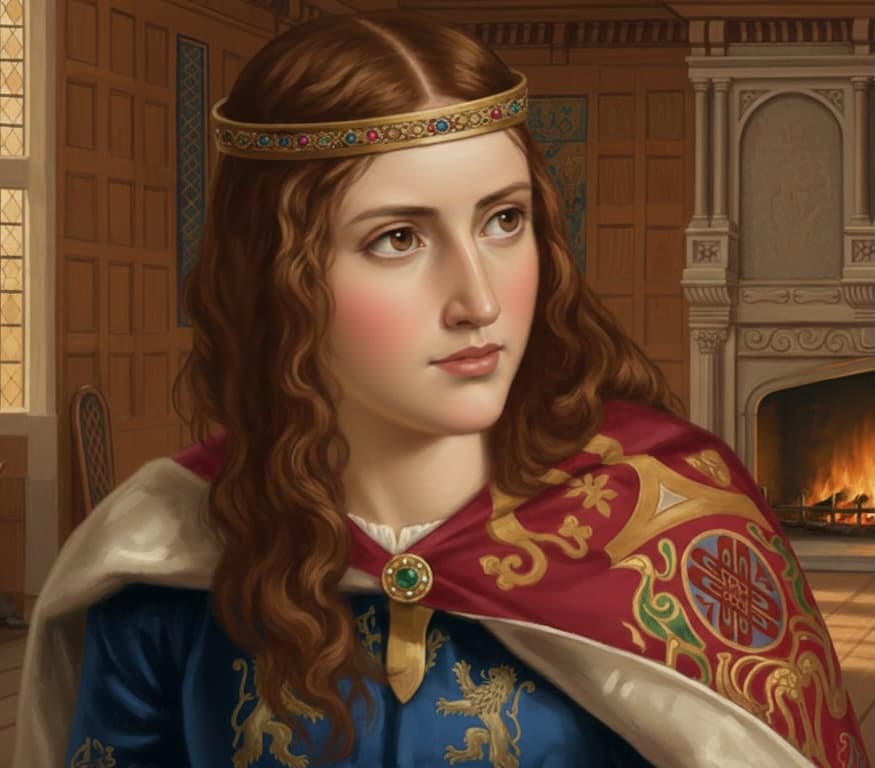
AI-assisted Portrait of Eleanor of Aquitaine.
The Duchess Who Would Not Be Contained
Born around 1122 into the powerful duchy of Aquitaine, Eleanor inherited one of the wealthiest and most culturally sophisticated territories in Europe at the age of fifteen. She was not merely a royal bride — she was a geopolitical asset.
She became Queen of France through marriage to Louis VII. When that union proved politically and temperamentally mismatched, it was annulled. Within weeks, she married Henry II of England — a union that created the Angevin Empire and redrew the map of medieval Europe.
She bore eight children, rode on crusade, supported rebellion when dynastic succession was threatened, and endured fifteen years of imprisonment under Henry II. Upon his death, she immediately resumed political leadership — negotiating ransoms and managing alliances into her seventies. Eleanor is most clearly ENTJ: an executive force who governed through structural command, not relational harmony.
She did not orchestrate hearts. She consolidated kingdoms.
Te — Dominant
Eleanor's defining pattern is operational agency. She consistently moved toward power centers and secured leverage: inheriting Aquitaine, aligning with France, then pivoting decisively to England when conditions shifted. Her second marriage was not romantic impulsivity — it was geopolitical recalibration.
During her regency for Richard I, she did not retreat into symbolic influence. She negotiated treaties, raised funds, coordinated political stabilization, and managed succession structures. Her actions demonstrate comfort in command and an instinct for executive responsibility.
Ni — Auxiliary
Beneath her decisiveness lies long-arc strategy. Her rebellion against Henry II was not emotional volatility; it was dynastic foresight. When succession structures threatened her children's inheritance, she aligned with the future rather than the present authority.
Her life shows continuity of direction across decades. Even during fifteen years of confinement, she remained politically relevant, re-emerging immediately upon opportunity. That level of internal coherence under constraint suggests strong Ni support to her Te execution.
Se — Tertiary
Eleanor demonstrated comfort in bold action: traveling extensively, riding on crusade, navigating volatile courts. Yet these actions were goal-aligned rather than thrill-seeking. Her decisiveness and presence in high-stakes environments suggest accessible Se — a willingness to act directly when circumstances required it.
Fi — Inferior
Eleanor was not remembered as emotionally demonstrative or confessionally expressive. She was described as proud, formidable, and difficult to dominate. Her values appear internal and firm rather than relationally negotiated. When her authority or her children's futures were threatened, she did not soften to preserve harmony.
Why Not ENFJ?
Why not ENFJ?
Eleanor is often typed ENFJ due to her association with troubadour culture and the mythology of "courts of love." But cultural patronage does not automatically signal Fe dominance. ENFJs lead through relational alignment and consensus-building. Eleanor's pattern does not center harmony — it centers leverage. When her marriage to Louis VII failed, she did not attempt to preserve unity; she exited strategically. When Henry II marginalized her, she did not mediate emotionally — she backed rebellion. Her leadership was not about sustaining relational cohesion. It was about maintaining dynastic power.
The Ecosystem
Her contrast with Louis VII — likely an ISFJ — highlights the mismatch between conscientious piety and expansion-driven governance. With Henry II, an apparent ENTJ himself, we see both synergy and eventual power struggle: two executive forces colliding over succession and control.
Eleanor did not merely survive these men.
She remained a central force among them.
Connected Figures
Further Reading
- Eleanor of Aquitaine: A Life — Alison WeirThe most accessible full biography — narrative-driven, richly sourced, essential for the political arc.
- Eleanor of Aquitaine: Queen of France and England — Ralph V. TurnerScholarly and measured, strong on the legal and dynastic dimensions of her two reigns.
- Eleanor of Aquitaine and the Four Kings — Amy KellyA classic of medieval biography — sweeping, literary, and still the most vivid account of her courts.
- The World of Eleanor of Aquitaine — Marcus Bull and Catherine Léglu (eds.)Essay collection covering troubadour culture, crusade, and Eleanor's political networks in depth.
