 Historical Figure MBTI
3 min read
#5 · 1-26-26 · The Italian Renaissance
Tommaso dei Cavalieri
Roman Nobleman · Muse · Lifelong Companion to a Titan
c. 1509 — 1587
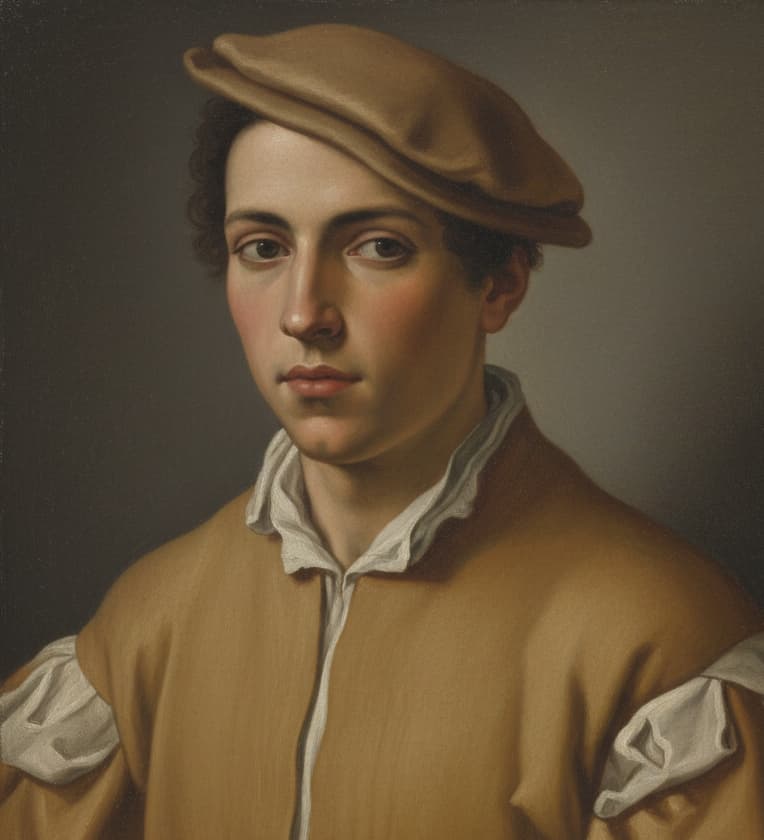
AI-assisted Portrait of Tommaso dei Cavalieri
The Catalyst
History often remembers the titans — the artists, the conquerors, the inventors — but forgets the catalysts who ignited them. Tommaso dei Cavalieri was not a creator of masterpieces in stone or paint, but he was a masterpiece of spirit. A Roman nobleman of exceptional beauty and intellect, he entered Michelangelo Buonarroti's life like a sudden burst of sunlight into a dark, cluttered workshop.
While Michelangelo was tempestuous, rugged, and solitary, Tommaso was radiant, curious, and deeply empathetic. He was the open window to the artist's closed room. Their bond was one of the most profound in Renaissance history — a love that transcended the physical to become something spiritual, intellectual, and enduring.
“If I am not mistaken, the world has never known a more beautiful young man, nor one more virtuous.” — Varchi
Tommaso dei Cavalieri is best understood as an ENFP — a soul driven by connection, idealism, and the exploration of human potential. His relationship with Michelangelo reveals a man who operated with intuitive empathy and a zest for intellectual and emotional discovery.
Drawn to Hidden Depth
Tommaso was drawn to the mind of the genius. Despite the age gap and Michelangelo's difficult reputation, Tommaso saw the hidden depth and potential within the artist. He was not intimidated by the “terribilità” of the master — he was fascinated by it.
This openness to the abstract, the complex, and the potential of others is the hallmark of Ne dominance. Where most people saw an impossible, exhausting man, Tommaso saw possibility.
Devotion Grounded in Values
His devotion was not born of duty, but of deep personal resonance. Tommaso valued authenticity and emotional truth. He navigated the complex social waters of Rome not just with charm, but with a genuine moral compass that earned him the respect of popes and artists alike.
He understood Michelangelo's internal torment and met it with validation, not judgment. That quality — meeting intensity with acceptance rather than correction — is Fi in action: not managing others' feelings, but honoring them.
Michelangelo — The Shadow Pairing
The dynamic between Tommaso (ENFP) and Michelangelo (INTJ) is a classic shadow pairing. They shared the same cognitive functions but in reverse order — Ne-Fi-Te-Si versus Ni-Te-Fi-Se.
Michelangelo, the tortured planner, saw in Tommaso the freedom and spontaneity he denied himself. Tommaso, the intuitive explorer, found in Michelangelo a depth and intensity that anchored his wandering spirit.
Tommaso remained by Michelangelo's side until the very end, holding the artist's hand as he took his final breath — the final, faithful act of a true companion. Not a disciple. Not a subject. A counterweight.
Connected Figures
Further Reading
- Michelangelo: A Life in Six Masterpieces — Miles J. UngerPlaces the Tommaso relationship at the center of Michelangelo's late creative life.
- The Sonnets of Michelangelo — Michelangelo Buonarroti, trans. Elizabeth JenningsThe primary source — over three hundred poems addressed to or inspired by Tommaso dei Cavalieri.
- Michelangelo and the Reform of Art — William E. WallaceScholarly analysis of Michelangelo's late period, including his relationships and spiritual evolution.
- The Agony and the Ecstasy — Irving StoneA biographical novel that dramatizes the Tommaso relationship within Michelangelo's full life arc.
