 Historical Figure MBTI
4 min read
#4 · 1-25-26 · The Italian Renaissance
Michelangelo Buonarroti
Sculptor · Painter · Architect · Poet of the High Renaissance
1475 — 1564
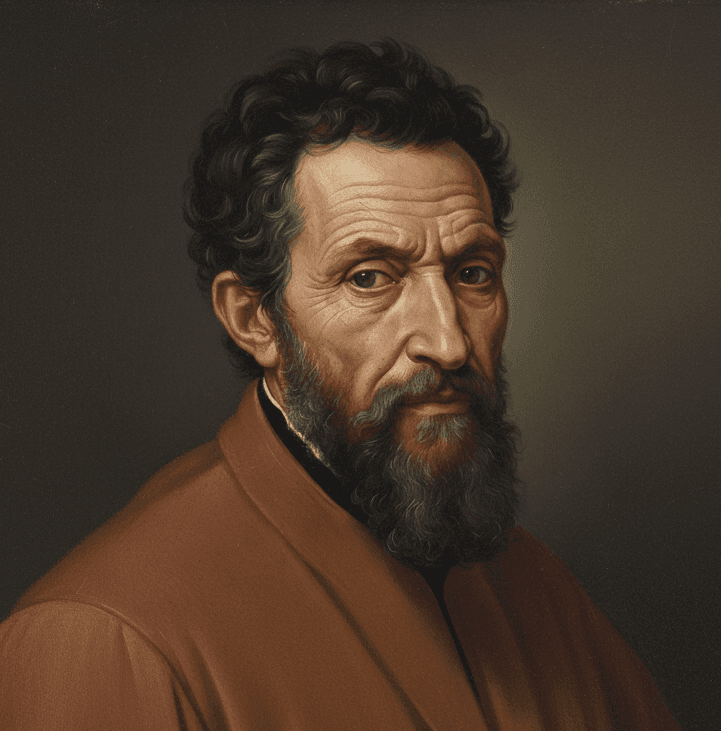
AI-assisted Portrait of Michelangelo Buonarroti
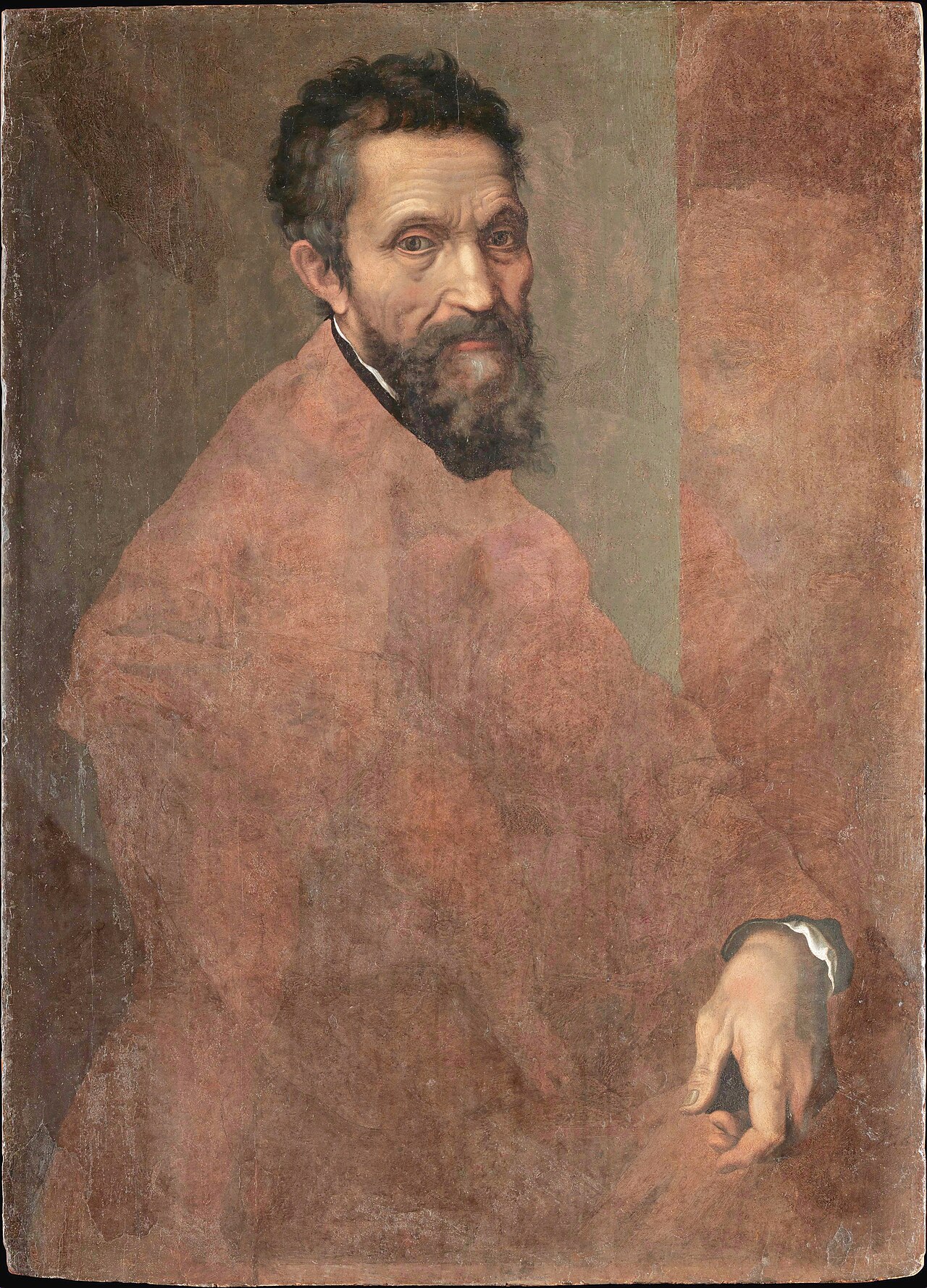
The Reluctant Vessel
Born in 1475 in Caprese, Michelangelo Buonarroti did not see himself as a creator in the modern sense. He saw himself as a vessel — a flawed, human intermediary between divine perfection and corrupted matter. Where Leonardo da Vinci sought to understand nature, Michelangelo sought to submit to something higher than it.
From a young age, he demonstrated an obsessive devotion to form, anatomy, and scale, yet he lived in constant internal conflict. He despised painting, mistrusted patrons, avoided social life, and carried a lifelong sense of spiritual inadequacy. Art was not joy. It was obligation.
Michelangelo worked not to explore ideas, but to extract truth — believing that every block of marble already contained its final form, waiting to be released through suffering and discipline. This was not Renaissance optimism. This was Renaissance severity.
Often mistyped as an ISFP due to his artistic output and emotional intensity, a closer examination reveals a different conclusion: Michelangelo was an INTJ — one whose intuition was shaped not by freedom, but by divine pressure.
His life unfolded under the heavy gravity of Catholic doctrine, guilt, and transcendence. Unlike Leonardo's expansive curiosity, Michelangelo's genius turned inward, compressing faith, fear, and ambition into monumental expressions of human struggle before God.
The Vision Before the Stone
Michelangelo's mind was governed by a rigid internal ideal of form — not experimentation, but inevitability. He did not “play” with compositions. He saw the final result long before his hands touched the stone.
This is evident in his belief that sculpture was an act of revelation rather than invention. The figure already existed; the artist's role was to remove everything that did not belong. This deterministic worldview — where outcomes are pre-seen and execution is merely alignment — is classic Ni dominance.
His themes were obsessively consistent: the tension between flesh and spirit, human imperfection before divine law, the terror of judgment. Across decades, mediums, and commissions, the same vision reasserted itself with increasing intensity.
Discipline as Doctrine
Despite his spiritual torment, Michelangelo was ruthlessly disciplined in execution. He mastered anatomy through dissection, engineered scaffolding systems for the Sistine Chapel, and negotiated aggressively with patrons to preserve control over his work.
His process was methodical, solitary, and endurance-based. He worked for years in physical agony, ignoring comfort, relationships, and reputation. This was not Fi-led expression — it was Te enforcement of an internal Ni vision, regardless of cost.
When commissions conflicted with his standards, he resisted, delayed, or abandoned them entirely. Utility served vision, not the other way around.
The Private World of Shame and Longing
Michelangelo's emotional world was private, severe, and morally charged. His poetry reveals deep self-criticism, shame, and longing for divine forgiveness. He rarely sought validation and distrusted praise, viewing it as spiritually dangerous.
His values were deeply personal and internally regulated. He was uninterested in social harmony, reputation, or public affection. Relationships were few, intense, and carefully guarded. This reflects tertiary Fi — present, powerful, but contained and often punitive.
The most profound expression of this inner world appeared in his late-life devotion to Tommaso dei Cavalieri, a Roman nobleman who became for Michelangelo a rare source of light in his perceived darkness. This relationship, documented in intense sonnets and drawings, reveals the vulnerability that lay beneath Michelangelo's monumental severity — a mind that sought to balance divine judgment with human connection.
The Body as a Tool to Be Overridden
Michelangelo's relationship with the physical world was strained and compulsive. Though he worked in intensely sensory mediums, his body paid the price: chronic pain, exhaustion, and isolation.
He did not indulge in sensory pleasure. Instead, Se appeared as endurance — long hours, physical punishment, and extreme bodily demands imposed in service of Ni vision. This is characteristic of inferior Se: the body as a tool to be overridden, not enjoyed.
Why INTJ Over ISFP
Why not ISFP?
ISFPs lead with Fi–Se: present-moment expression, personal meaning, and sensory immersion. Michelangelo's process was the opposite. He despised painting despite mastering it, avoided decorative pleasure, and treated art as moral labor rather than emotional release. Art does not equal Fi-dominance. Suffering does not equal emotional openness.
His creations were not explorations of feeling but manifestations of a pre-existing internal blueprint. The scale, coherence, and ideological consistency of his work across decades point to Ni dominance, not Se spontaneity. Michelangelo's genius was not expressive — it was architectural.
Connected Figures
Further Reading
- The Agony and the Ecstasy — Irving StoneA vivid biographical novel tracing Michelangelo's life from his apprenticeship to the Sistine Chapel and beyond.
- Michelangelo: A Life in Six Masterpieces — Miles J. UngerExamines six defining works to illuminate Michelangelo's character, ambition, and spiritual intensity.
- The Complete Poems of Michelangelo — John Frederick Nims (trans.)The sonnets and madrigals in which Michelangelo's private emotional world — shame, longing, devotion — surfaces most directly.
- Michelangelo and the Pope's Ceiling — Ross KingA richly detailed account of the four grueling years Michelangelo spent painting the Sistine Chapel ceiling.
