 Historical Figure MBTI
3 min read
#1 · 1-22-26 · The Italian Renaissance
Leonardo da Vinci
Polymath · Painter · Engineer · Architect of the High Renaissance
1452 — 1519
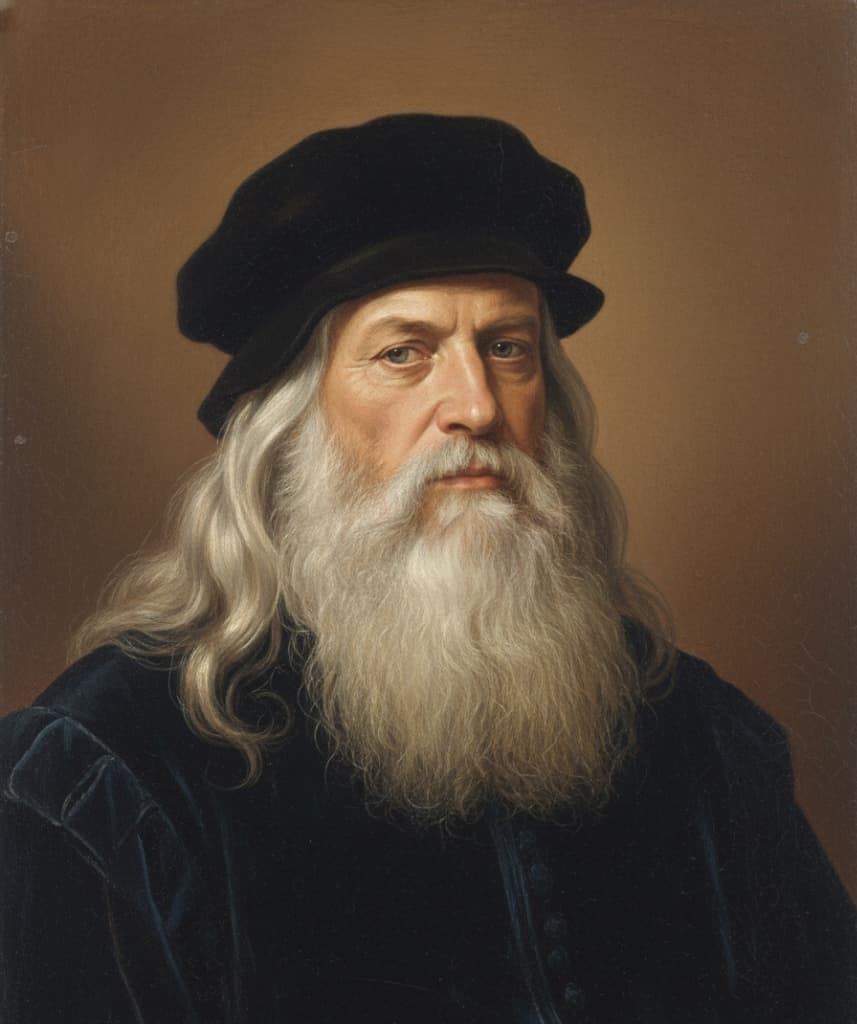
AI-assisted Portrait of Leonardo da Vinci
The Universal Man
Born on April 15, 1452, in the small Tuscan town of Vinci, Leonardo would become the quintessential Renaissance polymath — a mind that refused to recognize borders between art, science, engineering, and philosophy. He saw no meaningful distinction between them. To understand the beauty of a painting, one must first understand the mechanics of light and the anatomy of the human form.
In an era dominated by dogma, Leonardo insisted on direct observation. He believed nature was the ultimate teacher, and that the human mind could compress its complexity into unified, elegant truths.
He is often categorized as an ENTP — the restless polymath, the idea-hopper. But a closer look at his cognitive patterns points somewhere different.
That's the INTJ in da Vinci: a singular, converging vision — Ni pointing at the truth beneath appearances, Te building the machinery to prove it.
He wasn't asking what else could this be? He was asking what is the underlying principle that explains all of this?
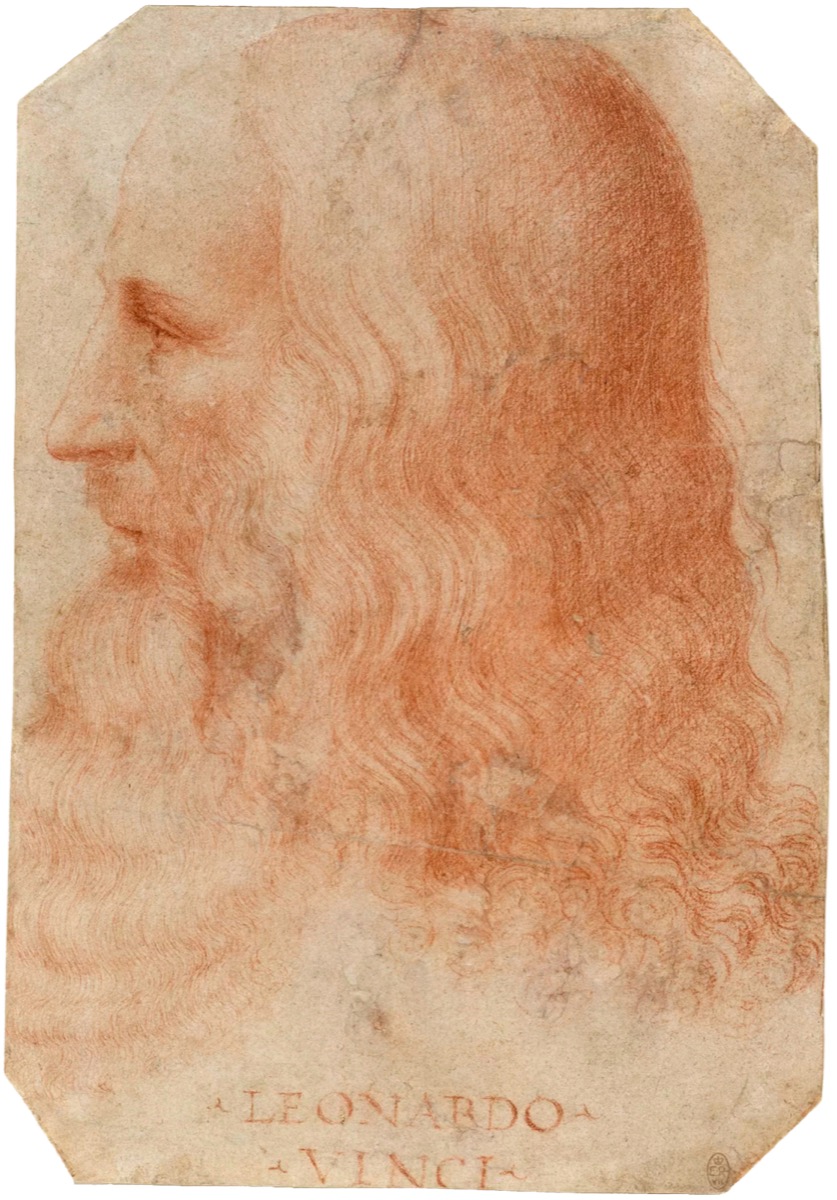
The Architecture of Everything
Da Vinci's cognition was fundamentally vision-driven, not idea-hopping for stimulation. His notebooks reveal long-term conceptual frameworks rather than spontaneous brainstorming.
His work consistently sought unifying truths: how anatomy explains motion, how light explains beauty, how mechanics explain life. This is classic Ni — compressing reality into elegant internal models. Many of his projects spanned decades, evolving slowly as his internal vision sharpened.
That level of singular, future-oriented synthesis is far more Ni than Ne. An Ne mind asks what else is possible; an Ni mind asks what is ultimately true.
Making Vision Physical
Despite the “artist” label, da Vinci was intensely pragmatic in execution. He documented experiments, measured proportions obsessively, tested hypotheses, and iterated designs with real-world constraints in mind.
His engineering sketches weren't abstract musings — they were actionable blueprints. He worked multiple commissions simultaneously, optimized workflows, and applied his insights directly to warfare, architecture, and infrastructure.
This wasn't playful ideation. It was results-oriented system building — a strong Te pairing with Ni vision.
The Private Compass
Da Vinci was notoriously private, emotionally reserved, and resistant to external moral or social expectations. He didn't marry, didn't publicly justify himself, and showed little interest in conforming to societal roles.
His lifelong loyalty to a small inner circle — especially Salai — and his refusal to compromise artistic integrity even when it cost him patrons, suggest a quiet but firm Fi core. He followed his sense of meaning, not public approval.
His values were internal, not performative. He built for truth, not for applause.
The Unfinished Canvas
While highly observant, da Vinci struggled with follow-through and present-moment closure. Many projects remained unfinished — not due to lack of ideas, but because execution in the physical world lagged behind his evolving inner vision.
His fascination with sensory detail — muscle fibers, water flow, facial expressions — reads less like Se dominance and more like inferior Se obsession: periods of intense immersion used to feed Ni insights, often at the expense of deadlines and practicality.
The Mona Lisa traveled with him for years. He kept revising it. It was never formally delivered to the man who commissioned it. An Ni mind that keeps refining the internal model rarely gets the signal that the work is truly done.
Why INTJ Over ENTP
Why not ENTP?
ENTPs lead with Ne — rapid external idea generation, conversational exploration, social experimentation. Da Vinci was introspective, solitary, and internally driven. His creativity wasn't sparked by external dialogue but by prolonged isolation, observation, and refinement. Breadth alone does not equal Ne.
We should also account for genius muddying type expression. A highly gifted INTJ operating in the Renaissance — without modern specialization — can easily appear scattered on the surface. Many high-Ni INTJs struggle with completion because their internal standard keeps evolving faster than the external world can keep up. His rival Michelangelo reportedly burned large quantities of his own drawings toward the end of his life, unwilling to let imperfect work represent his vision. The unfinished project isn't always a failure of effort — sometimes it's a refusal to let the real fall short of the ideal.
Connected Figures
Further Reading
- Leonardo da Vinci — Walter IsaacsonThe definitive modern biography — exhaustive on the notebooks, the unfinished projects, and the psychology behind the vision.
- The Notebooks of Leonardo da Vinci — Leonardo da Vinci (ed. Jean Paul Richter)Primary source. Richter's selection of the notebooks in translation is the closest you can get to Leonardo's own voice.
- Lives of the Most Excellent Painters, Sculptors, and Architects — Giorgio VasariThe Renaissance-era account that shaped how we think about Leonardo — hagiographic but essential for period context.
- Leonardo and the Last Supper — Ross KingA focused study of Leonardo's most ambitious commission and what it reveals about his working method and perfectionism.
