 Historical Figure MBTI
4 min read
#3 · 1-24-26 · The Italian Renaissance
Francesco Melzi
Painter · Pupil · Guardian of Leonardo's Legacy
c. 1491 — 1570
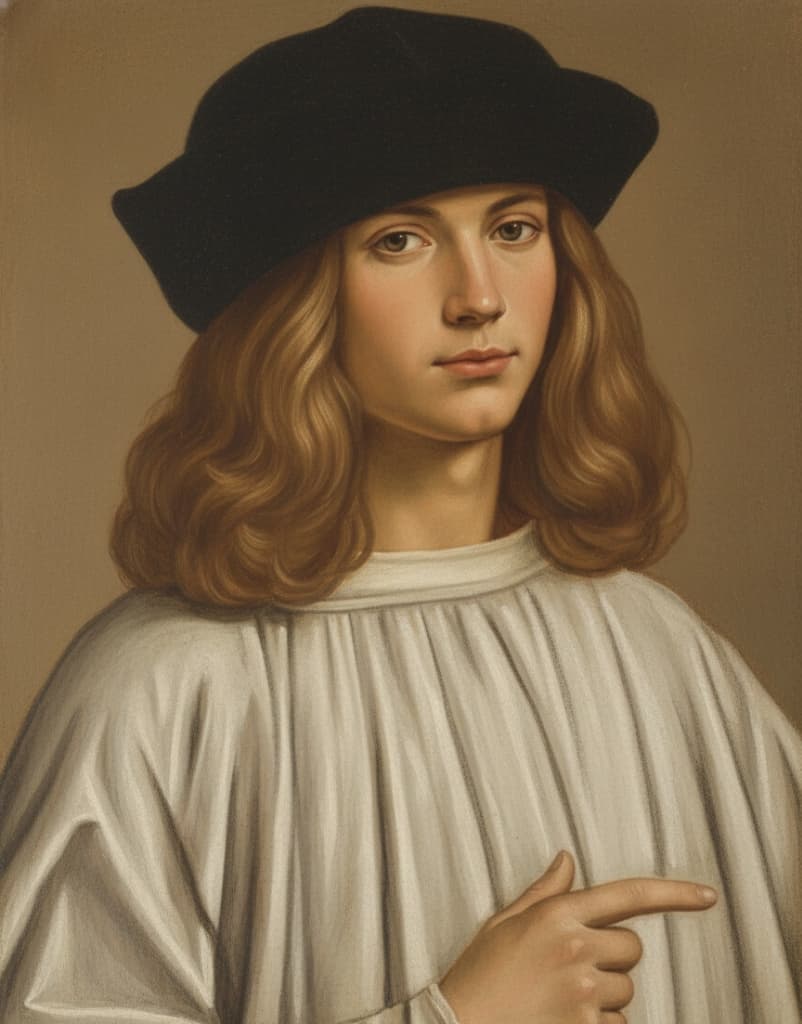
AI-assisted Portrait of Francesco Melzi
The Guardian of the Legacy
Francesco Melzi was the stabilizing force of Leonardo da Vinci's final years. Born into Milanese nobility, he traded a life of aristocratic ease for a life of service to a master whose genius was as chaotic as it was brilliant.
While others were drawn to Leonardo for fame or money, Melzi was drawn by duty and profound personal devotion. He became the “son” Leonardo never had — providing the administrative and emotional structure that allowed the aging polymath to work in peace.
The case for ISFJ is one of quiet deduction rather than flamboyant evidence. Melzi was so devoted to his master that his own personality often retreated into the shadow of Leonardo's brilliance.
That retreat was not weakness. It was the signature of a mind that found its highest purpose in preservation rather than creation.
The Archive of a Life
Melzi's entire adult life was an exercise in archival preservation. After Leonardo's death in 1519, Melzi didn't merely keep the notebooks — he spent decades cataloging, organizing, and transcribing thousands of pages of mirror-writing.
This required a high-functioning Si preference for detail, sequence, and historical continuity. Unlike the disruptive Salai, Melzi operated within established social hierarchies with grace. He valued the proper way of doing things, which is why Leonardo trusted him with his legal estate and most precious intellectual secrets.
He was a man who found meaning in the known, the documented, and the preserved.
The Bridge Between Worlds
Melzi's social personality was defined by harmony, diplomacy, and nurturing. In Leonardo's final years at Clos Lucé in France, he acted as a buffer between the master and the outside world — managing the household, handling the King's correspondence, providing the emotional stability Leonardo needed as his health declined.
His letter to Leonardo's brothers following the master's death is a masterclass in Fe: deeply empathetic, honoring the family's grief while expressing a profound, selfless love for the deceased. He sought to maintain relationships and honor the feeling of the legacy, ensuring that the transition of power and property was handled with emotional intelligence.
He didn't just manage Leonardo's affairs. He held the emotional world together when the center was gone.
Logic in Service of Loyalty
Melzi used logic as a tool for organization rather than a weapon for debate. To compile the Codex Urbinas — the Treatise on Painting — he had to impose internal logic on Leonardo's scattered, non-linear thoughts, creating a coherent system from thousands of fragments.
His own art reflected this tertiary Ti. He was a highly skilled painter, but his work was correct rather than innovative — he mastered Leonardo's techniques with scientific precision, ensuring every shadow and proportion was logically sound. For Melzi, logic served the preservation of truth, not the disruption of it.
The Fear of Loose Ends
Melzi struggled with uncertainty and chaos — a trait that likely made his relationship with the high-Ni Leonardo both challenging and necessary. Leonardo was notorious for leaving things unfinished, and this open-endedness was a source of deep anxiety for Melzi.
His life's mission became closing the loops — finishing what Leonardo started, ensuring nothing was scattered or lost. While Salai was an opportunist who thrived on change, Melzi sought a singular, lifelong path. His inferior Ne manifested as a protective urgency: a fear that the legacy, if left to chance, would dissolve.
Why ISFJ Over INFJ
Why not INFJ?
An INFJ would likely have been frustrated by fifty years of organizing someone else's work. They would have wanted to evolve the ideas into something new, to add their own prophetic vision. Melzi, however, was a Preserver — he found his highest purpose in the concrete, tangible task of saving physical manuscripts, not reimagining them.
The INTJ + ISFJ dynamic is the ultimate Architect and Builder pairing. Leonardo provided the vision, the theory, and the futuristic blueprints. Melzi provided the devotion, the physical labor, and the meticulous care to ensure those blueprints didn't turn to dust. Leonardo lived in the future; Melzi ensured the future actually got to see Leonardo.
Connected Figures
Further Reading
- Leonardo da Vinci — Walter IsaacsonThe most thorough modern biography of Leonardo, with substantial coverage of Melzi's role as executor and companion.
- Leonardo da Vinci: The Complete Paintings and Drawings — Frank Zöllner & Johannes NathanScholarly catalogue documenting the works Melzi helped preserve and attribute.
- The Notebooks of Leonardo da Vinci — Jean Paul Richter (ed.)The compiled notebooks that survived largely because of Melzi's stewardship — the direct legacy of his life's work.
- Leonardo and the Italian Renaissance — Nathaniel HarrisAccessible survey of the Renaissance context in which Melzi served as Leonardo's household anchor.
