 Historical Figure MBTI
3 min read
#2 · 1-23-26 · The Italian Renaissance
Salai
Pupil · Companion · The Little Devil of Leonardo's Studio
1480 — 1524
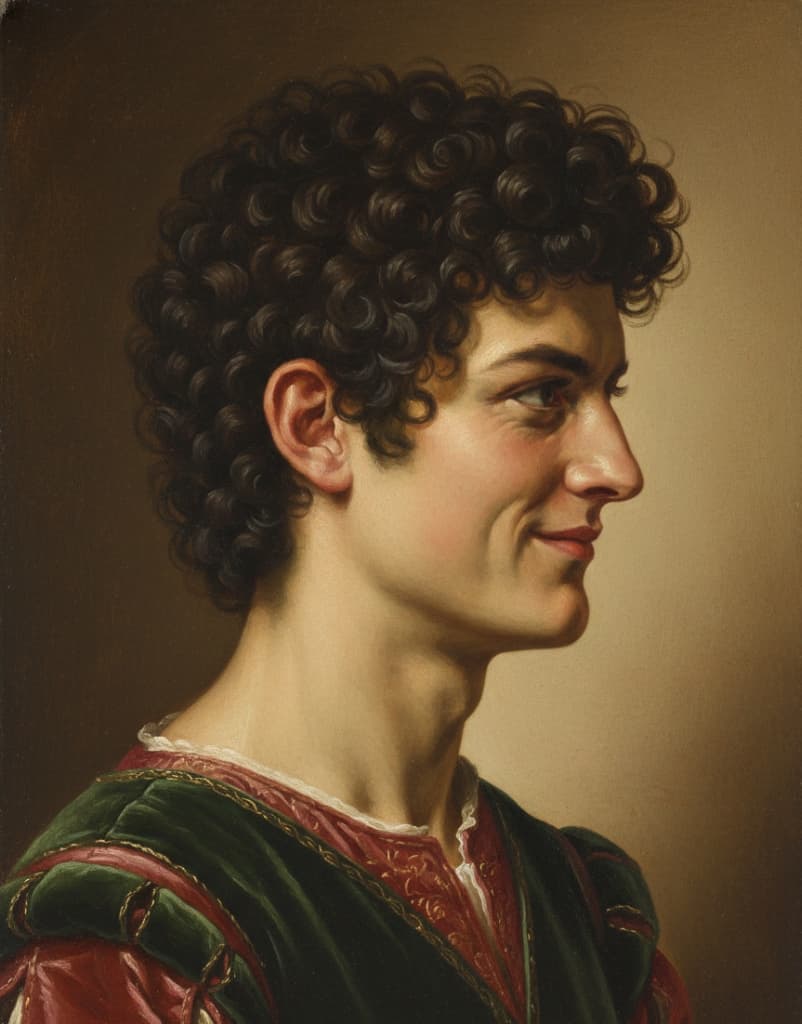
AI-assisted Portrait of Salai (Little Devil)
The Spark in the Studio
Gian Giacomo Caprotti — better known as Salai, “Little Devil” — entered Leonardo da Vinci's life as a young boy and remained his companion for over 25 years. Despite being repeatedly described by Leonardo himself as a liar, thief, troublemaker, and general menace, Leonardo kept him, paid him, traveled with him, and eventually left him a significant inheritance.
This dynamic alone should give us pause. Why would one of history's most exacting minds tolerate such a disruptive presence for a quarter century?
The answer is cognitive. An ENTP brings exactly what an INTJ cannot generate alone — spark, spontaneity, and the irreverent aliveness of the present moment.
The Spark That Won't Sit Still
Salai was curious, impulsive, playful, and constantly pushing boundaries. He tested limits not out of malice, but out of experimentation — to see what would happen, what he could get away with, what new configuration of events his actions might produce.
He embodied novelty-seeking, improvisation, and opportunism. He wasn't focused on one craft or a long-term vision. He drifted, adapted, and inserted himself into situations through charisma and timing rather than discipline or mastery.
That restless, generative energy — classic Ne dominance — was precisely what made him both maddening and irreplaceable.
Clever, Not Principled
Salai survived through cleverness, not values or structure. He knew how to recalibrate behavior just enough to stay in Leonardo's orbit — a finely calibrated reading of what he could push and when to pull back.
That's Ti: internal logic, tactical thinking, and adaptive intelligence. He wasn't emotionally confessional or morally expressive. Instead, he used wit and flexibility to navigate power dynamics — staying useful, staying close, staying.
The Art of Staying
Salai had a clear social magnetism. People tolerated him far longer than they logically “should have.” Leonardo himself — one of the most exacting minds in history — remained attached despite constant frustration.
That points to tertiary Fe charm: knowing how to soften impact, diffuse tension, and remain likable even when unreliable. Salai didn't survive in Leonardo's world through brilliance — he survived by making the room feel better when he was in it.
The Absent Foundation
Routine, discipline, and reliability were Salai's weakest traits. Leonardo complained endlessly about his lack of follow-through. This wasn't rebellion — it was inferior Si: poor consistency, poor respect for structure, a mind that lived in the moment and forgot what had been agreed to.
Where Francesco Melzi would preserve everything Leonardo left behind, Salai preserved nothing except the relationship itself.
Why ENTP Over ENFP
Why not ENFP?
Salai was not values-driven, emotionally expressive, or authenticity-focused. There's no evidence of Fi moral orientation, guilt spirals, or emotional self-definition. He didn't rupture relationships over feelings — he stayed and adapted. That's ENTP, not ENFP.
The INTJ + ENTP dynamic is a classic cognitive pairing. Leonardo provided vision, restraint, and long-range synthesis. Salai brought spark, disruption, and aliveness. Leonardo saw the future; Salai made him feel present in it. They didn't compete — they completed each other's blind spots.
Connected Figures
Further Reading
- Leonardo da Vinci — Walter IsaacsonThe most comprehensive modern biography of Leonardo; several chapters deal directly with Salai's role in the household and studio.
- Leonardo: The Artist and the Man — Serge BramlyA richly detailed account of Leonardo's life that situates Salai as a central emotional presence across three decades.
- The Lives of the Artists — Giorgio VasariVasari's 16th-century accounts — written within living memory — include brief but telling mentions of Salai among Leonardo's circle.
- Leonardo da Vinci: The Marvellous Works of Nature and Man — Martin KempA scholarly study of Leonardo's notebooks and paintings, with contextual material on the apprentices and companions around him.
