 Historical Figure MBTI
5 min read
#6 · 1-27-26 · Elizabethan England
William Shakespeare
Playwright · Poet · Architect of the Inner Life
1564 — 1616

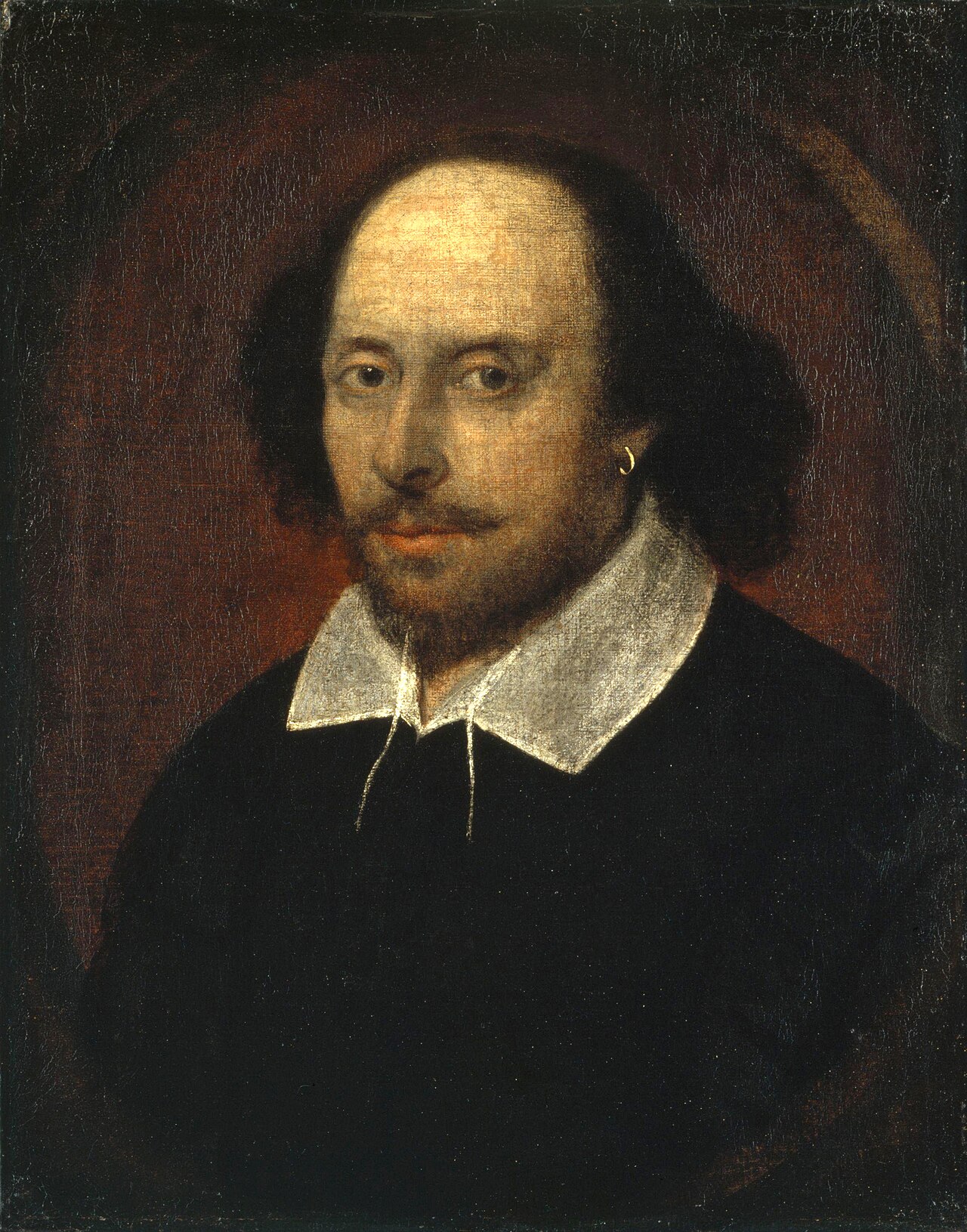
AI-assisted Portrait of William Shakespeare
The Poet of Human Contradiction
Born in 1564 in Stratford-upon-Avon, William Shakespeare would become the most influential writer in the English language — not through technical innovation or formal philosophy, but through an unmatched ability to render the inner life of human beings. His plays do not teach doctrine, nor do they argue theses. Instead, they expose motives, hesitations, longings, moral fractures, and emotional truths with such precision that they remain psychologically modern centuries later.
Unlike Renaissance polymaths who sought mastery over the external world, Shakespeare's genius was inward-facing. He was less interested in how the universe worked than in how people endure it — how they love, betray, hesitate, rationalize, and grieve. His work is not driven by novelty or experimentation for its own sake, but by a sustained meditation on meaning, identity, and consequence.
He is most commonly mistyped as an INFP, and occasionally as an ENFP or ENTP, due to his emotional depth, lyrical language, and apparent sensitivity. But his writing consistently demonstrates something more systematic and outward-facing: an effort to map shared human patterns, social tensions, and moral dilemmas that extend beyond the self.
That's the INFJ signature: Shakespeare does not write to express his feelings. He writes to reveal how people work.
The Singular Vision
At the core of Shakespeare's work is introverted intuition: a deep, singular preoccupation with underlying human patterns.
His plays are not episodic explorations of “what if” scenarios (Ne), nor intimate diary-like expressions of personal value (Fi). They are sustained dissections of why people are the way they are. Characters such as Hamlet, Macbeth, Lear, and Brutus are not driven by circumstance alone; they are driven by internal visions — of honor, destiny, moral order, or self-concept — that slowly collapse under pressure.
Shakespeare returns obsessively to the same themes across genres and decades: appearance vs truth, action vs hesitation, love vs duty, time, decay, and mortality. This is Ni compression at work: different stories serving the same internal model of human nature. He does not brainstorm reality. He distills it.
The Relational Cartographer
Shakespeare's secondary strength lies in extraverted feeling, expressed through an extraordinary attunement to social dynamics and emotional ecosystems.
His characters are rarely isolated psyches; they are embedded in families, courts, friendships, and power structures. Emotional truth is revealed through interaction — through misalignment, misunderstanding, manipulation, and unmet needs.
Crucially, Shakespeare does not privilege one emotional perspective over another. He inhabits opposing viewpoints with equal seriousness and compassion. This is not Fi-driven self-expression; it is Fe-driven relational awareness. His plays function as emotional simulations, allowing audiences to experience the consequences of actions rather than be instructed on what is right.
The Logic Beneath the Emotion
Beneath the emotion lies a precise internal logic.
Shakespeare's soliloquies — especially Hamlet's — are not emotional outpourings. They are structured, recursive reasoning processes. His characters test premises, dismantle their own arguments, and reconstruct meaning in real time.
This tertiary Ti does not dominate the work, but it sharpens it. It is why Shakespeare's writing feels intellectually coherent even when emotionally turbulent. The contradictions are intentional. The logic bends, but it does not break.
The Fair Youth — INFJ Longing
Beyond the plays, Shakespeare's sonnets provide a rare window into the specific nature of his emotional world — one characterized by the hallmark INFJ sense of longing for an idealized, often unattainable unity with another mind. The first 126 sonnets are addressed to a young man, often called the “Fair Youth,” documenting a relationship that shifts between paternal mentorship, obsessive devotion, and profound spiritual intimacy.
This focus, likely directed toward figures such as Henry Wriothesley or William Herbert, reveals a specific INFJ attraction to the ENFP psyche. In both men, Shakespeare found the vibrant, spontaneous, and exploratory energy (Ne) that mirrored and sparked his own internal depths. For the INFJ, the ENFP represents a rare psychological match — a mind that can enter the intuitive landscape and play within it.
By contrast, his marriage to Anne Hathaway, an ISFJ, likely functioned as an anchor of safety rather than a source of musing. While Anne provided the institutional stability of a home in Stratford, she occupied a different cognitive world — one of duty, continuity, and the ordinary. For a mind that lived so intensely in the abstract and archetypal, this domesticity offered preservation, but it was to the ENFP youths that his spirit truly traveled.
He did not just desire the Youth; he sought to preserve him, to immortalize him in verse against the ravages of time and decay. This is Ni foresight and Fe devotion merging into a singular, career-defining obsession with transcendence through connection.
Why INFJ Over INFP
Why not INFP?
INFPs lead with Fi — personal value systems and inner emotional truth. Shakespeare's work, by contrast, consistently prioritizes interpersonal consequence over personal expression. His characters are shaped by social roles, expectations, and relational fallout. The question is rarely “What do I feel?” and almost always “What happens when this feeling exists among others?”
The INFP interpretation mistakes emotional richness for Fi dominance. Shakespeare's outward orientation toward shared human experience — the way his work functions as emotional simulation rather than self-expression — aligns far more closely with Fe–Ni than Fi–Ne.
Connected Figures
Further Reading
- Will in the World — Stephen GreenblattThe most readable modern biography — Greenblatt reads backward from the plays to reconstruct a plausible inner life.
- Shakespeare: The Biography — Peter AckroydExhaustive and richly atmospheric; situates Shakespeare in the full texture of Elizabethan London.
- 1599: A Year in the Life of William Shakespeare — James ShapiroA single pivotal year — Julius Caesar, Henry V, As You Like It, Hamlet — used to illuminate how Shakespeare worked.
- The Genius of Shakespeare — Jonathan BateAddresses the authorship question head-on, then turns to the plays themselves — essential on how originality actually worked in the period.
