 Historical Figure MBTI
4 min read
#68 · 2-23-26 · The Civil Rights Movement
Betty Shabazz
The Quiet Moral Anchor
1934 — 1997
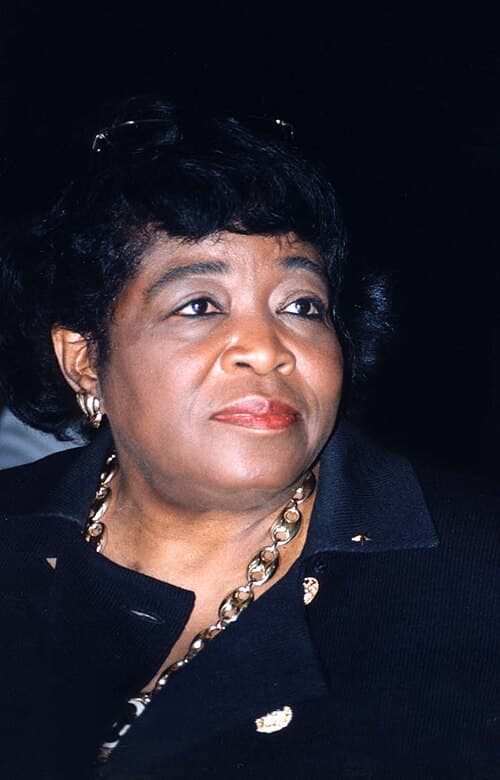
Historical Portrait of Betty Shabazz.
The Quiet Moral Anchor
Betty Shabazz did not seek history, yet history pressed upon her life with relentless force. Born in 1934 in Detroit, she was academically serious, disciplined, and independent long before she became associated with Malcolm X. She studied nursing, valued education, and moved through the world with deliberate composure.
When she married Malcolm, she understood the ideological gravity of the man she chose. She did not marry charisma. She married conviction. After his assassination in 1965 — while pregnant with twins and already mother to four young daughters — she did not collapse into spectacle. She completed her education. She earned advanced degrees. She raised six children under public scrutiny and continued advocating for dignity and human rights. Though sometimes perceived as merely reserved or duty-bound, her inner orientation reflects dominant Introverted Intuition (Ni) supported by Extraverted Feeling (Fe) — the cognitive signature of INFJ. Her life reveals not reactive survival, but principled trajectory.
She did not attempt to outshine Malcolm's intensity. She stabilized what he left behind.
Ni — Dominant
Betty consistently framed Malcolm's life within a broader historical pattern. In her reflections, she expanded individual events into systemic analysis — linking "by any means necessary" to comprehensive human rights discourse, reframing violence as structural climate rather than individual impulse.
Her language often moved from personal memory to collective implication. She did not merely recount events; she interpreted them within larger frameworks of diaspora, identity, and global justice. Her belief shifts — such as her views on women's roles — were not reactive but reflective. "My experience has not been that," she stated. She revised her perspective based on an evolving internal synthesis of meaning. Ni does not shout. It reframes.
Fe — Auxiliary
Her outward presence was composed and controlled, yet deeply relational. She defended Malcolm not with emotional theatrics but with moral clarity. She spoke of youth feeling "trapped" and denied the "full expression of their humanity," grounding rights discourse in dignity rather than resentment.
Her Fe was not exuberant. It was protective. She carried collective pain without dramatizing it. She expected excellence from her daughters not merely as discipline, but as survival within a society she understood intimately.
Ti — Tertiary
Betty frequently clarified definitions and corrected misconceptions. Her speech rhythm often involved definitional reframing — expanding terms like "violence" beyond narrow interpretation. This reflects tertiary Introverted Thinking supporting her moral intuition.
She did not wander conceptually. She sharpened concepts when necessary.
Se — Inferior
Her life was saturated with instability — surveillance, threats, widowhood under global attention. Yet she responded with composure rather than impulsivity. Under pressure, she narrowed focus to responsibility: education, parenting, continuity.
Inferior Se in INFJs often appears as controlled endurance under chaos. She did not chase attention. She endured exposure.
Primary Source Analysis: 1971 Public Interview
A particularly revealing primary source is her 1971 public interview, where she engages in an extended Q&A format. What stands out is not extroverted enthusiasm, but controlled abstraction. She repeatedly redirects audience questions toward broader historical and systemic frameworks — referencing "anthropological groupings," five centuries of oppression, and the necessity of unity beyond ideological division.
Even when fielding emotionally charged topics, she reframes rather than reacts. Her humor is precise and strategic, used to regulate tension rather than feed off crowd energy. The structure of her responses suggests internally synthesized conviction deployed outwardly — a pattern consistent with dominant Ni supported by measured Fe.
The Dynamic with Malcolm X
Malcolm X embodied ideological reconstruction — an INTJ reworking frameworks in real time. Betty embodied moral continuity. Where he sharpened analysis, she anchored identity. Where he revised models, she preserved dignity.
He restructured the argument. She sustained the meaning. Their partnership was not identical in cognition but aligned in seriousness. Vision and moral steadiness met in disciplined union. Betty Shabazz was not the echo of a revolutionary. She was the quiet force that ensured revolution did not dissolve into caricature.
Connected Figures
Further Reading
- The Autobiography of Malcolm X — Malcolm X with Alex Haley (1965)The primary text for understanding Malcolm's world — and by extension, Betty's. Her presence runs throughout as the stabilizing domestic counterpoint to his public fire.
- Betty Shabazz: A Remarkable Story of Survival and Faith Before and After Malcolm X — Russell J. Rickford (2003)The definitive biography of Betty Shabazz, tracing her life from Detroit to her death in 1997.
- Living Black History: How Reimagining the African-American Past Can Remake America's Racial Future — Manning Marable (2006)Marable's later scholarship, which contextualizes figures like Betty within the longer arc of Black intellectual and political life.
