 Historical Figure MBTI
5 min read
#69 · 2-24-26 · The Civil Rights Movement
W. E. B. Du Bois
The Double Mind
1868 — 1963
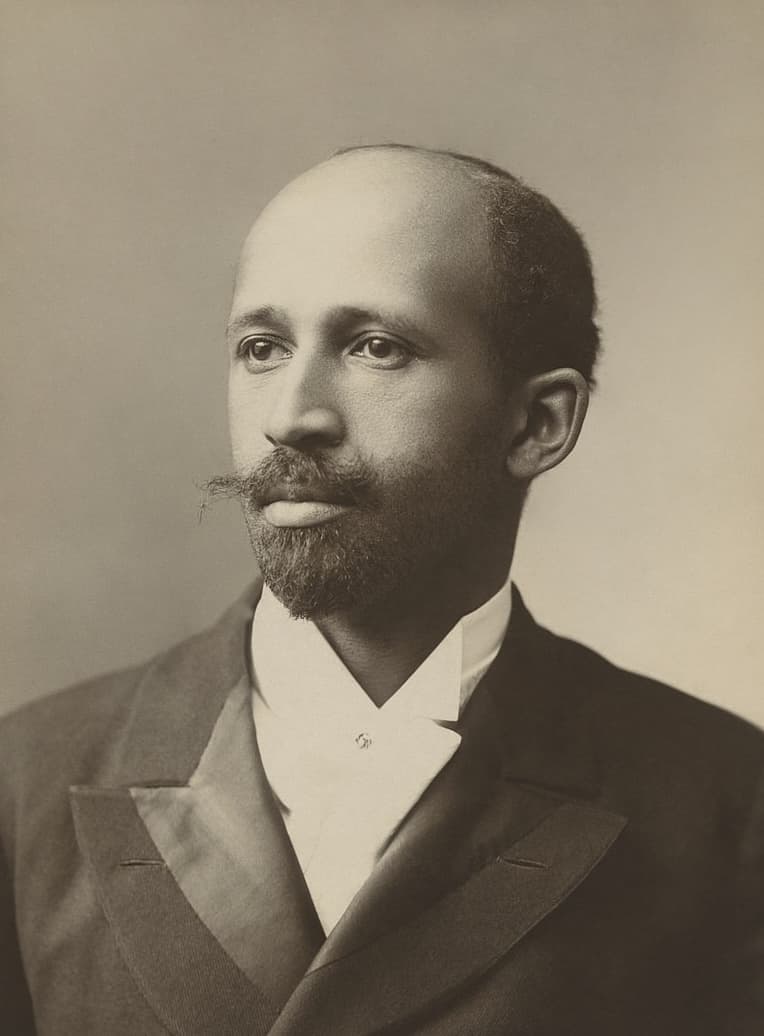
Historical Portrait of W. E. B. Du Bois.
The Double Mind
Born in 1868 in Great Barrington, Massachusetts, just after the Civil War, W. E. B. Du Bois came of age in a nation that had abolished slavery but had not dismantled hierarchy. He would spend the next nine decades interrogating that contradiction.
Du Bois was not merely a civil rights activist. He was a systems thinker operating decades ahead of his political moment. Trained at Harvard University and shaped intellectually in Berlin, he fused historical scholarship, sociology, and philosophy into a single project: to diagnose the architecture of racial power.
In 1903, he published The Souls of Black Folk, introducing the concept of “double consciousness” — the psychological fracture of seeing oneself through the eyes of a society that denies full humanity. This was not rhetorical flourish. It was cognitive compression. He translated lived experience into structural insight.
He did not simply protest injustice.
He mapped it.
The Psychological Verdict
While occasionally described as an INFJ due to his poetic prose or as an ENTJ due to his institutional influence, Du Bois aligns most coherently with INTJ.
His life reveals a cognition driven first by internal synthesis (Ni), executed through structured argument and institution-building (Te), anchored by a private moral core (Fi), and relatively detached from sensory immediacy (Se).
He was not a populist. He was an architect.
Ni — Dominant
Du Bois’ defining trait was pattern integration.
“Double consciousness” was not activism. It was abstraction. He identified the internal psychological tension created by structural racism and articulated it as a unifying explanatory model.
Across decades, his thinking moved from Reconstruction analysis to Pan-Africanism to global anti-colonial critique. The continuity is striking. Each phase builds upon an internal, evolving vision of racial hierarchy as a systemic phenomenon.
His mind worked longitudinally.
He thought in eras.
That is Ni.
Te — Auxiliary
Though inwardly conceptual, Du Bois was not detached from execution. He co-founded the NAACP, edited The Crisis for over twenty years, organized conferences, wrote policy arguments, and structured legal resistance.
But his institutional work served vision. He did not build for the sake of order; he built to operationalize insight. Te here is disciplined, not dominant.
He built to operationalize insight.
Fi — Tertiary
Du Bois possessed a strong but private moral center. He did not bend easily to external pressure. He broke with allies when principles diverged. His pride — often described as imperious — was less ego than internal alignment.
His letters reveal emotional depth, longing, and a guarded but sincere romantic interior. He was not emotionally performative. He was internally anchored.
That quiet value structure aligns with tertiary Fi.
Se — Inferior
Du Bois was not known for spontaneous charisma or physical dynamism. He often appeared reserved in gatherings. His power came from language, not presence. Even his activism was structured and mediated through publication and organization rather than direct agitation.
His engagement with the sensory world seems secondary to his engagement with ideas.
Why Not INFJ?
INFJs often center relational transformation and moral awakening through interpersonal resonance. Du Bois centered structural diagnosis.
He did not primarily ask: “How do we heal society emotionally?” He asked: “How is society architected, and how does that architecture reproduce inequality?”
His focus was systems, not sentiment.
The Partner in Motion
Late in life, Du Bois married Shirley Graham Du Bois — an outwardly energized activist and artist. Where he synthesized, she amplified. Where he compressed theory, she mobilized emotion and coalition.
The pairing suggests complementarity: Ni depth meeting Ne expansion. He remained architect; she broadcast the vision.
Du Bois did not shout.
He diagrammed.
And in doing so, he altered the intellectual foundation of modern civil rights discourse.
One mind. One model. A century still unfolding.
Connected Figures
Further Reading
- The Souls of Black Folk — W. E. B. Du BoisThe 1903 classic that introduced 'double consciousness' — the indispensable starting point for any reader of Du Bois.
- W.E.B. Du Bois: Biography of a Race, 1868–1919 — David Levering LewisThe first volume of the definitive two-volume biography; Pulitzer Prize winner and the deepest scholarly account of his early life and thought.
- W.E.B. Du Bois: The Fight for Equality and the American Century, 1919–1963 — David Levering LewisThe second Pulitzer-winning volume, covering Du Bois's later radicalism, Pan-Africanism, and his final years in Ghana.
- Black Reconstruction in America — W. E. B. Du BoisHis 1935 masterwork — a revisionist history of Reconstruction that anticipated decades of subsequent scholarship.
- The Oxford W. E. B. Du Bois Reader — Edited by Eric J. SundquistA comprehensive anthology spanning his sociological, literary, and political writing across six decades.
