 Historical Figure MBTI
3 min read
#70 · 2-24-26 · The Civil Rights Movement
Shirley Graham Du Bois
The Expanding Flame
1896 — 1977
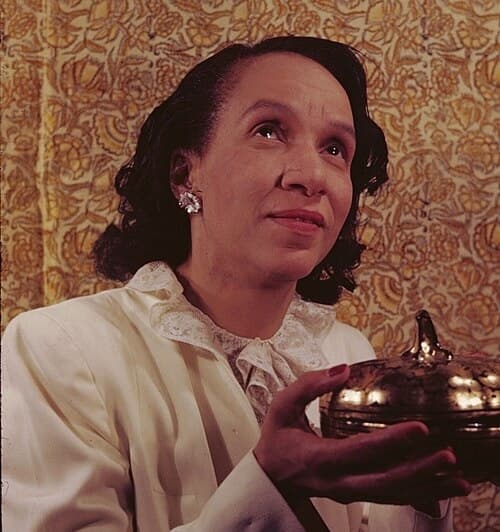
Historical Portrait of Shirley Graham Du Bois.
The Expanding Flame
Born in 1896, Shirley Graham Du Bois did not move through life in straight lines. She was a writer, composer, activist, and an international voice of Black liberation.
Before she ever married W. E. B. Du Bois, she was already internationally oriented, anti-colonial in outlook, and immersed in global liberation networks. Her energy was not confined to one discipline or institution.
It moved.
It connected.
It expanded.
The Psychological Verdict
Shirley Graham Du Bois aligns most coherently with ENFP.
Her cognition reveals dominant outward expansion (Ne), guided by deeply personal conviction (Fi), supported by practical execution when required (Te), and relatively unconcerned with tradition or precedent (Si).
She was not static. She was catalytic.
Ne — Dominant
Shirley’s life reflects expansive pattern-making across domains. She did not isolate art from politics, or America from Africa, or biography from activism. She linked them. Her worldview operated across movements and borders.
Her thinking was not linear. It was associative and outward-facing. Racism, colonialism, capitalism — she saw them as interconnected phenomena long before global discourse normalized that framing.
She did not simply participate in causes.
She wove them together.
Fi — Auxiliary
Her activism was personal, not performative. She held convictions intensely and defended them openly. Those who knew her described emotional expressiveness, loyalty, and fierce protectiveness — especially toward Du Bois during periods of political scrutiny.
Her stance was not shaped by consensus or social ease. It was anchored in internal moral alignment. She did not soften for comfort.
She stood by belief.
Te — Tertiary
Though not institution-first, Shirley was capable of execution. She navigated logistics, public relations, and political tension with competence. She organized internationally, coordinated events, and managed transitions — including the move to Ghana late in Du Bois’ life.
Structure was not her identity. But she could wield it.
Si — Inferior
Tradition did not bind her. She was comfortable crossing borders — geographic and ideological. Stability was secondary to conviction. She was willing to leave the United States, embrace global citizenship, and reject familiar structures if they conflicted with principle.
Her orientation faced outward, not backward.
The INTJ–ENFP Axis
Her partnership with Du Bois illustrates a classic INTJ–ENFP dynamic. Ni compresses; Ne expands. He synthesized the architecture of racial consciousness; she energized the movement around it.
W. E. B. Du Bois (INTJ)
He modeled systems internally.
Shirley Graham Du Bois (ENFP)
She mobilized people externally.
It was not a quiet domestic alignment. It was intellectual complementarity. Shirley Graham Du Bois did not inherit vision. She carried it outward.
One spark. Many directions. A movement set in motion.
Connected Figures
Further Reading
- His Day Is Marching On: A Memoir of W. E. B. Du Bois — Shirley Graham Du BoisHer own account of their life together — indispensable primary source for understanding her role alongside Du Bois.
- The Autobiography of W. E. B. Du Bois — W. E. B. Du BoisWritten in his final years in Ghana; illuminates the world Shirley helped him inhabit and the political convictions she shared.
- W. E. B. Du Bois: Biography of a Race, 1868–1919 — David Levering LewisPulitzer Prize–winning biography; the essential scholarly account of the movement Shirley Graham Du Bois later championed.
- Visions of a Liberated Future: Black Arts Movement Writings — Larry Neal (ed.)Places the cultural activism of figures like Shirley Graham Du Bois in the broader current of Black creative and political thought.
