 Historical Figure MBTI
5 min read
#71 · 2-25-26 · The Civil Rights Movement
Booker T. Washington
The Builder of Leverage
1856 — 1915
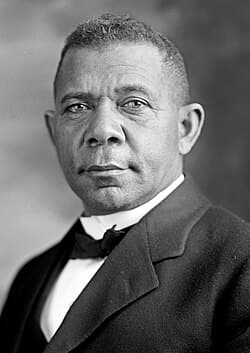
Historical Portrait of Booker T. Washington.
The Builder of Leverage
Born enslaved in 1856, Booker T. Washington did not inherit power — he constructed it.
Where others agitated publicly for immediate civil rights, Washington focused on something more durable: infrastructure. He founded and scaled Tuskegee Institute from near nothing, turned brick-making students into campus builders, cultivated white philanthropists, mobilized Black middle-class networks, and built what critics later called the “Tuskegee Machine.”
This was not abstract theorizing. It was external architecture.
Washington did not merely speak about uplift.
He operationalized it.
The Psychological Verdict
Washington aligns most coherently with ENTJ (Te–Ni–Se–Fi).
His cognition shows: dominant external structuring (Te), strategic long-range sequencing (Ni), tactical adaptability to political realities (Se), and controlled but present internal conviction (Fi).
He was not primarily a theorist like W. E. B. Du Bois. He was an executor of power.
Te — Dominant
Washington built systems.
He negotiated with industrialists like Andrew Carnegie. He cultivated political alliances across racial lines. He advised on philanthropic flows. He constructed a national influence network rooted in Black business, clergy, and educators.
The so-called “Tuskegee Machine” functioned because of centralized executive gravity. After his death, it collapsed rapidly — a hallmark of leader-dependent Te dominance.
His speeches often read strategic rather than sentimental.
Even the Atlanta Exposition Address was calibrated messaging.
That is external command.
Ni — Auxiliary
Washington was not reactive.
He understood that frontal assault on Jim Crow in the 1890s South would fail. Instead, he sequenced progress: economic strength, institutional credibility, social capital, and gradual leverage.
Revisionist historians later revealed that while publicly preaching accommodation, he secretly funded legal challenges to segregation. That dual-layer strategy reflects Ni-guided positioning — seeing beyond the immediate move to the larger board.
He was playing chess, not checkers.
Se — Tertiary
Washington understood optics.
He traveled constantly. He fundraised relentlessly. He signed autographs. He delivered patriotic speeches with careful tone management. He knew perception was power.
This was not impulsive Se — but it was pragmatic engagement with real-world constraints.
He did not retreat into abstraction.
He acted.
Fi — Inferior
Though emotionally reserved in private life, Washington possessed a quiet internal conviction. He believed deeply in racial uplift through discipline and economic strength. He did not broadcast moral intensity the way Du Bois did — but he did not lack belief.
His conviction was operational rather than expressive.
ENTJ vs INTJ
Washington is sometimes mistaken for INTJ due to his long-range thinking. But INTJs build internal models first and act second. Washington built machinery first.
He organized networks. He centralized influence. He commanded alliances. That is Te-forward cognition.
Du Bois compressed theory.
Washington expanded institutions.
The Marriage Dynamic
Washington’s partnership with Margaret James Murray Washington reinforces this structure. She appears structured, disciplined, and stability-oriented — likely ISTJ — maintaining order in the household and women’s divisions at Tuskegee.
ENTJ strategist + ISTJ stabilizer is historically coherent: Vision scaling outward. Structure reinforcing inward.
One executive mind.
One institutional machine.
A long game under siege.
Connected Figures
Further Reading
- Up from Slavery — Booker T. Washington (1901)Washington's own account of his life and philosophy — the primary source for his self-constructed public identity.
- Booker T. Washington: The Wizard of Tuskegee, 1901–1915 — Louis R. Harlan (1983)The definitive Pulitzer Prize–winning biography, revealing the gap between Washington's public accommodation and his private resistance to segregation.
- The Souls of Black Folk — W. E. B. Du Bois (1903)Contains Du Bois's famous critique of Washington's Atlanta Compromise — indispensable for understanding the ideological divide.
- Booker T. Washington: Black Leadership in the Age of Jim Crow — Raymond W. Smock (2009)A concise scholarly reassessment placing Washington within the political constraints of the post-Reconstruction South.
