 Historical Figure MBTI
4 min read
#32 · 2-10-26 · Petrine Russia
Catherine I of Russia
Empress · Stabilizer · Survivor of Empire
1684 — 1727
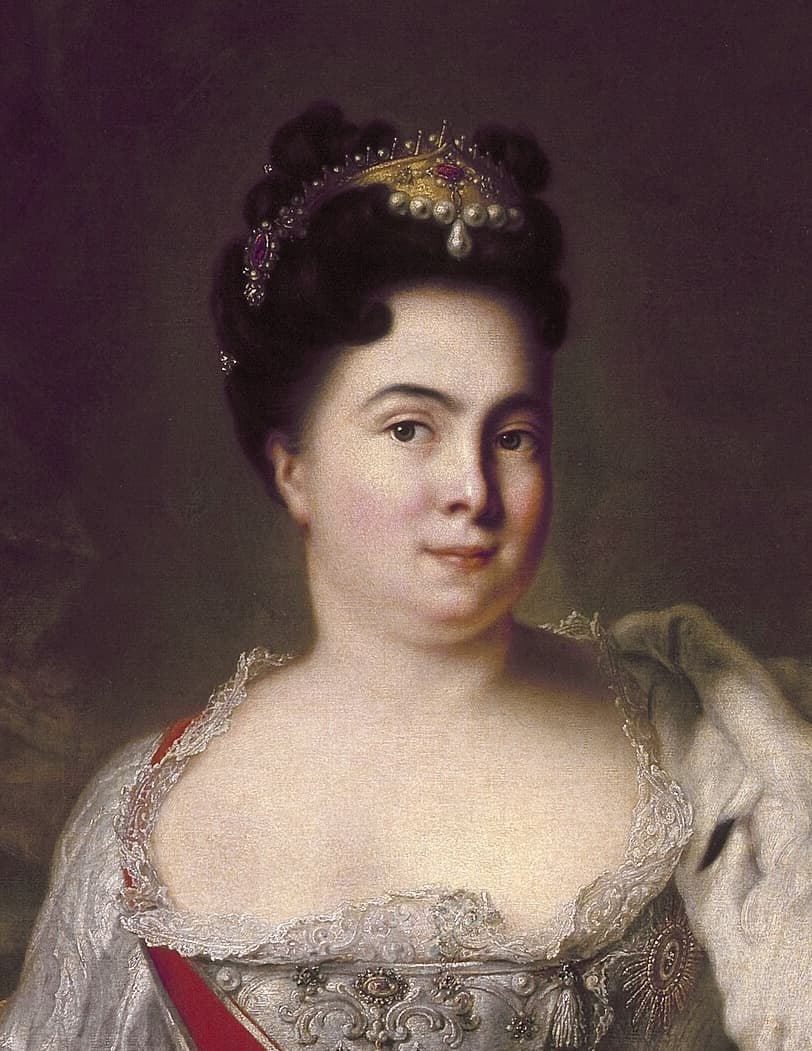
Portrait of Catherine I of Russia.
The Woman Who Held the Center
Catherine I of Russia did not rise through ideology, inheritance, or intellectual authorship. She rose through presence.
Born Marta Skowrońska into poverty and displacement, Catherine entered history without education, status, or institutional power. What she possessed instead was rarer and far more difficult to cultivate: the ability to regulate human systems under extreme pressure.
She is often misread through absence: no diary, no theory, no authored vision. This leads to shallow conclusions — irrational, indulgent, lightweight. But when we examine how she moved through people, crises, and power, a coherent pattern emerges. She stabilized volatile environments, read emotional weather instantly, acted decisively when systems failed, and avoided domination while quietly shaping outcomes. This is ENFJ cognition expressed without ego.
Catherine was not passive. She was centripetal.
Fe — Dominant
Catherine's defining trait was her ability to hold emotional equilibrium for others. Contemporaries consistently describe her as cheerful, compassionate, easy to approach, calming, non-punitive, and beloved by soldiers, servants, and artisans alike.
Her humor was warm and disarming. Her presence reduced fear. People relaxed around her.
Most decisively, she stabilized Peter the Great — a ruler known for volatility and explosive affect. Catherine did not oppose him, correct him, or redirect him through argument. She regulated him through steady, attuned presence.
That is dominant Fe in its most mature form: shaping systems by managing emotional load rather than commanding authority. She did not need to lead the room. She was the room's center of gravity.
Ni — Auxiliary
Catherine did not theorize the future — but she understood where things were going.
Her life demonstrates accurate reading of power dynamics, long-range adaptation rather than short-term optimization, and an instinct for aligning with trajectories that would endure. She did not become Empress by accident. She survived war camps, court intrigue, shifting alliances, and the collapse of traditional structures.
Her Ni did not express itself in ideology or text. It expressed itself in placement — being in the right role, beside the right force, at the right time, without triggering resistance. That is Ni as navigation, not vision.
Se — Tertiary
Catherine's Se appeared most clearly in leisure and celebration: balls and masquerades, music and dance, ceremony and festivity. But this was not indulgence-as-identity.
Her sensory engagement followed periods of prolonged containment, emerged when pressure lifted, and functioned as recovery rather than pursuit. She was physically resilient and unflinching in crisis — as seen during the Pruth River campaign, where she helped facilitate the negotiation that saved Peter's army.
This is supportive Se, not dominant Se.
Ti — Inferior
Catherine did not analyze systems abstractly or argue principles. She demonstrated sound situational judgment, epistemic humility, willingness to defer to specialists, and avoidance of overreach.
As Empress, she limited her own autocracy and delegated governance to the Supreme Privy Council — not out of confusion, but out of accurate self-assessment.
She knew where her strength ended — and did not pretend otherwise. That restraint is not weakness. It is integrated inferior Ti.
Why Not ESFP?
Why not ESFP?
Catherine enjoyed celebration, warmth, and sensory richness — but she did not orient life around experience, expression, or impulse. Her indulgence followed responsibility; it did not precede it. ESFP cannot explain her crisis intelligence, her restraint in power, her long-term survivability, or her emotional containment of others. Pleasure was never the point.
Connected Figures
Further Reading
- Peter the Great: His Life and World — Robert K. MassieThe definitive English biography of Peter — covers Catherine's rise from camp follower to empress in full.
- The Romanovs: 1613–1918 — Simon Sebag MontefioreSweeping dynastic history that situates Catherine I within the turbulent early decades of Romanov rule.
- Russia in the Age of Peter the Great — Lindsey HughesScholarly account of the Petrine transformation, with substantial attention to court culture and Catherine's role in it.
