 Historical Figure MBTI
4 min read
#141 · 3-16-26 · The Founding Generation of USA
Charles Francis Adams Sr.
The Custodian of a Legacy and disciplined diplomat who preserved the Adams lineage.
1807 — 1886
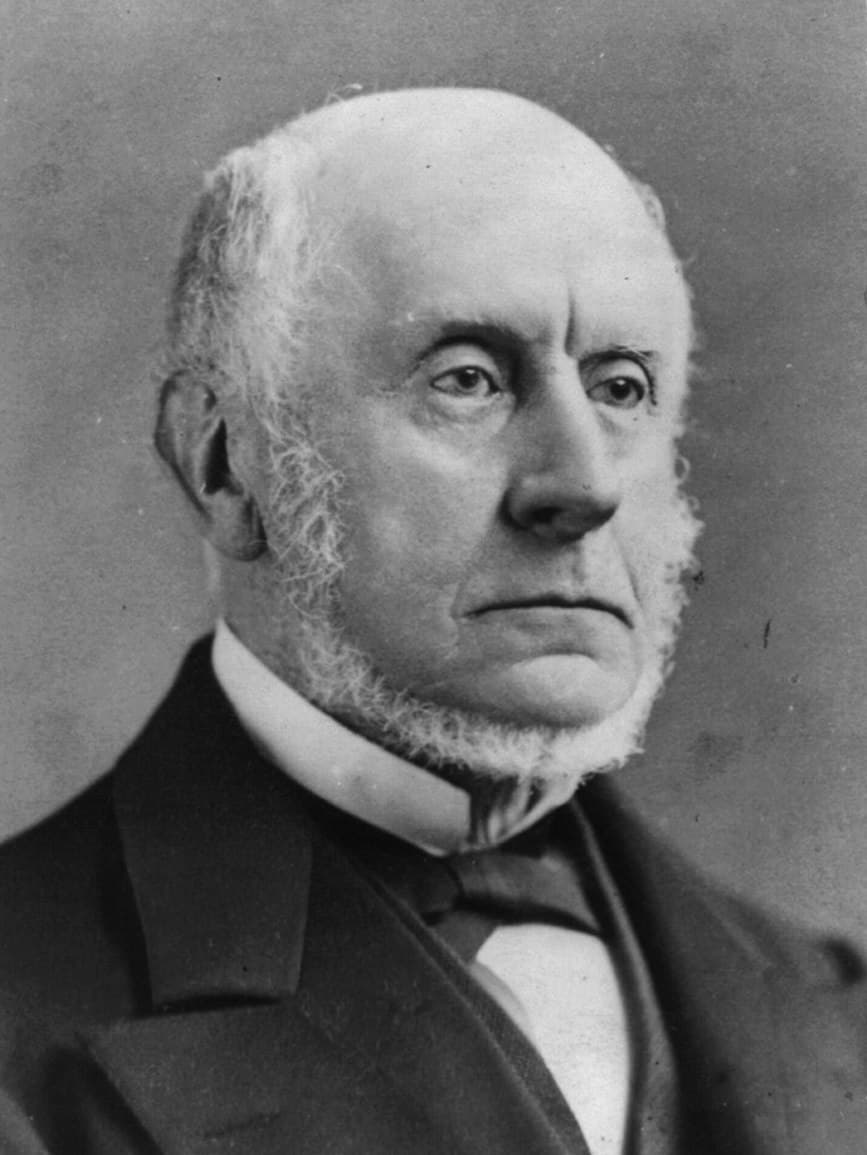
Portrait of Charles Francis Adams Sr.
The Custodian of a Legacy
Charles Francis Adams Sr. was born into one of the most formidable political lineages in American history — the son of John Quincy Adams and the grandson of John Adams. By the time he came of age, the weight of that legacy was already fully formed: intellectual rigor, public service, and a deep sense of responsibility to the nation.
But Adams did not attempt to reinvent that inheritance. He carried it.
Over the course of his life, he served as a diplomat, congressman, and historian of his own family’s past. Most notably, as U.S. Minister to Great Britain during the Civil War, he played a critical role in preventing British recognition of the Confederacy — not through dramatic innovation, but through careful, disciplined diplomacy.
He was not a figure of spectacle. He was a figure of continuity.
The Psychological Verdict
Charles Francis Adams Sr. is best understood as an ISTJ — a type defined by structure, duty, and a grounded commitment to preserving and executing established systems.
Unlike more visionary or ideologically expansive figures, Adams’s pattern is one of stewardship. His life reflects a consistent orientation toward responsibility, precedent, and the careful management of institutions rather than their reinvention.
Si — Dominant
Adams’s defining trait is his relationship to continuity — both personal and historical. He not only lived within the Adams legacy, but actively preserved it, editing and publishing the writings of his father and grandfather. This was not merely archival work; it was an extension of his identity — maintaining the intellectual and moral lineage he inherited.
This reflects dominant Si: a deep connection to the past, a respect for precedent, and a commitment to preserving what has proven enduring.
He did not seek to replace the tradition. He ensured it endured.
Te — Auxiliary
Alongside this is a clear orientation toward structure and execution. Adams operated effectively within formal systems — in Congress, in diplomacy, and in public administration.
His success in Britain during the Civil War was not the result of bold ideological reframing, but of disciplined, methodical engagement with a complex political environment. He managed relationships, upheld policy, and navigated tensions with precision and restraint.
This is auxiliary Te: practical, results-oriented, and grounded in fulfilling external responsibilities.
Fi — Tertiary
Adams’s values appear steady but understated. He did not present himself as emotionally expressive or personally revealing, but his consistency in public service and his commitment to preserving his family’s intellectual legacy suggest a quiet but firm internal value system.
This aligns with tertiary Fi: internalized principles that guide action without overt display.
Ne — Inferior
There is little indication of exploratory or speculative thinking in Adams’s approach. He does not appear drawn to conceptual expansion or unconventional pathways.
Instead, his strength lies in working within established frameworks, consistent with inferior Ne — where uncertainty is approached cautiously, and stability is preferred over novelty.
Why not INTJ?
Si over Ni
Given his intelligence, diplomatic role, and historical awareness, INTJ might seem plausible. But the distinction lies in orientation. INTJs are driven by internal vision — seeking to reshape systems according to long-term conceptual frameworks. Adams, by contrast, does not exhibit a strong drive to reinvent or reimagine structures. His work is not vision-first, but responsibility-first.
He did not attempt to architect a new system. He operated within the one he inherited — and preserved it with discipline. This points clearly toward Si–Te over Ni–Te.
Connected Figures
Further Reading
- Charles Francis Adams, 1807–1886 — Martin B. DubermanThe standard biography — thorough on his diplomacy in London during the Civil War and his role as family archivist.
- The Adams Papers: Diary of Charles Francis Adams — Edited by Aida DiPace Donald and David DonaldPrimary source. Adams kept a detailed diary for decades; essential for understanding his inner life and working method.
- The Education of Henry Adams — Henry AdamsWritten by his son — an intimate portrait of the Adams world and what Charles Francis represented to the next generation.
- Lincoln and the British — Richard J. Carwardine and Jay Sexton (eds.)Covers the diplomatic stakes of the Civil War in Britain, where Charles Francis Adams's work was most consequential.
