 Historical Figure MBTI
#1080 · 8-12-26 · Spring and Autumn China
Duke Huan of Qi
First Hegemon · Ruler Who Trusted a Rival
c. 716 – 643 BCE
6 min read
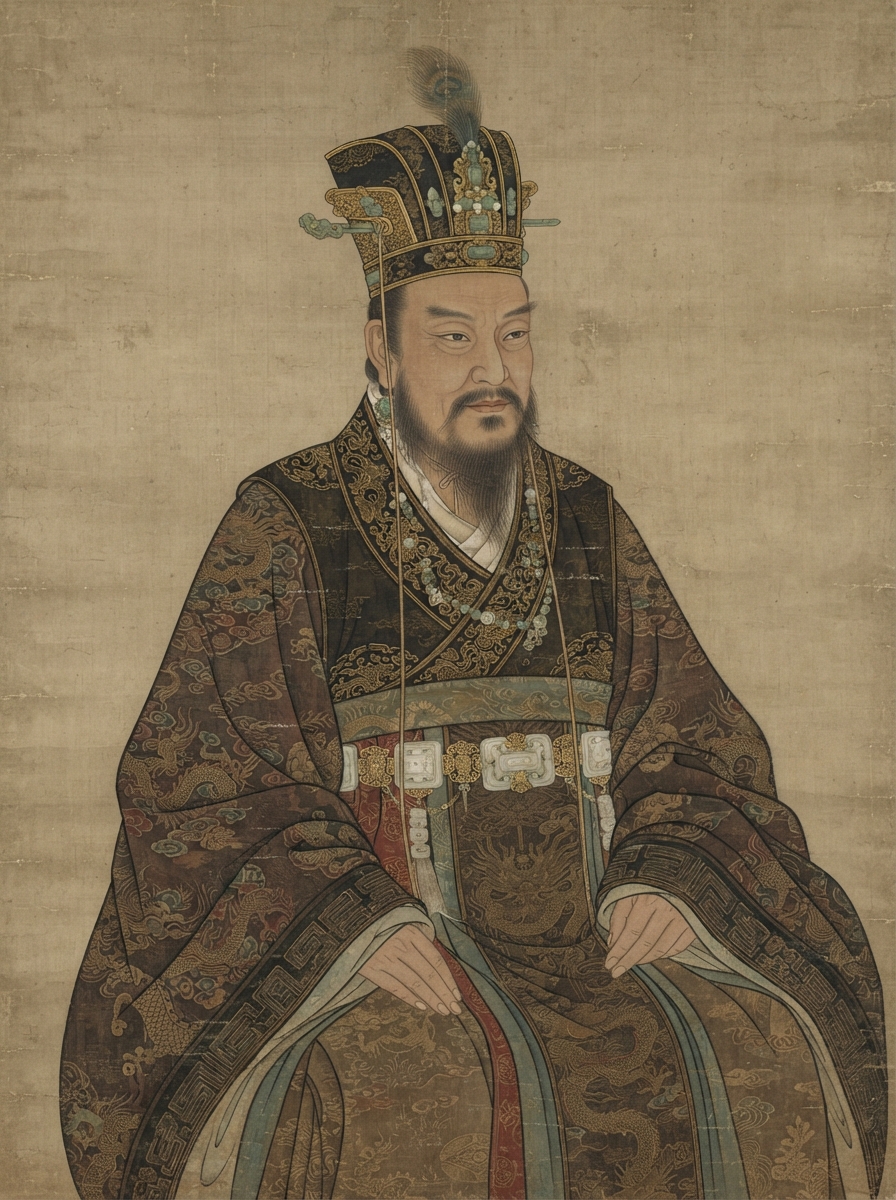
AI-assisted Portrait of Duke Huan of Qi
The Man Who Forgave the Arrow
Duke Huan of Qi came to power the way he would rule: in a scramble, on instinct, with an arrow already lodged in the story. In 685 BCE he raced a rival brother back to the state of Qi to claim the vacant throne, and the retainer sent to stop him — a sharp-eyed strategist named Guan Zhong — put a bolt into his belt buckle and left him for dead on the road. Huan lived, won the throne anyway, and by every reasonable account of a man's temper should have had his would-be killer executed the day he arrived. Instead, on the word of a friend he trusted more than his own grievance, he made Guan Zhong his chancellor.
That single reversal is the whole of Duke Huan's psychology in miniature. He was an ESFP — a ruler who lived in the present tense, read a room and a battlefield with the same immediate, physical fluency, and made his biggest decisions not from doctrine or calculation but from who stood in front of him and what he felt about them. He did not plan Qi's rise to hegemony. He backed the man who did, because his oldest friend Bao Shuya vouched for him, and Huan's loyalty to that friendship outran every reasonable instinct for self-preservation.
An ESFP dominant in Se, Duke Huan ruled from the immediate and the personal — and the greatest act of his reign was forgiving, on a friend's word, the man who had tried to kill him.
The Sprint to the Throne
Se dominance shows up first in how Huan actually became duke: not through patient maneuvering but a literal footrace, riding hard for the capital while an arrow was still in his clothes, arriving before his rival and simply occupying the seat of power before anyone could argue the succession further. It is the move of a man who trusts his body and the moment over any long game.
He ruled the same way for over forty years. His signature achievement as hegemon — nine convocations of allied states, most famously at Kuiqiu in 651 BCE — was theater as much as statecraft: armies mustered and paraded in full view of rival courts, oaths sworn over the blood of sacrificed animals, banners and chariots arranged for maximum visible effect. Huan understood power as something you displayed in the present moment, in front of witnesses, more than something you accumulated quietly. Even his famous appetite — the near-mythic tales of his taste for rich food and rich company — reads as the same instinct turned inward: a man who lived through his senses first.
The Grudge He Refused to Keep
The decision that made Duke Huan's reign matter was not strategic — it was personal, and it ran directly against his own injury. Guan Zhong had served his rival brother and had tried, with real intent, to kill him. Any calculating ruler had cause and cover to execute him. Huan didn't. He listened instead to Bao Shuya, the friend who had backed his own claim to the throne from the start, and who argued that Guan Zhong's talent outweighed the wrong done to Huan personally. Huan overruled his own grievance because he trusted the man making the argument.
This is Fi, not Te: the decision came from an internal reckoning with loyalty and feeling, filtered through a relationship Huan valued, rather than from a cold external audit of Guan Zhong's usefulness. Huan didn't run the numbers on his enemy's talents and conclude forgiveness was efficient. He forgave first, on trust, and let the competence follow. He gave Guan Zhong the honorific "Uncle Zhong" and, by tradition, near-total latitude to govern — a devotion that looks less like strategy than like genuine, personal fealty to a bond Bao Shuya had vouched for.
Power He Didn't Build Himself
What Fi opened, tertiary Te let him use. Once Guan Zhong held the chancellery, Huan backed his reforms — new taxation on land and salt, standardized administration, a professionalized military levy — with the authority of the throne, and stayed out of the machinery himself. It was borrowed Te: real, effective state-building that Huan sanctioned and benefited from without personally engineering it.
That borrowed quality is exactly what makes his final years so telling. Guan Zhong, dying, warned Huan by name against three flattering courtiers — men who had reportedly castrated themselves and abandoned their own families to prove devotion to the duke, a devotion Huan had prized precisely because it flattered his need for immediate loyalty. Without Guan Zhong's structuring hand, Huan's tertiary Te collapsed back into the pull of whoever was standing closest and most agreeable. The courtiers seized the court, isolated the aging duke, and let him starve in his own palace in 643 BCE. His sons fought over the succession for so long that his body lay unburied for more than two months — the state Guan Zhong had built outliving, briefly, the discipline that was never really Huan's own.
Why ESFP Over ESTP
Why not ESTP?
An ESTP reading of Huan would credit his rise to cold, calculating opportunism — a man who out-maneuvered rivals and used Guan Zhong purely because the man was useful. The record doesn't support it. Huan didn't audit Guan Zhong's talents and conclude forgiveness was the efficient move; he forgave first, on the strength of Bao Shuya's word, and handed over real power to a man he had every external reason to distrust. That is a decision run through personal loyalty and feeling, not through Te-style opportunism — the signature of Fi, not Te, as the second seat.
The distinction matters because it explains both halves of Huan's reign. An ESTP hegemon would have kept building leverage after Guan Zhong died, reading the field and adapting. Huan instead dissolved into whichever loyal face was nearest him — because his core operating logic was never coldly transactional. It was relational, immediate, and, in the end, dependent on someone else's structure to hold it together.
Connected Figures
Further Reading
- Records of the Grand Historian (Shiji) — Sima QianThe foundational biography of Duke Huan and his rise to hegemony.
- The Zuo Tradition (Zuo Zhuan) — trans. Stephen Durrant, Wai-yee Li, David SchabergThe core Spring and Autumn chronicle covering Huan's covenants and campaigns.
- Guanzi: Political, Economic, and Philosophical Essays — attributed to Guan Zhong, trans. W. Allyn RickettThe reform text traditionally tied to Huan's chancellor and his statecraft.
- The Cambridge History of Ancient China — ed. Michael Loewe and Edward L. ShaughnessyScholarly overview of Qi's rise and the Five Hegemons system.
