 Historical Figure MBTI
#887 · 6-27-26 · The American Civil War
Eliza McCardle Johnson
First Lady · Taught Her Husband to Write
1810 — 1876
4 min read
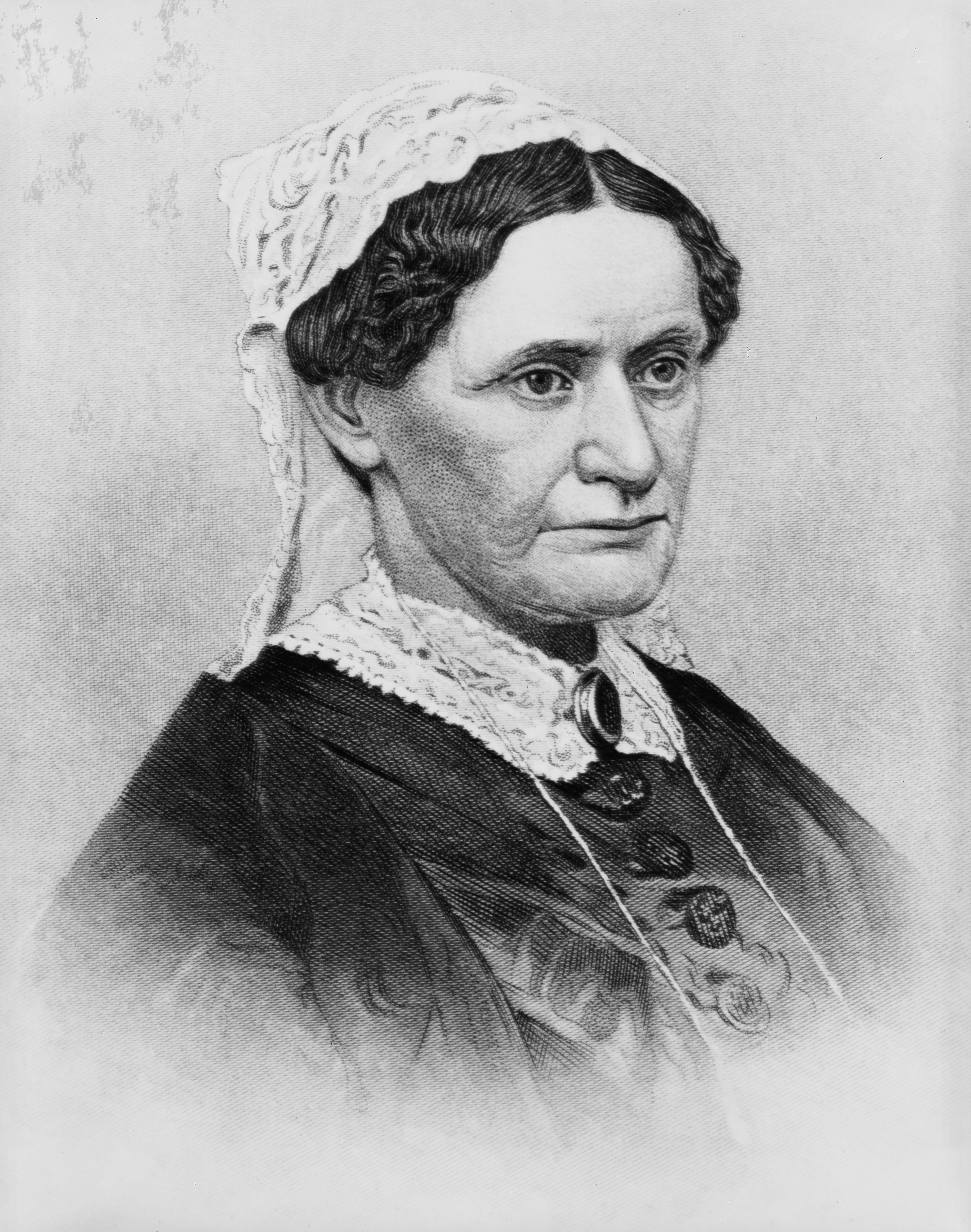
Portrait of Eliza McCardle Johnson
The Teacher Behind the Tailor
In the mountain town of Greeneville, Tennessee, a sixteen-year-old girl named Eliza McCardle married a seventeen-year-old tailor who could barely sign his own name. He had fled an apprenticeship in North Carolina, arrived in Greeneville with nothing, and set up shop on the town square. She had grown up modestly, the daughter of a shoemaker who died young, and had already picked up more schooling than most girls of her class. By most accounts it was Eliza who, in the evenings after the shop closed, taught Andrew Johnson to read fluently, to write a legible hand, and to work sums — and who sat with him as he rehearsed the speeches that would carry him from alderman to mayor to governor to senator to president.
It is a story easy to sentimentalize and easy to overstate, since so little of Eliza herself survives in the record — no diary, almost no letters, only the testimony of neighbors and the shape of a marriage that lasted fifty years. What is not in dispute is the asymmetry: he was the public man, prickly and self-made, who would defend the Union from the floor of the Senate and be impeached in the White House he barely wanted; she was the private woman who made that public man literate, and who then, for most of the rest of her life, was too ill to appear beside him.
Tuberculosis settled into her by her thirties and never fully left. During the presidency she lived mostly upstairs in the White House, in a single sunlit room, while their daughter Martha Patterson ran the household and stood in for her at receptions. Eliza is remembered, when she is remembered at all, less for anything she did in public than for a private act of instruction performed decades earlier — one whose consequences reached the presidency itself.
An ISFJ whose devotion ran inward rather than outward — she built her husband's competence quietly and then receded, by temperament as much as by illness, from the stage he went on to fill.
Psychological Verdict
What can be read of Eliza McCardle Johnson's temperament comes almost entirely through inference — through what she did rather than what she said, since so little of her own voice survives. But the pattern is consistent enough to be legible. Her dominant instinct was introverted sensing: she worked from the concrete and the present — a specific young man who needed to be taught specific skills — rather than from some abstract vision of who he might become. She did not dream Andrew Johnson into a senator; she taught him to read a ledger and hold a room, one lesson at a time, and let the rest follow from there.
Alongside that ran a supporting extraverted feeling, oriented toward the practical harmony and advancement of the household rather than toward any personal ambition for the spotlight. Even the delegation of First Lady duties to her daughter reads less as withdrawal than as a natural extension of a lifelong habit: keep the family functioning, let its most visible member occupy the foreground. She was, by every surviving account, self-effacing rather than self-erasing — present in effect, absent in name.
Set beside her husband — combative, exposed, almost pathologically stubborn in public — she reads as his psychological complement rather than his echo: the steady, private competence that made his volatile public career possible in the first place, and that asked for no credit when it succeeded.
Connected Figures
Further Reading
- Andrew Johnson: A Biography — Hans L. Trefousse1989
- Andrew Johnson — Annette Gordon-Reed2011, The American Presidents Series
