 Historical Figure MBTI
#888 · 6-28-26 · The American Civil War
Benjamin Wade
Senator · Radical Republican · One Vote From the Presidency
1800 — 1878
5 min read
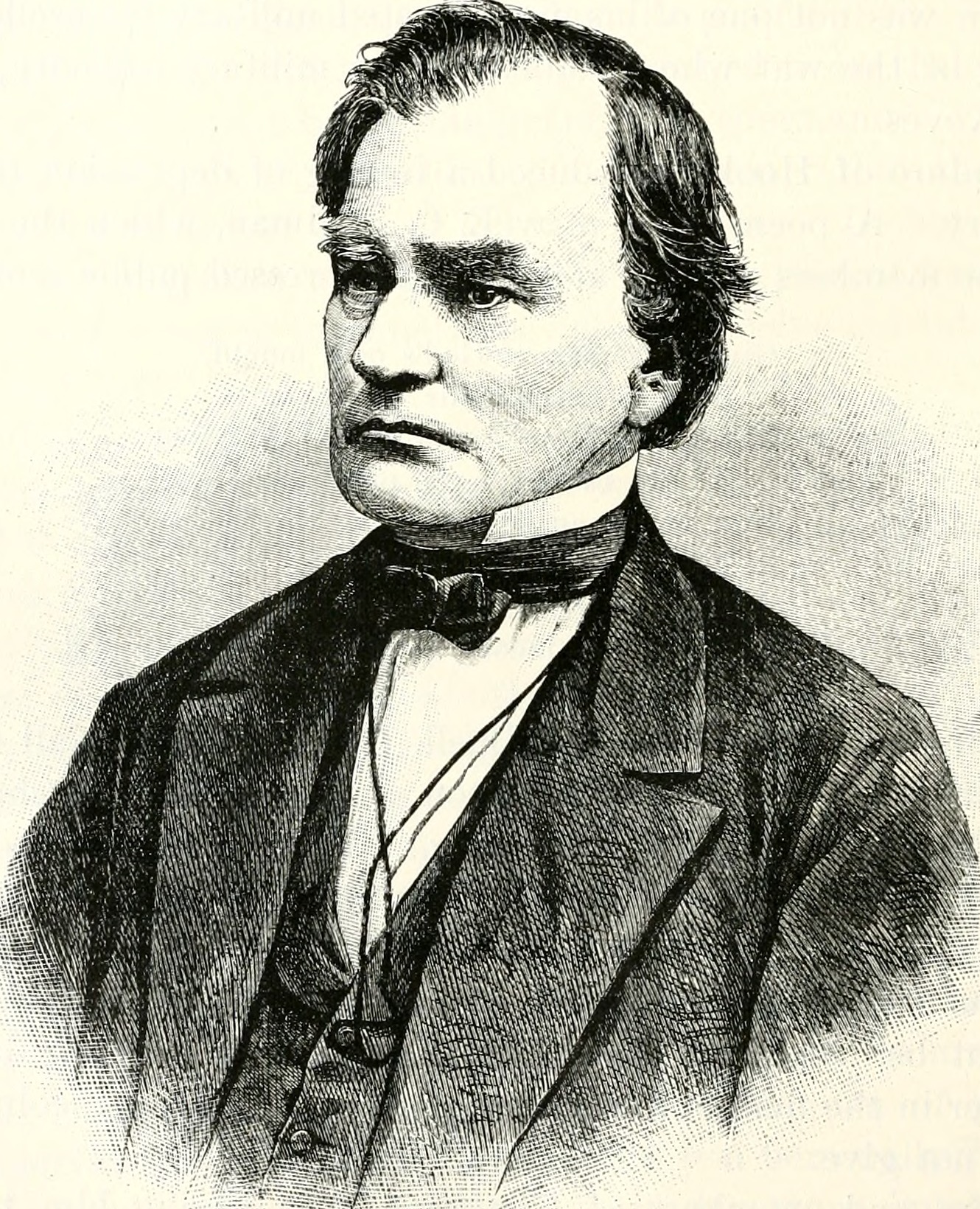
Portrait of Benjamin Wade
The Senator Who Would Not Wait
Benjamin Wade came to the Senate from the Western Reserve of Ohio already known for a temperament that made colleagues nervous — he had once nearly fought a duel, and he never learned to soften a sentence for the comfort of the man it was aimed at. Long before the Civil War made abolition fashionable in Washington, Wade was demanding it outright, contemptuous of the incrementalism that passed for principle among more cautious Republicans. He did not arrive at his politics through sentiment. He arrived at them through a cold, load-bearing conviction that the republic could not survive half-measures, and he built his career on saying so to whoever least wanted to hear it.
That combination — a mind that worked in decades rather than news cycles, married to a temper that would not sit quietly through a single afternoon of it — is the signature of an ENTJ built on the Te-Ni axis. Wade wanted outcomes, not gestures, and he wanted them enforced by the machinery of federal power rather than left to the goodwill of former rebels. When he co-authored the Wade-Davis Bill in 1864, demanding Reconstruction terms far harsher than Lincoln's, and when Lincoln pocket-vetoed it, Wade did not absorb the rebuke quietly. He and Henry Winter Davis published a public manifesto attacking a sitting president of their own party in terms usually reserved for the enemy. It was not insubordination for its own sake. It was a man who had already worked out where the country needed to go, and who regarded anyone standing in the way — friend or foe — as an obstacle rather than an authority.
Wade was an ENTJ whose dominant Te fused with a long-range Ni vision of enforced racial justice — a man who treated even his own president as an obstacle when he stood between the country and where it needed to go.
Governing by Verdict
Wade's dominant Extraverted Thinking showed itself less in eloquence than in efficiency of aim. He was not a stylist on the Senate floor; he was a prosecutor, building a case toward a conclusion he had already reached and daring anyone to dislodge him from it. Where other senators hedged, qualified, and left themselves room to retreat, Wade stated the verdict first and defended it after — a habit that made him formidable in debate and exhausting in negotiation. His colleagues learned that arguing with him rarely meant persuading him; it meant discovering how firmly the conclusion was already fixed.
This same instinct made him one of the earliest and least apologetic congressional abolitionists, years before it was politically safe. He treated slavery as a problem to be solved by law and force, not a moral question to be managed by patience. As chair of the Committee on the Conduct of the War, he hounded generals he judged too slow or too soft, applying the same standard to Union commanders that he applied to Southern policy: results, delivered on his timetable, or accountability. It was Te in its purest legislative form — indifferent to comfort, oriented entirely toward the visible, measurable end.
A Reconstruction Already Seen
What separated Wade from a merely aggressive administrator was the auxiliary Introverted Intuition running underneath the bluntness — a settled, internally coherent picture of what postwar America had to become. The Wade-Davis Bill was not just harsher than Lincoln's plan; it was structurally different, requiring a majority of a state's white male citizens to swear loyalty before readmission, and it anticipated a Reconstruction that remade Southern society rather than merely restored it to the Union under new management. Wade was not improvising punishment. He was working from a picture of the future he had held for years and was not willing to trade away for the sake of a faster peace.
That same long-range vision is what made his position as President pro tempore of the Senate during Andrew Johnson's impeachment trial so consequential — and so unsettling to his own allies. Had Johnson been convicted, Wade stood next in the line of succession, one vote away from the presidency itself. Some historians believe that very prospect, a hardline Radical suddenly wielding the executive power he had spent years insisting should be used more forcefully, cost the conviction the handful of swing votes it needed. Wade's vision was clear enough to frighten people who otherwise agreed with where it pointed.
Why ENTJ Over ESTJ
Why not ESTJ?
An ESTJ works within the procedures and precedents already on hand, administering the existing order more forcefully rather than redesigning it. Wade did the opposite: the Wade-Davis Bill proposed a structural, forward-looking remaking of Southern society, not a stricter enforcement of the terms already in place. That is Ni reaching past precedent toward a picture of an unbuilt future — and it is why he was willing to break publicly with a sitting president of his own party to pursue it, something a Te-Si administrator, more invested in institutional continuity, would have been far less likely to risk.
The distinction matters because Wade is easy to mistake for a simple hardliner — loud, combative, uncompromising. But the hardline itself was never the point; it was the visible edge of a vision he had held fixed for years and refused to trade away, even when trading it away would have cost him nothing and gained him the presidency.
Connected Figures
Further Reading
- Benjamin Franklin Wade: Radical Republican from Ohio — Hans L. Trefousse1963
- Reconstruction: America's Unfinished Revolution, 1863–1877 — Eric Foner1988
