 Historical Figure MBTI
#889 · 6-28-26 · The American Civil War
Hiram Revels
First Black US Senator · Minister · Educator
1827 — 1901
6 min read
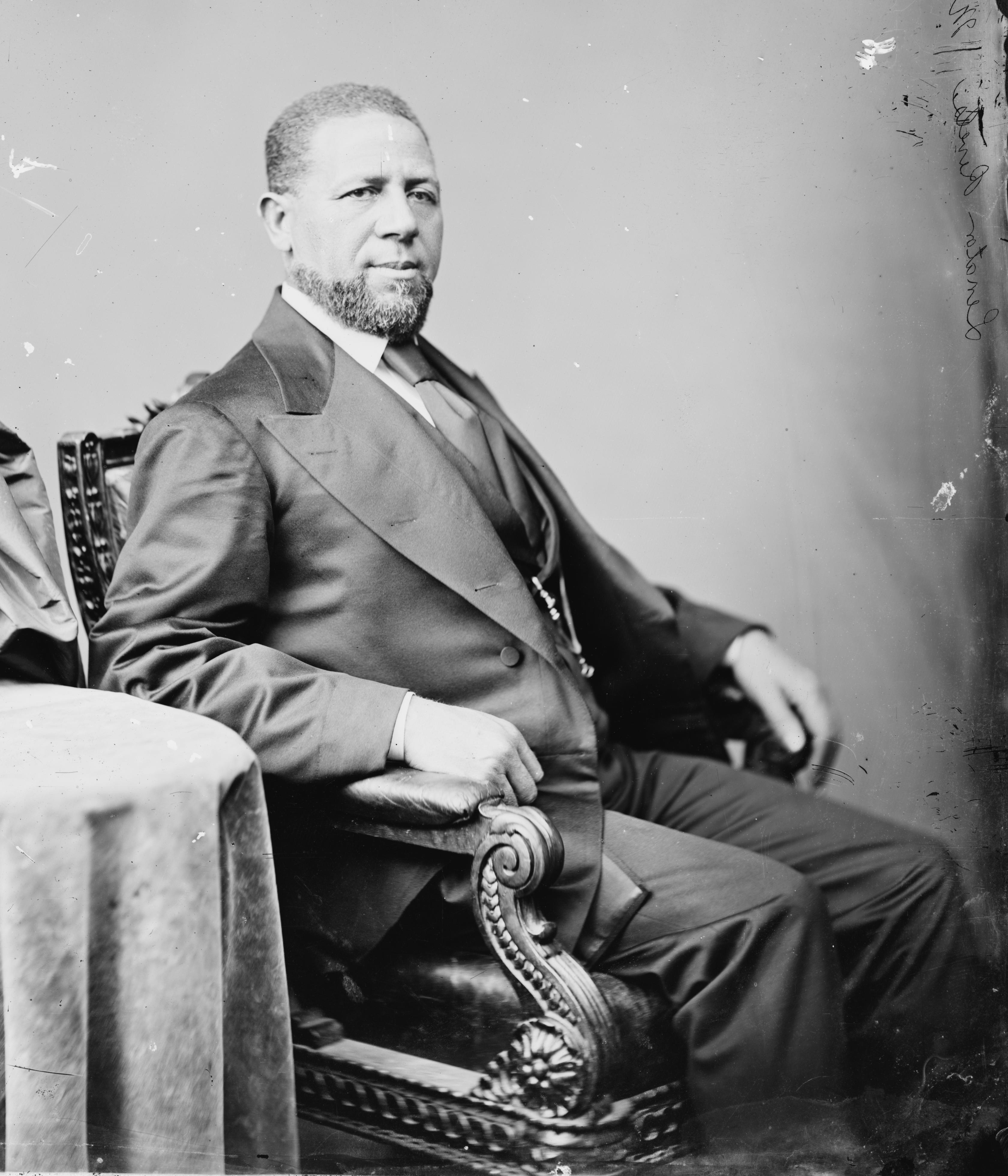
Portrait of Hiram Revels
The Seat That Once Held Jefferson Davis
In February 1870, the Mississippi legislature sent a free-born minister of the African Methodist Episcopal Church to occupy a chair in the United States Senate that had sat empty since Jefferson Davis walked out of it to lead a rebellion in its defense. Hiram Revels did not choose the symbolism, but he understood it, and he spent his brief tenure trying to make sure it would not be squandered. He had recruited Black regiments for the Union and served them as chaplain; he had built and pastored congregations across the border states and the Deep South; and when Reconstruction handed him a national stage, he used it the way he had used every pulpit before it — carefully, and in service of something larger than himself.
That carefulness is the whole man. Revels was not a firebrand and never tried to be one. He arrived in a chamber that had spent years rehearsing arguments for why a Black senator was unthinkable, and he answered them not with rhetoric but with conduct — steady, dutiful, almost pastoral in its restraint. He is best read as an ISFJ: a temperament oriented to concrete duty and quiet service, allergic to spectacle, that treated the Senate seat less as a platform for transformation than as a trust to be honored on behalf of people who could not yet hold it themselves.
Revels governed the way he had always preached — from memorized precedent, in service of the people in front of him, without raising his voice.
A Ministry of Precedent
Dominant Si reads people who trust the tested over the theoretical, who build authority out of lived experience rather than abstract vision. Revels's whole career before the Senate was an accumulation of exactly that kind of authority: circuit-riding AME pastorates in Maryland, Missouri, Kansas, Tennessee, and Kentucky, a wartime chaplaincy, the founding of schools for freedpeople in Mississippi. By the time he took his oath in 1870 he was in his forties, and every institution he touched — church, army, classroom — had already told him what steady, patient labor could accomplish and what recklessness could destroy.
That accumulated caution shaped how he legislated. Revels arrived already fluent in the grammar of institutions that were not built to include him, and his instinct was to work inside their existing forms rather than to demand new ones. He pressed for the readmission of Georgia's legislators, for amnesty for former Confederates who would accept the new order, for the desegregation of Washington's schools — always through the procedural channels already at hand, never by asking the Senate to remake itself around him. It is the temperament of a man who has learned that trust, once extended to an outsider, is a fragile and revocable thing, best protected by proving reliable rather than by testing its limits.
Reconciliation as Strategy
Auxiliary Fe is the harmonizing function, attentive to the emotional temperature of a room and the collective good it can be steered toward — and it is what let Revels turn moderation into a form of advocacy rather than a retreat from it. His maiden Senate speech, delivered against a bill to bar Georgia's elected officials from resuming their seats, appealed explicitly to conciliation: punish disloyalty, he argued, but do not punish it so broadly that reunion becomes impossible. It was a position calibrated to hold a fractured chamber together, not to win a rhetorical battle.
The same instinct governed how he carried himself as a symbol. Revels understood, with a clarity that reads as painfully self-aware, that he was being watched as a referendum on whether Black officeholders as a class deserved their offices — and he shaped his public conduct accordingly, favoring dignity and restraint over confrontation that critics could point to as proof of unfitness. It cost him standing with those who wanted a more combative voice in the seat Davis had vacated. But it was not timidity; it was Fe reasoning about the group stakes of an individual's behavior, and choosing to be the kind of first that made a second, a third, and a fourth Black senator thinkable.
Why ISFJ Over INFJ
Why not INFJ?
An INFJ senator would have led with Ni — a structural vision of what Reconstruction ought to become, pressed with the conviction that the moment demanded transformation, not maintenance. Revels pressed for none of that. He did not campaign for a reimagined South; he campaigned for readmission, amnesty, and school desegregation within the Senate's existing machinery, one incremental motion at a time. His speeches read as pastoral counsel, not prophecy — grounded in what particular people in front of him needed, never in a sweeping architecture of what the nation should become.
What tips the verdict decisively toward Si over Ni is the direction his caution ran. An INFJ pushed toward moderation might frame it as tactical patience en route to a larger transformation still held firmly in view. Revels's moderation was not tactical; it was the object itself — a conviction, formed over decades in the pulpit, that credible, steady service inside inherited institutions was the actual work, not a compromise on the way to something grander. He left the Senate after roughly a year to run a college, not a movement, which is exactly what an Si-Fe temperament does when the trust it has been asking for is finally granted.
Connected Figures
Further Reading
- Hiram R. Revels, 1827-1901: A Biography — Julius E. ThompsonThe standard biography of Revels's life and Senate career
- Reconstruction: America's Unfinished Revolution, 1863-1877 — Eric FonerDefinitive history of the era Revels served in
- Congressional Record, 41st Congress — United States SenateTranscripts of Revels's Senate floor speeches
