 Historical Figure MBTI
#302 · 3-26-26 · Catherinian Russia
Elizaveta Protasova
Karamzin's Unrequited Love · Nizhny Novgorod Dreamer · Early Death
1768 — 1799
3 min read
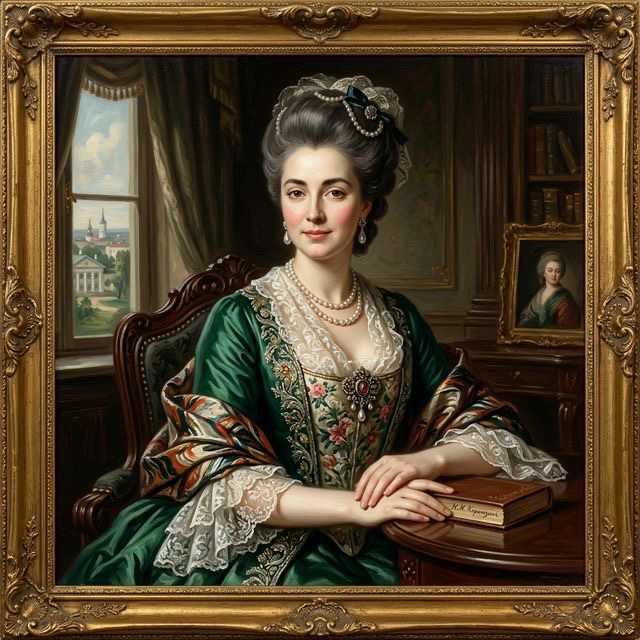
AI-assisted Portrait of Elizaveta Protasova
The Woman Who Taught Karamzin to Grieve
Elizaveta Protasova was born around 1768 into a Nizhny Novgorod noble family and died around 1799 at approximately thirty-one — a short life that left almost no direct historical record. What survives of her comes filtered almost entirely through Nikolai Karamzin, who is believed to have loved her unrequitedly and encoded something of her in the sentimental fiction and melancholy verse of his first literary decade. She is less a documented figure than a presence inferred from an absence: the woman a great writer could not stop thinking about.
His most famous work, Poor Liza (1792) — a peasant girl who loves, is abandoned, and drowns herself — could not have been written without real experiences of longing and grief. Whether Elizaveta Protasova was the direct source of that grief is impossible to establish. That she was connected to the emotional world from which the story emerged seems plausible. Her death, whenever it came, left no direct textual monument; the loss went underground, into the emotional substrate of a sensibility that had already learned, through her, how to feel literary sorrow.
Nizhny Novgorod and the Sentimental Age
The provincial nobility of late eighteenth-century Russia had access to European fashions in literature and sentiment — to Richardson and Rousseau, to the tear-soaked correspondence novel, to the idea that refined feeling was itself a moral achievement — while living at a remove from the capitals where those fashions were generated. A young noblewoman in Nizhny Novgorod in the 1780s would have been educated in French, equipped with the sentimental vocabulary of the era, and entirely subject to the practical imperatives of marriage and family regardless of her inner refinement.
This was the world that produced Elizaveta Protasova, and the world Karamzin came from before he left for Moscow and then Europe. Their connection, if it ran as deep as the literary traces suggest, would have been between two provincial sensibilities newly acquainted with Romantic feeling. What she thought of him, whether the feeling was mutual, whether she knew what she meant to his developing artistic consciousness: all of this is lost. The woman who could not be adequately mourned became the emotional source of a literature devoted to mourning.
Psychological Verdict
Almost nothing is recoverable about Elizaveta Protasova's psychology. She left no letters, no memoirs, no direct testimony. What can be said is that the woman who attracted Karamzin's sustained emotional attention — a man with the most finely calibrated sentimental sensibility of his generation — was likely someone whose interiority was legible and rich without being loudly performed. The type that fits is the INFP: quiet, intensely feeling, generating in others the sense that there is more here than can be said.
The INFP makes those depths available to the sensitive observer without imposing — exactly the dynamic that sentimental literature was built to memorialize. Karamzin spent his career writing about women who felt too much for the world to contain. She taught the great sentimentalist how to grieve, and he spent his career teaching a nation to do the same.
Connected Figures
Further Reading
- Nicholas Karamzin and Russian Society in the Nineteenth Century — J. L. BlackCovers Karamzin's early sentimental writing, including the unrequited longing for Protasova believed to have shaped Poor Liza.
- Russia in the Age of Catherine the Great — Isabel de MadariagaProvides the broader imperial and literary backdrop against which Karamzin's sentimentalist circle, including Protasova, took shape.
- Catherine the Great: Portrait of a Woman — Robert K. MassieSketches the cultural world of late Catherinian Russia in which sentimental literature like Karamzin's began to flourish.
