 Historical Figure MBTI
#868 · 6-22-26 · The American Civil War
Ellen Ewing Sherman
Wife · Devout Catholic · General's Anchor
1824 — 1888
3 min read
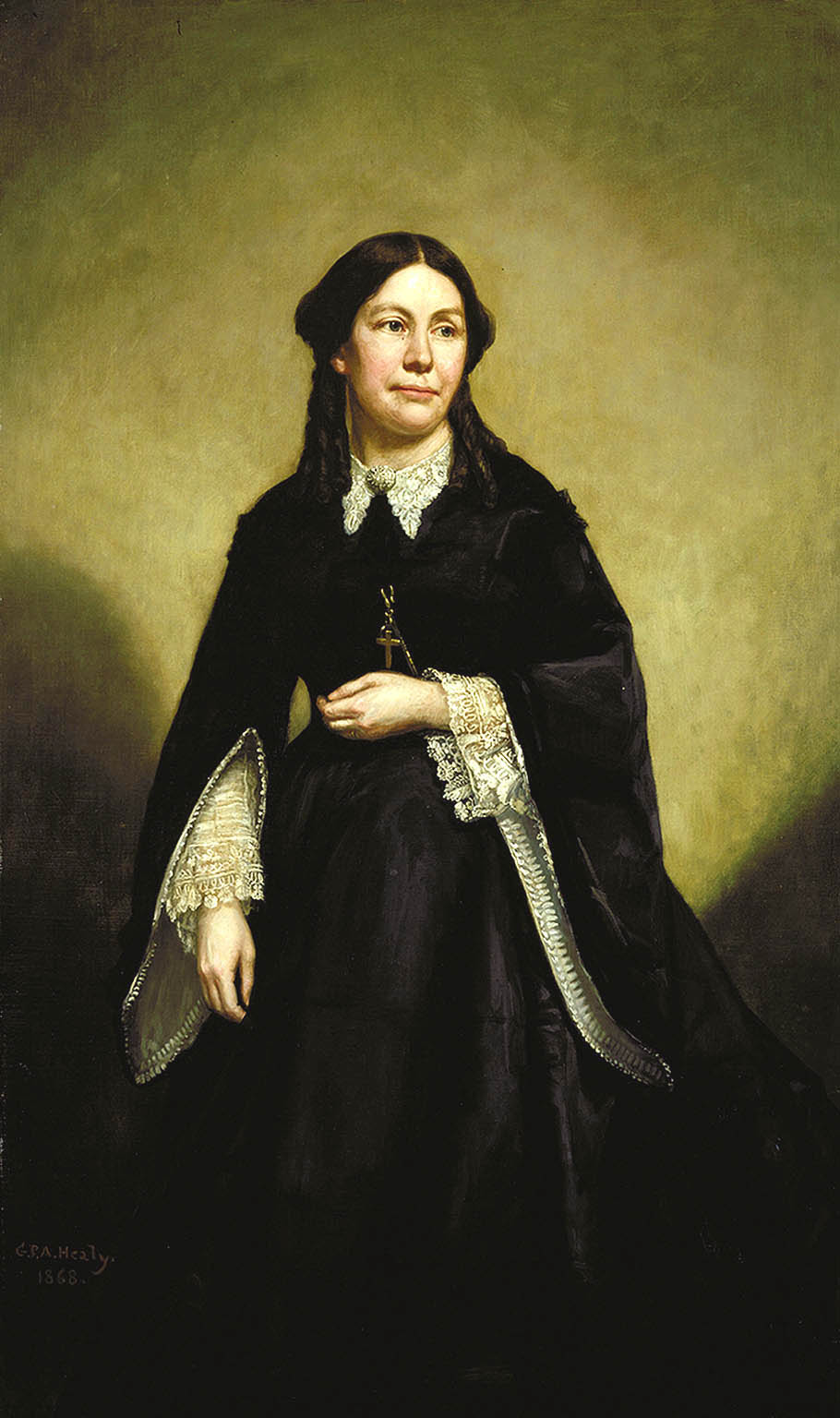
Portrait of Ellen Ewing Sherman
The Woman Who Waited
Ellen Ewing Sherman was, by the accident of her father's generosity, her husband's foster sister before she was his wife. When William Tecumseh Sherman's father died in 1829, leaving eleven children and no money, the boy was taken in by Thomas Ewing — Ohio senator, cabinet officer, a man whose household ran on order, piety, and ambition. Ellen was raised alongside him. She married him in 1850, in a wedding attended by Henry Clay and Daniel Webster, and spent the next thirty-eight years doing what the Ewing household had trained her to do: hold a family together while the men in it were elsewhere, chasing careers that did not include her.
For most of the Civil War, elsewhere was where Sherman was. He moved through Kentucky, Tennessee, Georgia, trailing a reputation for instability that the press printed as fact before it settled into legend. Ellen managed the children, the finances, the Catholic instruction, and the correspondence — volumes of it, some of the most candid mail either of them ever wrote. She was not a passive correspondent. She lobbied Lincoln's cabinet on her husband's behalf when his career needed defending, and she pressed him, letter after letter, toward a religious devotion he never fully gave her. In 1863 their nine-year-old son Willy died of typhoid at a river camp in Mississippi, having ridden out with his father as an honorary sergeant days before. It was a wound that outlasted the war.
An ISFJ holding a household together by memory, duty, and faith, while the world outside it burned and reorganized itself without asking her opinion.
What comes through in Ellen's letters is not sentiment so much as insistence — the same three or four convictions, repeated across decades, never abandoned for a more persuasive argument. Sherman should convert. Sherman should behave. Sherman should come home. She did not theorize about any of it; she simply held the position, the way she held the household, the finances, and the children's catechism, through moves, deployments, and one unbearable loss. Her stability was not warmth performed for its own sake — it was warmth as obligation, Fe in service of a Si memory of how a Catholic household was supposed to run, inherited whole from her father's home and never renegotiated. Sherman, restless and abstract, needed exactly that kind of fixed point to return to, whether or not he ever said so.
Connected Figures
Further Reading
- Citizen Sherman — Michael FellmanThe fullest account of the Sherman marriage, including Ellen's religious campaign and the death of Willy.
- Sherman: A Soldier's Passion for Order — John F. MarszalekSituates Ellen's letters within Sherman's psychology and career pressures.
- Sherman: Fighting Prophet — Lloyd LewisClassic biography with extensive use of the Ewing household correspondence.
- The Sherman Letters: Correspondence Between General and Senator Sherman — ed. Rachel Sherman ThorndikeFamily letters connecting Ellen's household to John Sherman's political career.
