 Historical Figure MBTI
3 min read
#160 · 3-17-26 · The Young Republic of USA
Elmore Douglass
Not the moment. The routine.
c. 1800s
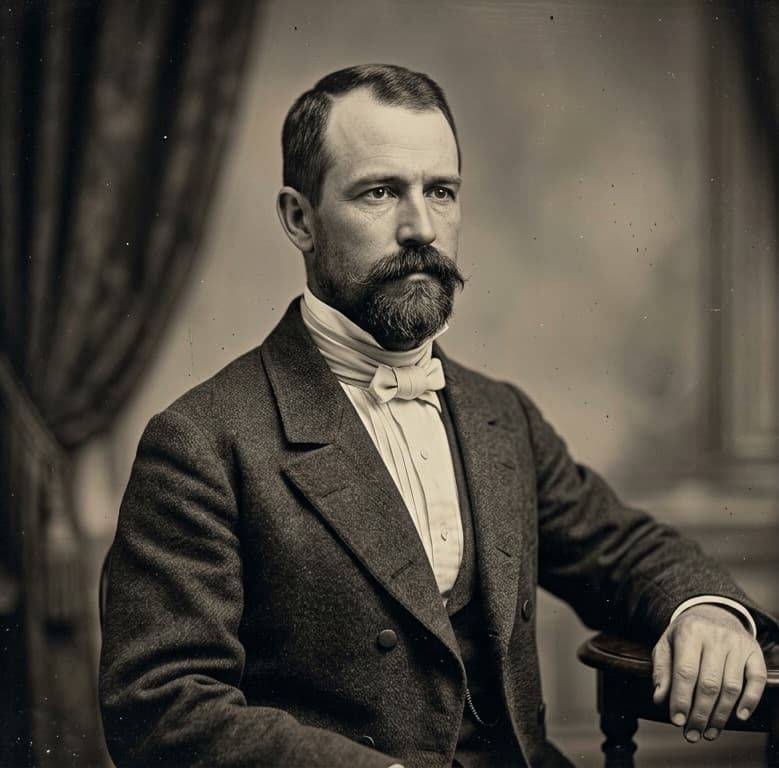
Portrait of Elmore Douglass
A Life Without Spectacle
Elmore Douglass does not enter history with noise.
He enters it quietly—and leaves it the same way.
A physician by profession and the second husband of Eliza Allen, Douglass lived a life defined less by public recognition and more by function. His presence in historical record is brief, almost understated, but what emerges is not absence—it is a different kind of life entirely.
Not one of disruption or reinvention. But of steadiness.
Where others around him were pulled into scandal, political tension, and emotional rupture, Douglass represents something more grounded: a man who practiced, who worked, who fulfilled his role without spectacle. His life did not seek to expand beyond its boundaries—it remained within them, consistent and contained.
He was not trying to become something else. He was doing what was already in front of him.
The Psychological Verdict
Elmore Douglass is not widely documented, but the shape of his life—practical, stable, duty-oriented—points toward a clear orientation.
His cognition reflects grounded responsibility, structure, and reliability—hallmarks of Si–Te.
He was likely an ISTJ.
Si — Dominant
Douglass's life appears rooted in consistency. As a physician, his role required routine, precision, and adherence to established methods. There is no indication of deviation or experimentation—his presence reflects continuity rather than change.
This is dominant Si: trust in what is known, practiced, and proven.
Te — Auxiliary
His work was not abstract—it was functional. Medicine, especially in his time, demanded action grounded in practical outcome. Douglass's life suggests a focus on doing what works, fulfilling responsibilities, and maintaining order in his professional and personal roles.
This reflects Te: efficiency, structure, and execution.
Fi — Tertiary
While not outwardly expressive, there is likely a quiet personal grounding beneath his steadiness. His life does not appear detached—it appears contained. His choices suggest an internal sense of what is right, even if it is not publicly articulated.
Ne — Inferior
Douglass does not appear oriented toward possibility or expansion. There is little evidence of exploration, reinvention, or engagement with the unknown. His life remained within established boundaries, favoring stability over uncertainty.
This reflects inferior Ne: preference for the familiar over the new.
Why not ISFJ?
Te over Fe (not ISFJ)
ISFJs also lead with Si, but their focus is more relational and people-oriented. Douglass's life appears more task-focused than socially driven. His identity centers on role and function rather than emotional coordination or group harmony. This leans toward Te rather than Fe.
Connected Figures
Further Reading
- The Raven: A Biography of Sam Houston — Marquis JamesCovers Eliza Allen's life after Houston, including the quiet second marriage to Douglass.
- Sam Houston — James L. HaleyFrames Douglass's steady, undocumented life against the turbulence of Eliza's first marriage.
- What Hath God Wrought: The Transformation of America, 1815-1848 — Daniel Walker HoweSets the ordinary practice of a frontier physician like Douglass within the wider Jacksonian era.
