 Historical Figure MBTI
#700 · 5-25-26 · The Age of Exploration
Fernando Colón
Bibliophile · Biographer of His Father · Builder of a 15,000-Volume Library
1488 — 1539
6 min read
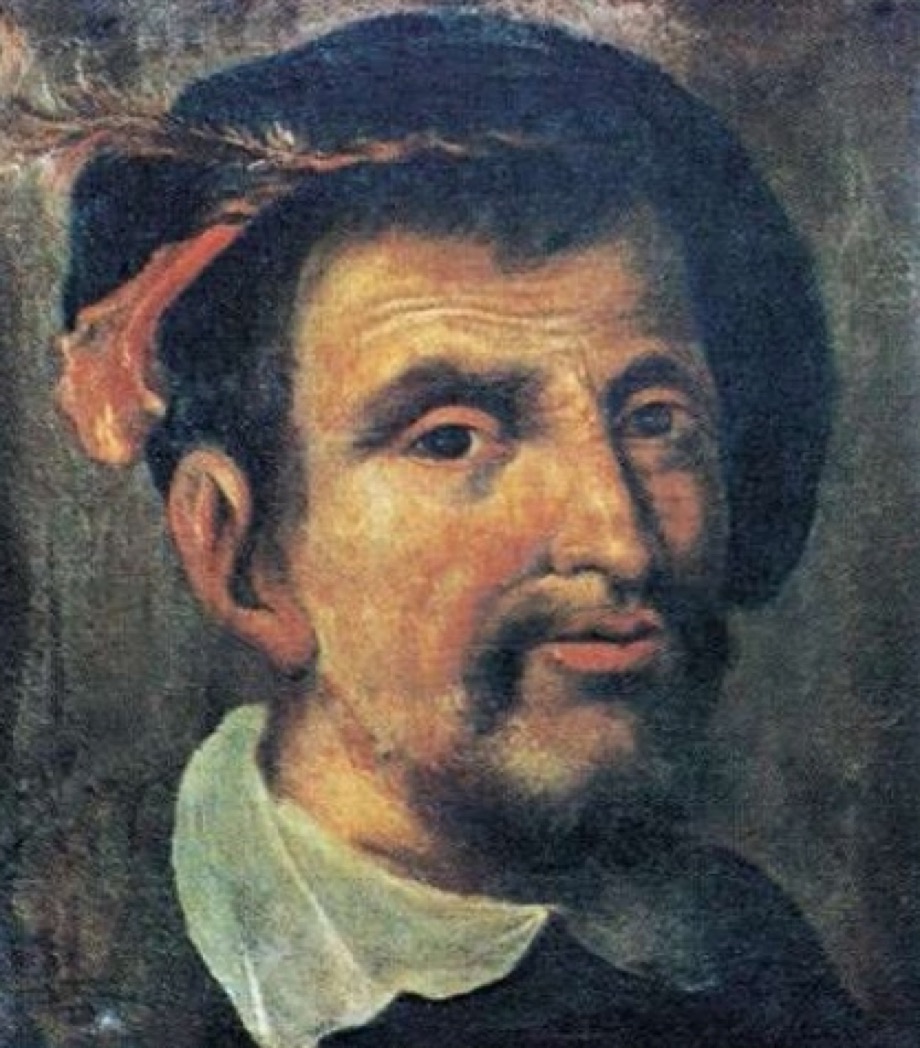
Portrait of Fernando Colón
The Son Who Turned the Voyage Inward
He was fourteen when he boarded his father’s fourth and final voyage — storms, mutinies, a year marooned on Jamaica. Most sons of famous men spend their lives answering the question the father leaves behind, chasing the same horizon or fleeing it. Fernando Colón did neither. He took the raw material of Christopher Columbus’s life and did what he would go on to do with every book, map, and print he ever touched: he catalogued it.
This is the shape of an INTP mind operating at the edge of an empire. Where his father burned with a visionary’s certainty, Fernando absorbed the world’s raw data and spent a lifetime building the internal architecture to make sense of it. He wrote the first great biography of his father, the Historie, at once a devoted reconstruction and a quietly ruthless feat of source management. Then, having organized one man’s legacy, he set out to organize recorded knowledge itself: the Biblioteca Colombina, a private library past fifteen thousand volumes, indexed by a system he invented decades before anyone else thought a library needed one.
Fernando Colón was an INTP, and his dominant Introverted Thinking shows itself less in what he discovered than in the private, exacting architecture he built to hold everything else that had already been discovered.
A Cataloguing System Before Library Science Existed
Introverted Thinking wants a private, internally consistent system before it trusts the world’s labels. Fernando’s library did not simply grow — it grew inside a framework he engineered from scratch: his own subject classifications, content summaries for individual volumes, a running record of where and when he had acquired each book and whether he had read it. No European institution had anything resembling this apparatus. He was not preserving books the way a collector hoards trophies; he was building a machine for cross-referencing everything he knew, answerable to no patron and no scholarly tradition.
The same instinct governed the Historie. Fernando did not simply repeat the stories he had heard about his father — he assembled documents and weighed testimony, functioning less as a loyal son than as an internal auditor of the record. That the Spanish original was later lost and the work survives only in Italian translation is its own small irony: the structure outlasted the material’s physical form, exactly the durability a Ti-dominant mind is built to produce. He was not trying to convince Seville his father deserved a monument; he was trying to get the facts into a shape correct enough to hold on their own.
Fifteen Thousand Volumes, One Restless Appetite
A pure Ti-dominant obsessive might have built a small, airtight archive of one subject and stopped there. Fernando built one of the largest private libraries in Renaissance Europe, spanning theology, natural history, poetry, cartography, music, and cheap popular print — anything that crossed a border or a printing press was fair game. That range is Extraverted Intuition at work: a hunger for connection across domains, for the unexpected thread linking a broadsheet ballad to a navigational treatise.
He traveled through Italy, Germany, France, and the Low Countries buying books wholesale, not merely rare or prestigious ones but disposable pamphlets most contemporaries considered beneath preservation — trusting, correctly, that the patterns of an age live as much in its ephemera as in its monuments. That trust in possibility over pedigree is Ne serving Ti: it feeds the dominant function wide-ranging material to organize, rather than letting the system calcify around a narrow canon.
Keeping the Record of the Record
Introverted Sensing shows up in Fernando less as nostalgia than as bookkeeping discipline — the habit of preserving exact detail against the erosion of time. He tracked, volume by volume, when and where he had bought each book and what he had paid, building a personal chronicle of his own collecting alongside the collection itself. That double record — the books, and the record of acquiring the books — is a distinctly Si gesture: memory treated as an asset to be maintained, not just experienced.
It surfaces again in the Historie, where Fernando works to fix his father’s voyages into an accurate sequence — dates, routes, the texture of specific storms — resisting the pull toward the more flattering, legendary version of events already circulating in his lifetime. This tertiary function never dominates him, but it grounds the Ne-fed, Ti-organized sprawl of the library in something concrete: an archive is only as trustworthy as its provenance, and Fernando was, before almost anyone else in Europe, thinking seriously about provenance.
The Legacy He Could Not Simply Leave Alone
Extraverted Feeling, inferior and situational, appears in Fernando mainly as an undertow he could not entirely ignore: the pull to defend his father in the court of public opinion. Christopher Columbus’s later years were marked by disgrace and disputed claims against the Spanish crown, and Fernando spent decades — through the biography and a lawsuit on behalf of his half-brother Diego — trying to restore a reputation that mattered to him in a way pure intellectual curiosity does not explain.
But it is telling that even this act of loyalty took the form of an archive rather than a performance. He did not campaign for his father’s honor in speeches or spectacle; he built the documentary case and let it stand. When Fe does surface, it is filtered almost entirely through Ti — feeling converted into evidence, loyalty into footnotes. And in the one area of his life built for other people rather than himself — the Biblioteca Colombina, intended eventually to serve scholars beyond his own household — there is a quiet, unshowy generosity: a library assembled not to be admired, but used.
Why INTP Over ENTP
Why not ENTP?
An ENTP could plausibly have amassed a large library too — the same omnivorous curiosity, the same delight in unlikely connections. But an ENTP leads with Extraverted Intuition turned outward toward people and debate, generating ideas in conversation and testing them against an audience. Fernando shows almost none of that public, brainstorming energy. His signature achievement was a private indexing system built alone, over decades, refined for his own use before anyone else’s — Ti in the driver’s seat, with Ne feeding it material rather than steering.
The clearest evidence is what Fernando chose to build with his one great asset — access, funds, and a famous name. An ENTP with those resources tends toward ventures, networks, public reputation. Fernando spent his on a system nobody was asking him to build, refined to a standard of cross-referencing that would not become common practice for centuries. It is the mark of a mind organizing for its own satisfaction first, the world’s convenience only a byproduct.
Connected Figures
Further Reading
- The Life of the Admiral Christopher Columbus — Fernando Colón, trans. Benjamin Keen (Rutgers University Press, 1959)Fernando's own biography of his father — a primary source and a study in careful, defensive archiving.
- The Catalogue of Shipwrecked Books: Young Columbus and the Quest for a Universal Library — Edward Wilson-Lee (Scribner, 2018)A full biography of Fernando himself, centered on the building of the Biblioteca Colombina.
- The Print Collection of Ferdinand Columbus — Mark McDonald (British Museum Press, 2004)A scholarly study of Fernando's print holdings and his pioneering cataloguing methods.
