 Historical Figure MBTI
#699 · 5-25-26 · The Age of Exploration
Luis de Santángel
Converso Treasurer · The Man Who Financed Columbus
c. 1435 — 1498
3 min read
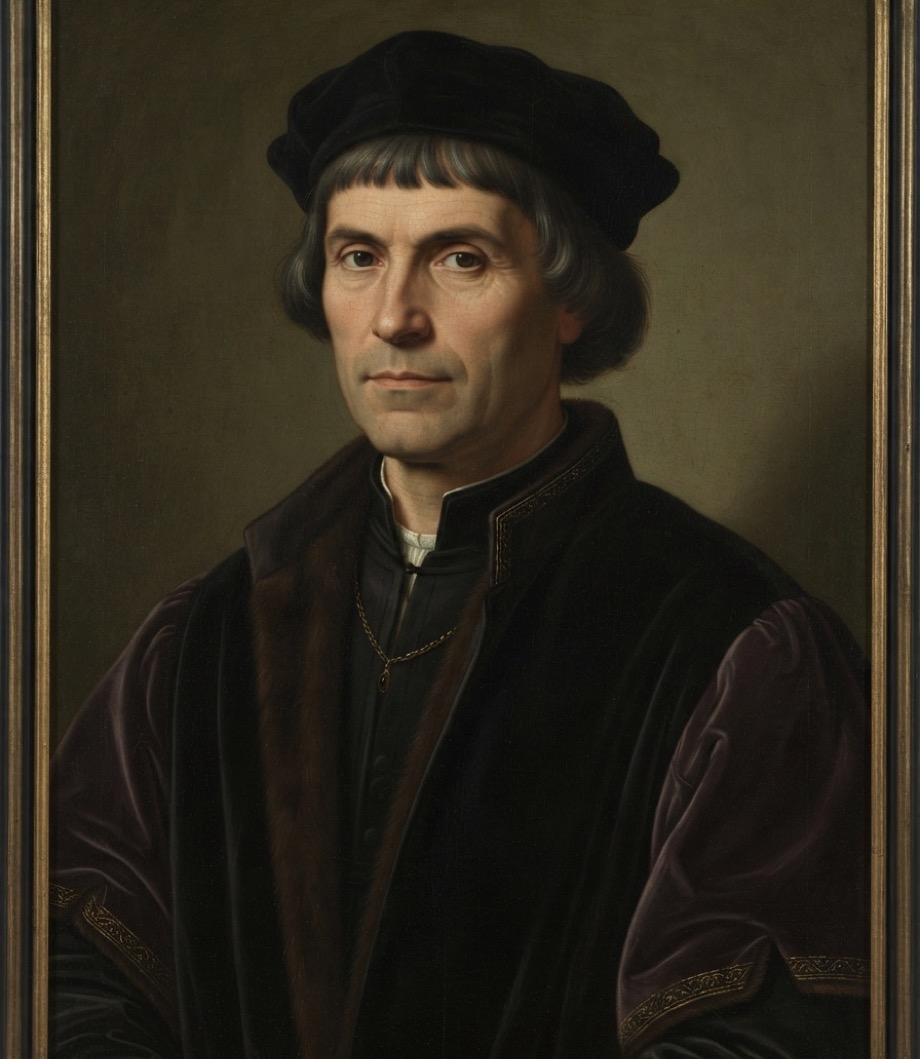
AI-assisted Portrait of Luis de Santángel
The Man Who Called the Queen Back
By the time anyone remembers Luis de Santángel, the story has usually already moved on to someone else — to the queen who supposedly pawned her jewels, to the admiral who supposedly saw what no one else could. Santángel belongs to the part of the story nobody tells: the ledger part, the part where a royal commission has already said no, where the treasury is exhausted from the long war against Granada, and where a Genoese sailor with an implausible proposal is packing his mule to leave Spain for good.
Santángel was Escribano de Ración to the Crown of Aragon — chief financial officer, in modern terms, to Ferdinand — and a converso, a descendant of Jews converted to Christianity, in a court where that fact was never quite forgotten and never quite safe. He had spent a career making himself indispensable by being right about money: what things cost, what they were worth, what a kingdom could and could not afford. When Columbus's proposal collapsed under the weight of Isabella's own advisors, it was Santángel — not a dreamer, not a courtier, but the man who kept the books — who rode after the decision and unmade it.
He did not argue that Columbus was right. He argued that the queen was risking almost nothing to find out. He offered to arrange the financing himself, part from the treasury, part from his own purse, part borrowed — a modest sum, he insisted, against an enormous possible return. Isabella listened to the number, not the vision, and sent for Columbus. Without Santángel's intervention, by every account historians take seriously, the 1492 voyage does not happen at all.
He didn't dream the voyage into being. He made it solvent — the necessary, unglamorous counterweight without which the dream stays a dream.
Connected Figures
Further Reading
- Columbus — Felipe Fernández-ArmestoOxford, 1991 — the standard scholarly biography, with the court politics behind the 1492 voyage.
- Sails of Hope: The Secret Mission of Christopher Columbus — Simon WiesenthalMacmillan, 1973 — explores Santángel's converso background and motives; a speculative but widely cited account.
