 Historical Figure MBTI
4 min read
#34 · 2-11-26 · Victorian Britain
Florence Nightingale
Nurse · Statistician · Architect of Modern Hospital Reform
1820 — 1910
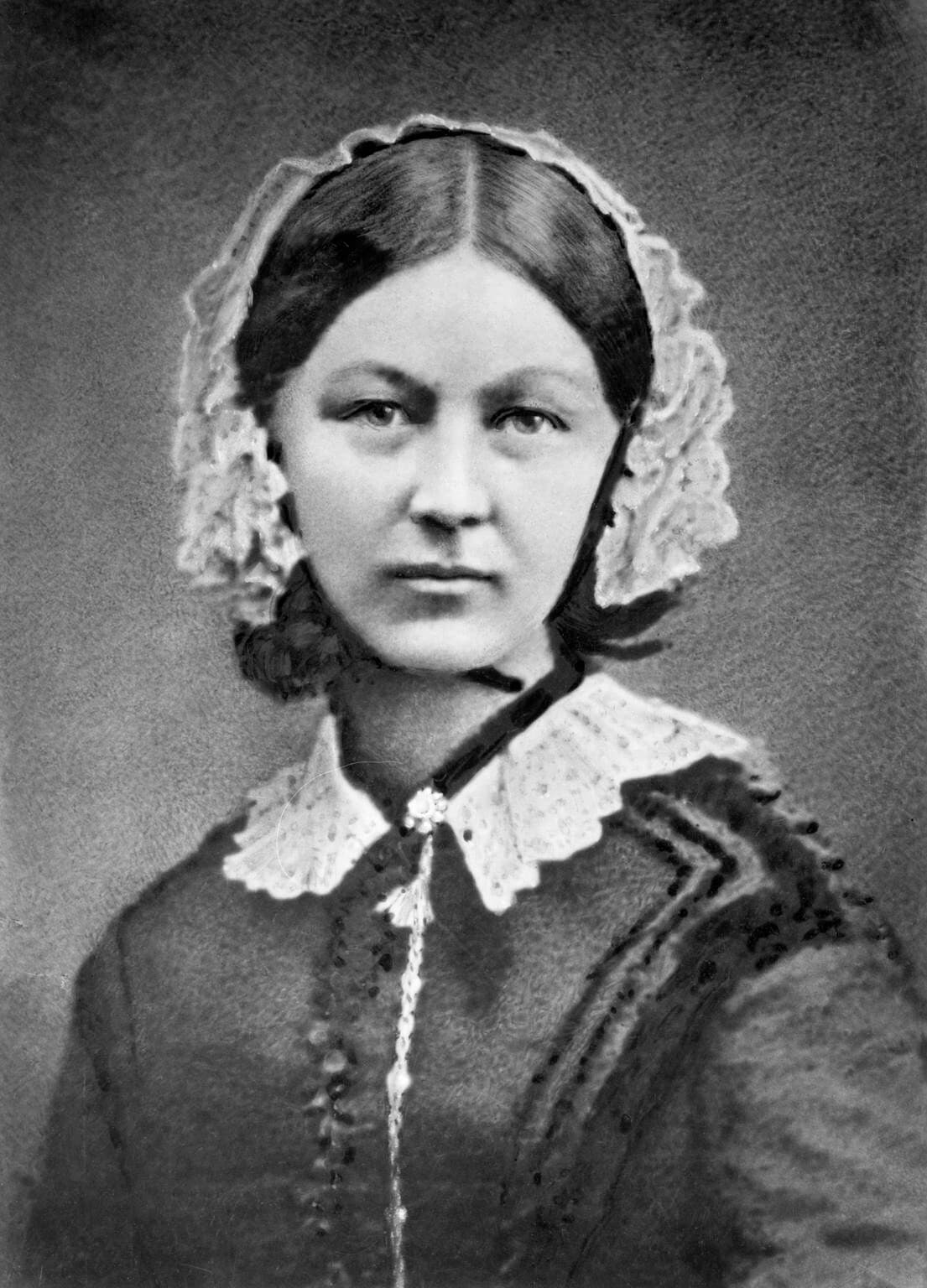
Portrait of Florence Nightingale.
The Woman Who Redesigned Survival
Florence Nightingale was not born into necessity. She was born into wealth.
In Victorian England, that meant marriage, social hosting, and a carefully curated life of propriety. Nursing was considered unsuitable — even degrading — for a woman of her class. She chose it anyway.
When she arrived in Scutari during the Crimean War, she encountered a reality the British public did not see: overcrowded wards, contaminated water, unwashed linens, infection spreading faster than bullets. Soldiers were not dying from wounds. They were dying from neglect. Where others saw tragedy, she saw a pattern.
She is frequently typed as INFJ or ENFJ due to her humanitarian legacy. But humanitarian impact does not equal Fe dominance. Her reforms were not relationally driven — they were architecturally driven. She did not primarily mobilize emotion; she constructed systems. Florence Nightingale was most likely INTJ.
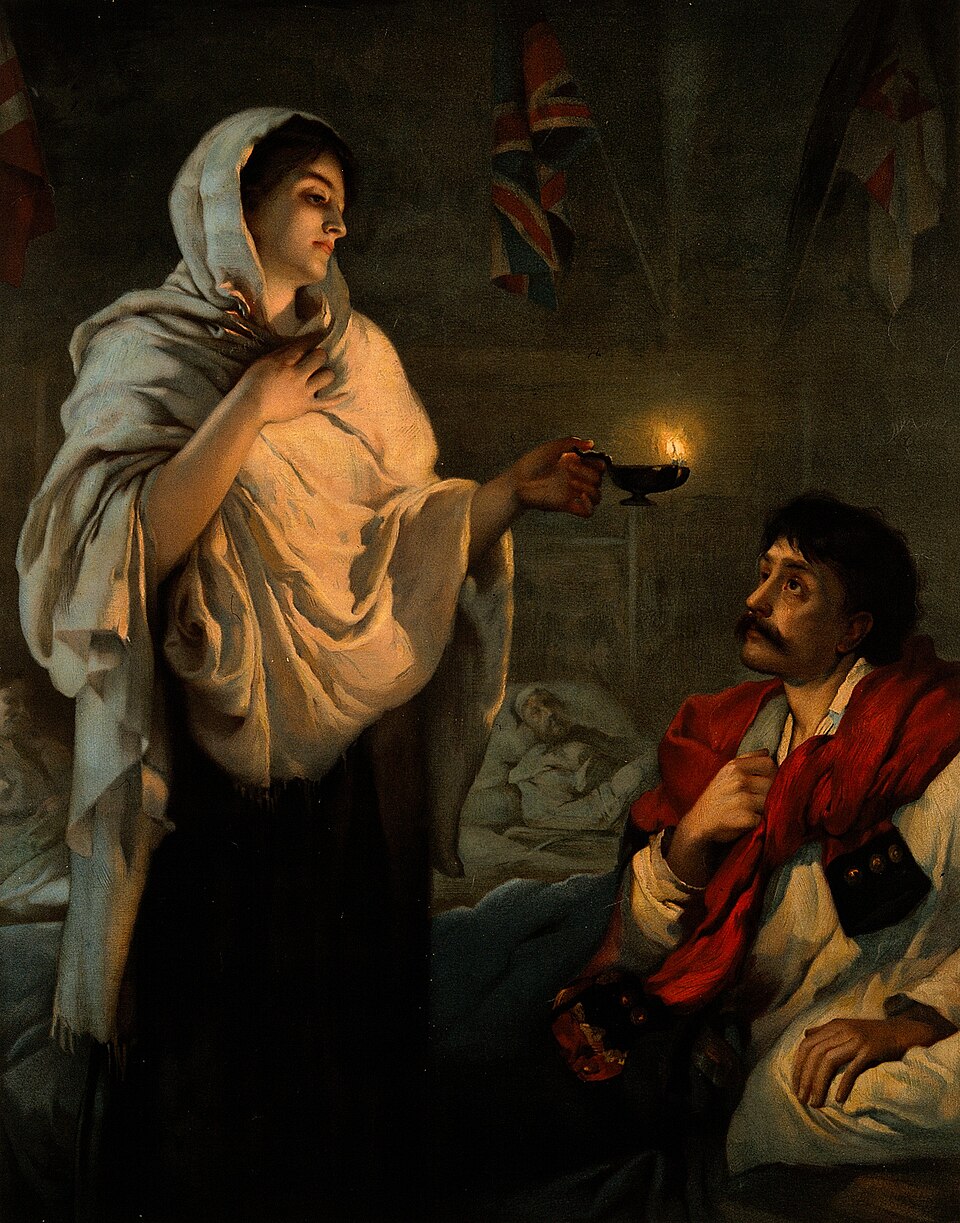
The lamp made her famous. The structure made her immortal.
Ni — Dominant
Nightingale's mind operated through compression. In the chaos of war hospitals, she did not merely respond to suffering in front of her. She stepped back and identified the invisible structure producing it — infection rates, ventilation failures, water contamination, logistical bottlenecks.
She extracted principle from noise.
Her coxcomb diagrams were not decorative innovations; they were Ni in visual form — vast complexity distilled into a single, undeniable pattern. She sought the underlying mechanism that explained mortality itself. This was not reactive empathy. It was strategic synthesis.
Te — Auxiliary
Her vision did not remain theoretical.
Nightingale compiled statistical reports, lobbied Parliament, and leveraged bureaucratic channels to codify reform. She understood institutional language and spoke it fluently. She transformed moral urgency into administrative mandate.
Hospitals were reorganized. Training standards were formalized. Nursing schools were established with measurable criteria. This was not emotional persuasion. It was structural implementation — Ni supported by Te.
Fi — Tertiary
Though publicly celebrated, Nightingale was personally reserved and fiercely independent. She rejected marriage proposals — including that of Richard Monckton Milnes — despite genuine affection. She believed marriage would compromise her calling.
Her conviction did not depend on consensus. She followed an internal sense of duty that remained intact even when criticized, misunderstood, or isolated. She endured decades of physical illness and social withdrawal while continuing her reform work from behind closed doors.
This quiet but unyielding moral compass reflects tertiary Fi: deeply personal values, selectively expressed, resistant to external pressure.
Se — Inferior
Nightingale could immerse herself intensely in physical crisis — as she did in Crimea — but prolonged sensory exposure drained her. After the war, she withdrew physically and worked primarily through correspondence and analysis.
Her relationship to the present moment was instrumental, not indulgent. She engaged reality to gather data, then retreated into abstraction to refine her model. Like many Ni-dominants, she interacted with the physical world in service of long-range vision, not immediate stimulation.
Why Not INFJ or ESTJ?
Why not INFJ?
INFJs lead with Fe — relational attunement, interpersonal harmonizing, and value-driven persuasion. Nightingale's influence, however, was not built on emotional coalition-building. Many contemporaries described her as blunt, uncompromising, even difficult. Her reforms succeeded because they were empirically undeniable, not because they were emotionally resonant. Her primary cognitive tool was statistical analysis — external structuring of reality — suggesting Te as a consistent auxiliary, not a tertiary afterthought.
Why not ESTJ?
ESTJs lead with Te-Si — they optimize existing frameworks, enforce proven procedures, and value precedent. Their reforms tend to restore order by returning to what has worked before. Nightingale did not restore precedent. She invented new systems from scratch based on an internal vision of what should exist. Her coxcomb charts were a novel form of data visualization designed to communicate an insight that had never been articulated. Furthermore, ESTJs are socially engaged and value hierarchical respect. Nightingale withdrew from public life and worked in isolation for decades. She was not enforcing tradition. She was architecting the future.
The Ecosystem
Nightingale did not operate in isolation. Her intellectual circle included Mary Clarke, whose wit and provocative conversation gave Florence room to be more than an icon, and Richard Monckton Milnes, who admired her deeply but could not secure her partnership.
Others provided channels; she supplied the blueprint. The system did not shape her vision. She reshaped the system.
Connected Figures
Further Reading
- Florence Nightingale: The Woman and Her Legend — Mark BostridgeThe definitive modern biography — draws on the full archive to separate the legend from the driven, difficult, and extraordinary person beneath it.
- Notes on Nursing: What It Is, and What It Is Not — Florence NightingaleHer own voice — a short, brisk text that reveals the systematic mind behind the humanitarian reputation.
- Florence Nightingale on Statistics — Florence Nightingale (ed. I. B. Cohen)Collects her statistical writings and the famous polar-area diagrams; shows how she invented data visualization as a tool of public persuasion.
- The Strange Case of the Lady with the Lamp — Hugh SmallA revisionist account that challenges the Scutari myth and forces a closer look at what the mortality data actually showed.
