 Historical Figure MBTI
4 min read
#64 · 2-21-26 · The Tang Dynasty
Emperor Gaozu of Tang
The Calculated Founder Who Waited — Then Took the Mandate
566 — 635
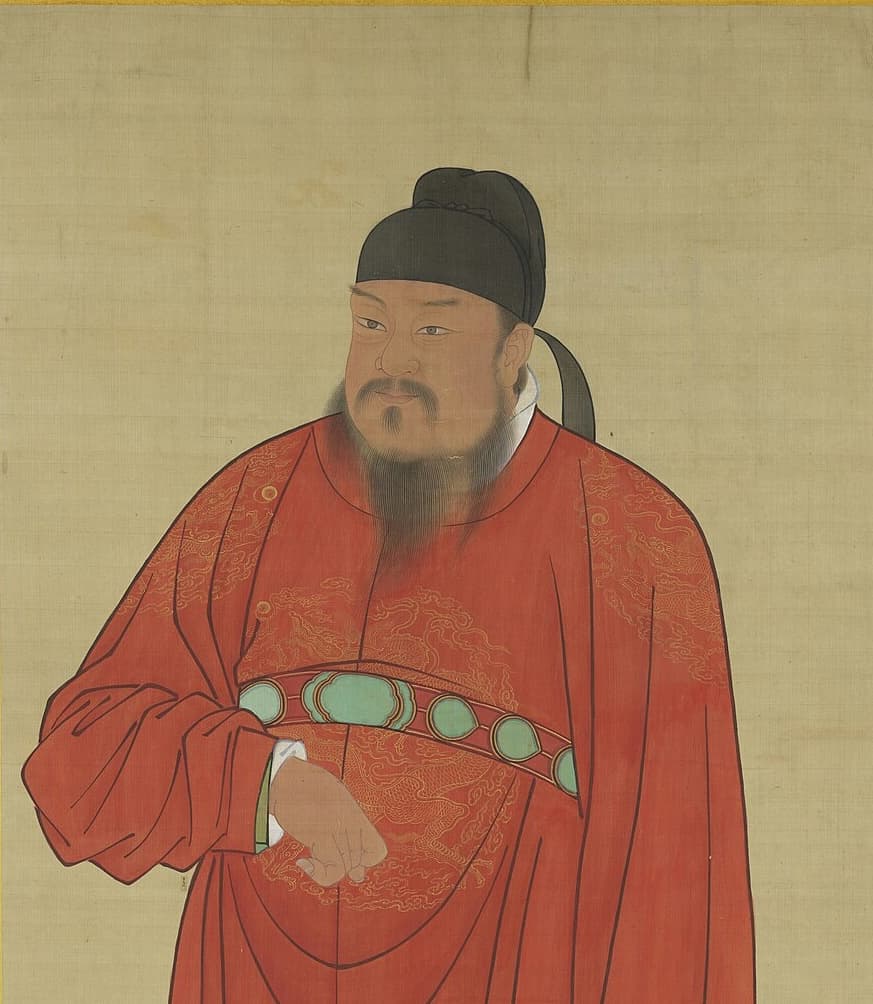
AI-assisted Portrait of Emperor Gaozu of Tang.
The Founder Who Did Not Rush
The Sui dynasty lasted barely four decades. It collapsed under overextension, forced labor, failed campaigns against Goguryeo, and internal rebellion. Li Yuan saw this. But he did not immediately revolt. He prepared.
Emperor Gaozu of Tang was not a reactionary provincial governor dragged into rebellion. He was a seasoned aristocratic general who understood timing. His rise was not emotional. It was executive. He eliminated potential internal threats preemptively, secured Turkic neutrality before advancing south, installed a puppet Sui emperor to control legitimacy optics, structured his sons into military command roles, and advanced only after flanks were stabilized.
That staged consolidation aligns with ENTJ. Li Yuan did not rebel for glory. He rebelled because he determined the Sui regime was unsalvageable. And once he determined that, he moved efficiently.
He waited. He calculated. He moved. And once he had the Mandate, he ensured it would survive him.
Te — Dominant
His rise was not improvisation. It was staged consolidation. He eliminated potential threats preemptively. Secured external flanks before advancing. Installed a puppet Sui emperor to manage legitimacy optics rather than alienating supporters through premature claims.
Li Yuan did not seize power chaotically. He engineered the conditions under which power transfer became structurally inevitable. That is Te at the founding level — efficiency as dominance, outcome control as governance.
Ni — Auxiliary
The puppet emperor move is often misread as humility or tradition. It was insulation. Declaring Tang immediately would have united rivals against him. So he framed himself as restorer before becoming founder. That's narrative foresight. He anticipated reactions. He reduced friction. He managed perception before power transfer.
He didn't cling to tradition. He leveraged it.
The Family Pattern
Look at the leadership culture he created:
- • Li Jiancheng: crown prince, military authority
- • Emperor Taizong of Tang: strategic military genius
- • Princess Pingyang: independently raised 70,000 troops
This was not a passive aristocratic house. This was a power-calibrated family. ENTJs often raise capable successors because they distribute authority strategically. They cultivate strength around them. Li Yuan did not micromanage. He positioned talent.
The Ruthlessness
When threatened internally, he executed. When facing collapse, he maneuvered. When rival regimes surrendered, he absorbed. He was not sentimental. He was not theatrical. He was controlled.
Even after the Xuanwu Gate Incident, when Li Shimin killed his brothers, Gaozu did not counter-coup. He evaluated. He stepped down. He preserved dynasty continuity over personal ego. That is Te-pragmatism over emotional attachment.
Why Not ENFJ or ESFJ? Why Not Si-Dominant?
Why not ENFJ or ESFJ?
He did not lead through emotional coalition building. He did not frame rebellion as moral salvation. He did not unify through symbolic rhetoric. His alliances were tactical. His moves were calculated. His legitimacy management was strategic, not relational. Fe-dominant founders inspire movements. Li Yuan executed transitions.
Why not Si-dominant?
He did not cling to Sui structure until collapse forced him. He anticipated collapse. He gathered talent early. He recruited before rebellion was declared. He positioned before acting. That is expansion-aware opportunism — not tradition-bound conservatism. Si-dominant leaders wait for systems to fail before acting. Li Yuan acted while the system was still nominally intact.
Connected Figures
Further Reading
- The Cambridge History of China, Vol. 3: Sui and T'ang China, 589–906 AD — Denis Twitchett (ed.)The definitive Western scholarly treatment of the Tang dynasty's founding, institutions, and early rulers.
- China's Imperial Past: An Introduction to Chinese History and Culture — Charles O. HuckerProvides essential context for the Sui–Tang transition and Gaozu's place in the dynastic cycle.
- The Open Empire: A History of China to 1800 — Valerie HansenAccessible narrative that covers Gaozu's founding of Tang within the broader arc of Chinese imperial history.
