 Historical Figure MBTI
4 min read
#63 · 2-21-26 · The Tang Dynasty
Emperor Taizong of Tang
The Strategist Who Secured the Dynasty
598 — 649
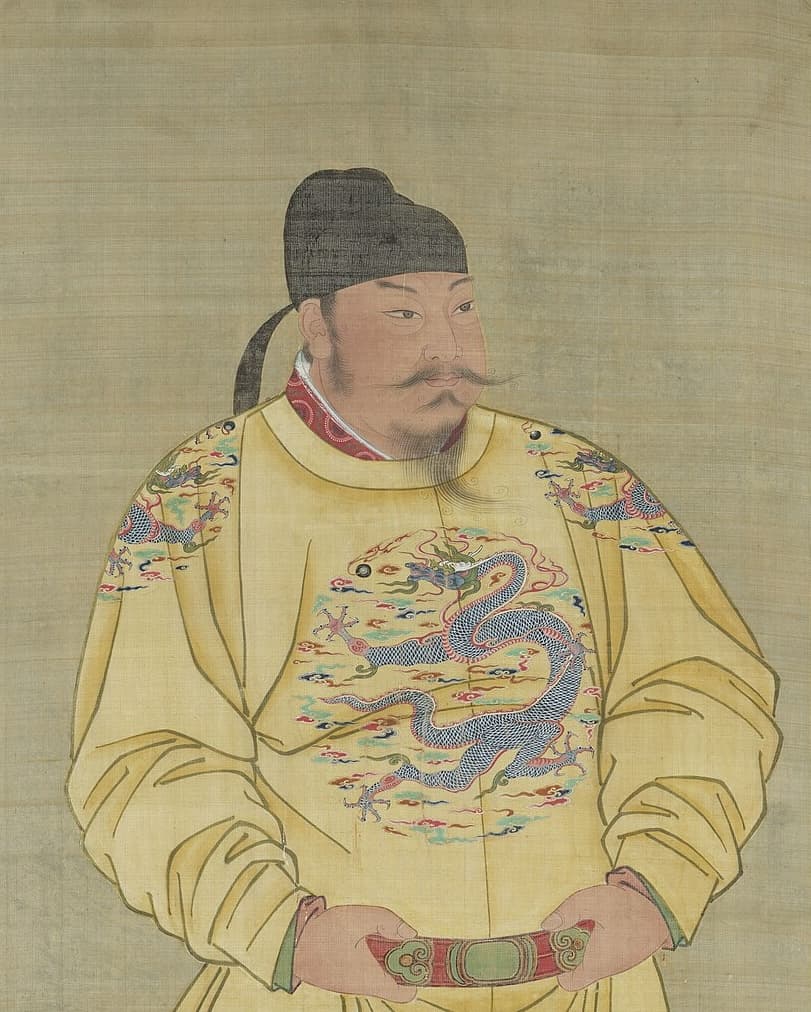
AI-assisted Portrait of Emperor Taizong of Tang.
The Son Who Took Power
If the Tang dynasty was founded by opportunity, it was secured by force. Li Shimin — later Emperor Taizong — did not inherit a peaceful succession. Though instrumental in defeating rival warlords and stabilizing the realm during his father's reign, he was not the crown prince. In 626, at the Xuanwu Gate Incident, Li Shimin ambushed and killed his brothers, forced his father Emperor Gaozu of Tang to abdicate, and assumed the throne.
It was decisive. Calculated. Irreversible. And once he had it, he governed exceptionally well. Taizong is sometimes typed ENFJ because of his willingness to listen to advisors and his reputation as a model ruler. But listening does not equal Fe-dominance. The deeper pattern of his reign aligns most coherently with ENTJ (Te–Ni–Se–Fi). He was not harmonizing people for unity's sake. He was optimizing empire.
He killed to secure the throne. He governed to secure the state.
Te — Dominant
Taizong's defining trait was structural authority. He consolidated power through decisive elimination of rivals, strengthened central administration, institutionalized meritocratic examinations, expanded territory through military campaigns, and stabilized frontier threats. His rule emphasized effective governance over sentiment.
The Xuanwu Gate Incident alone demonstrates Te-first prioritization of state stability over familial loyalty. If succession threatens the state, remove the threat. Te-dominance prioritizes outcome over relational discomfort.
Ni — Auxiliary
Taizong was not merely reactive. He demonstrated long-range strategic awareness. His foreign policy and military campaigns against Eastern Turkic forces show calculated timing rather than impulsive expansion. He also cultivated capable advisors such as Wei Zheng — not because he needed emotional reassurance, but because he understood that strong criticism strengthens governance. That's Ni supporting Te: recognizing that institutional longevity requires accurate feedback loops.
He valued dissent as a tool. Not as a bonding ritual.
Se — Tertiary
Unlike purely administrative rulers, Taizong had battlefield credibility. He was not an abstract strategist; he had commanded troops personally and understood warfare viscerally. This grounded decisiveness shows tertiary Se — action readiness, confidence under pressure, comfort with direct confrontation. He did not avoid conflict. He executed it.
Fi — Inferior
Taizong was not emotionally theatrical. He did not rule through moral persuasion or collective harmony-building. However, historical accounts suggest he reflected privately on the brutality of his early actions, reportedly warning future rulers about the mistakes of reckless governance. Inferior Fi in ENTJs often manifests as internal moral calibration — not outward emotional expression. He may have felt the weight of his brother's blood. He did not let it weaken governance.
Why Not ENFJ?
Why not ENFJ?
ENFJs lead with Fe — relational alignment and morale cohesion. Taizong's leadership, while consultative, was not harmony-first. He eliminated family members to secure succession and consolidated authority through power restructuring. Listening to advisors does not make one Fe-dominant. In Taizong's case, listening was instrumental — a governance tool. ENFJ rulers typically unify through persuasion and symbolic relational authority. Taizong unified through strategic control and institutional strength.
The Ecosystem Contrast
If Gaozu (his father) represents Te–Si stabilization, and Xuanzong later represents Ni–Fe harmony, Taizong stands between them as Te–Ni consolidation. He did not preserve tradition. He reshaped power around capability. He did not drift into aesthetic immersion. He enforced structural clarity. The Tang dynasty's golden age was not spontaneous. It was built atop the architecture he hardened.
Connected Figures
Further Reading
- Emperor Huizong — Patricia Buckley EbreyThough focused on a later emperor, Ebrey's framework for imperial governance and court culture applies directly to the Taizong model.
- The Cambridge History of China, Vol. 3: Sui and T'ang China — Denis Twitchett (ed.)The standard scholarly reference for the Tang dynasty, with detailed coverage of Taizong's reign and the Zhenguan era.
- Son of Heaven: Emperor Taizong of Tang — Howard WechslerA focused study of Taizong's political consolidation and the administrative reforms of his Zhenguan Reign.
- China: A History — John KeayAccessible narrative history situating Taizong within the broader arc of Chinese dynastic rule.
