 Historical Figure MBTI
3 min read
#148 · 3-17-26 · The Young Republic of USA
Hannah Hoes Van Buren
Not seen. But steady.
1783 — 1819
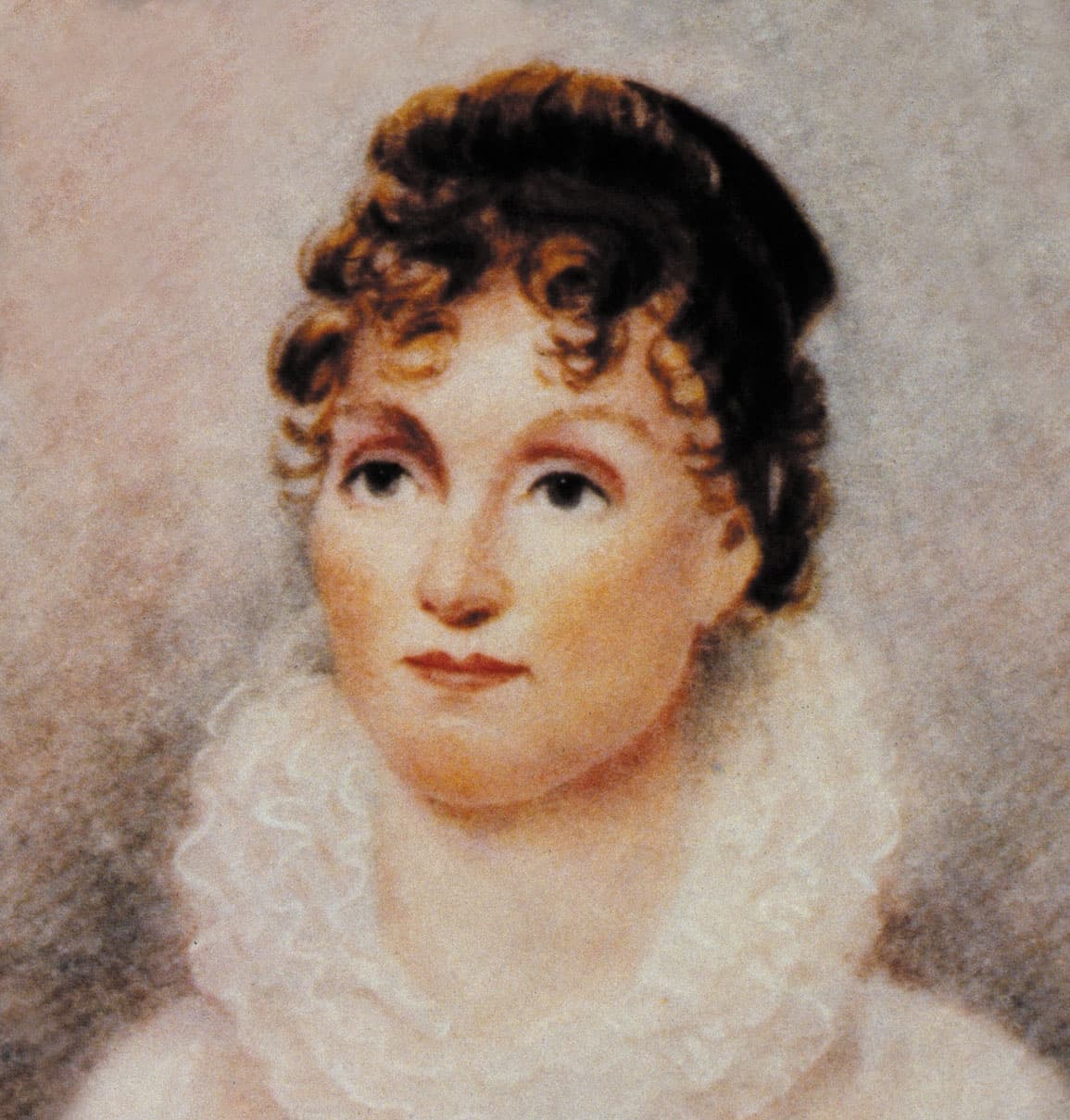
Portrait of Hannah Hoes Van Buren
The Private Anchor
Hannah Hoes Van Buren lived almost entirely outside the world her husband would come to shape.
Born in 1783 in Kinderhook, New York, she grew up in the same close-knit Dutch community as Martin Van Buren—one defined by continuity, familiarity, and deeply rooted social bonds. Unlike her husband, whose life would expand outward into ever-widening political circles, Hannah's life remained centered on home, faith, and the quiet rhythms of domestic life.
She did not follow him into Washington. She did not step into the public sphere. She remained where she was most grounded—within the private world she understood and sustained.
Described as modest, reserved, and deeply religious, Hannah embodied a kind of presence that does not seek visibility. Her influence was not in shaping events, but in maintaining the emotional and structural stability behind them.
She was not part of the system. She was what allowed it to hold.
The Psychological Verdict
Hannah Hoes Van Buren is rarely discussed in psychological terms, her life largely overshadowed by her husband's political career. But the consistency of her described traits points clearly in one direction.
Her orientation was not toward expansion or reinvention, but toward preservation—of home, of relationships, of a steady and meaningful life.
She was likely an ISFJ.
Si — Dominant
Hannah's life was rooted in continuity. She remained closely tied to her place of origin, her community, and her established way of life. Even as her husband's world grew more complex and politically demanding, she did not seek to follow or adapt to those changes.
Instead, she maintained the environment she knew—stable, familiar, and dependable.
This reflects dominant Si: a deep trust in what is known, lived, and sustained over time.
Fe — Auxiliary
Her presence was defined by quiet care. Accounts describe her as kind, gentle, and devoted—someone who prioritized the well-being of those around her without drawing attention to herself. Her role was not performative, but relational—expressed through daily acts of support, attentiveness, and emotional steadiness.
Her marriage to Martin Van Buren also reflects this Fe–Si pairing: loyalty not as obligation, but as a lived, consistent commitment.
Ti — Tertiary
Hannah does not appear as a public thinker, but there is a sense of internal consistency in how she carried herself. She did not shift with external pressures or attempt to redefine her role. Instead, she maintained a quiet coherence—an internal understanding of what was right for her life, even if it meant remaining outside her husband's political sphere.
This suggests a subtle but present Ti: inwardly stable, outwardly understated.
Ne — Inferior
The expanding, unpredictable nature of political life seems to have remained at a distance from Hannah. Rather than engaging with new possibilities or external complexity, she stayed rooted in what was familiar. The unknown was not something to explore—it was something to remain apart from.
This reflects inferior Ne: a preference for stability over uncertainty, especially when faced with rapidly changing external conditions.
Why not INFJ?
Si over Ni
INFJs lead with Ni, engaging with symbolic meaning, long-term vision, and abstract interpretation. Hannah does not present this way. There is no indication that she sought to reinterpret her role or engage with the broader ideological currents of her time. Her focus remained grounded in lived reality—home, family, and daily continuity. This is not Ni–Fe. This is Si–Fe.
Connected Figures
Further Reading
- Martin Van Buren — Ted WidmerTraces the Kinderhook years and Hannah's death in 1819, well before Van Buren's rise to the presidency.
- Martin Van Buren and the Making of the Democratic Party — Robert V. ReminiSituates Hannah's private, unseen life against the political machine her husband was building.
- What Hath God Wrought: The Transformation of America, 1815-1848 — Daniel Walker HowePlaces Hannah's quiet, faith-centered domesticity within the wider currents of the early republic.
