 Historical Figure MBTI
6 min read
#41 · 2-14-26 · The Age of Chivalry
Héloïse d'Argenteuil
Scholar · Abbess · The Most Unflinching Voice of Medieval Love
c. 1100 — 1164

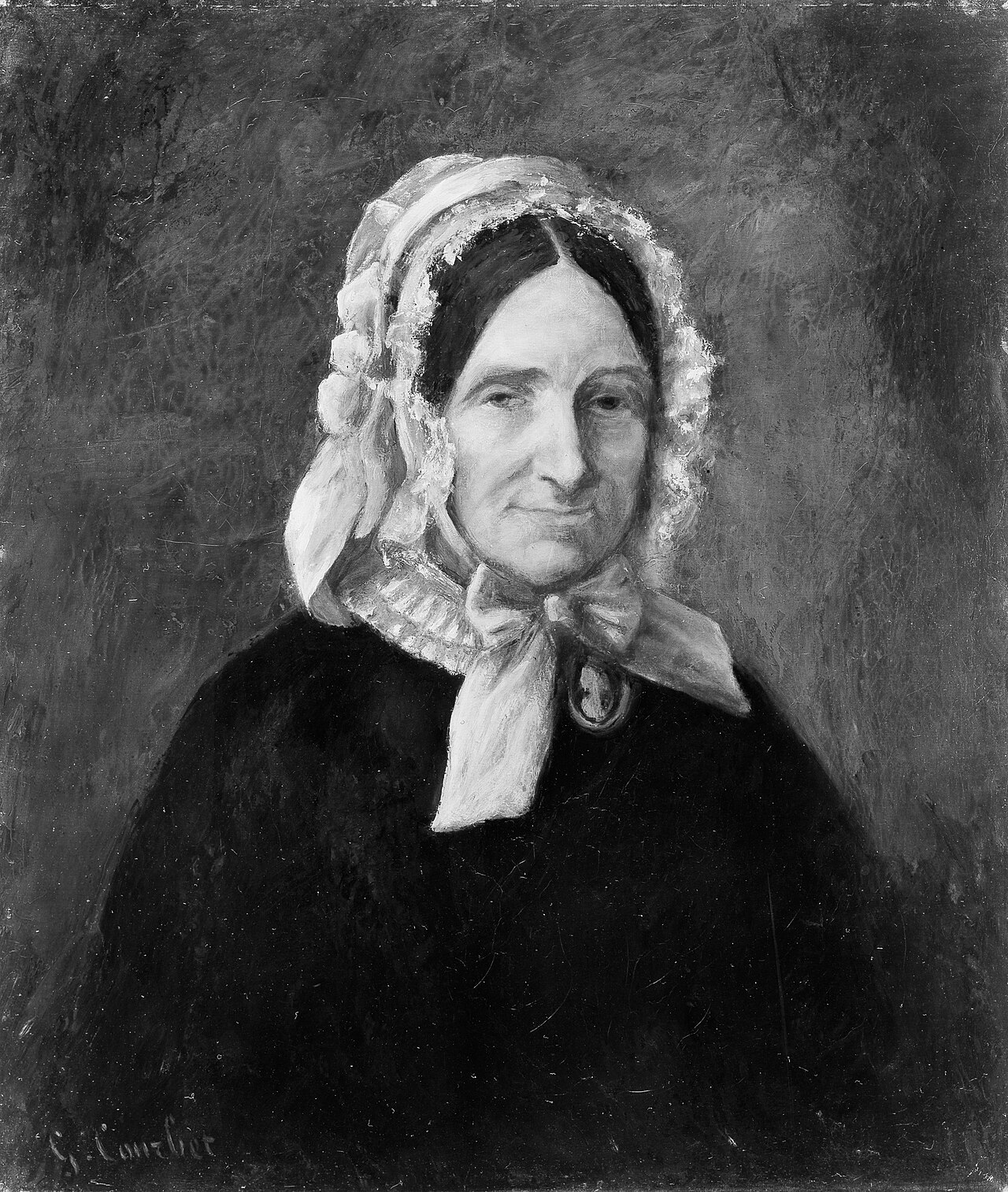
AI-assisted Portrait of Héloïse.
The Woman Who Refused to Rewrite Her Heart
Born around 1100 in France, Héloïse was educated to a degree almost unheard of for women of her time. Fluent in Latin, Greek, and Hebrew, she was renowned for intellectual rigor long before she became known for romance.
History remembers her through her connection to Peter Abelard — the celebrated logician whose affair with her ended in scandal and violence. But reducing Héloïse to tragedy misses the deeper truth. She was not a passive participant in that story. After catastrophe forced both into religious life, Héloïse became abbess of the Paraclete — governing, administering, and sustaining a community of women for decades.
Her surviving letters reveal a mind unwilling to falsify its own heart for the sake of public morality. Decades after the disaster, as a respected abbess, she refused to perform the repentance the Church demanded — refused to call her love a sin, because to her it had never been one. That refusal points toward INFP: the self's own truth held as the highest measure, against doctrine, convention, and salvation itself.
She would rather be called Abelard's whore than an empress's wife — and she would not lie about it, even to God.
Fi — Dominant
Héloïse measures everything against the private truth of her own heart, and nothing — not the Church, not convention, not the prospect of damnation — is allowed to override it. Famously, she told Abelard that had the emperor himself offered her marriage, she would still have chosen to be called his whore rather than another man's wife. Her love was pure, she insisted, precisely because it sought nothing beyond him: no rank, no security, no sacrament. That is Fi at its most absolute — devotion valued for itself alone.
Decades later, governing the Paraclete, she refused to falsify her own feeling even in prayer. The Church wanted repentance; she gave it none. She could regret the consequences, she wrote, but she could not call the love a sin, because to do so would be to lie about her own heart — and that lie she would not tell, even to God. This is the deepest signature of dominant Fi: the self's interior truth held as the final measure, immovable against any external moral system.
Ne — Auxiliary
Héloïse's inner conviction is carried by one of the most dazzling intellects of her century. Fluent in Latin, Greek, and Hebrew, steeped in the classics, she was renowned for her learning before she was ever known for love. Her letters to Abelard are not simple outpourings of feeling — they are arguments, ranging across Cicero and Seneca, scripture and Stoic ethics, marshaling authorities and turning them against him with a dialectical agility that could out-reason the theologians.
This is auxiliary Ne: the restless, branching mind that gives her Fi its reach. She does not merely feel that marriage would diminish their love — she builds the case, following the idea down every corridor, anticipating objections, generating fresh angles on a position the age found scandalous. Her brilliance is the instrument; her own heart's truth is what it serves.
Si — Tertiary
Across decades of enforced separation, Héloïse kept the past intact. Her letters return again and again to specific, preserved memory — the hours of their love, the exact texture of what had been — held with a vividness that time had not dulled. She does not let the bond fade into abstraction; she relives it, keeping an inner archive of feeling exact and unfaded. That fidelity to remembered experience, marshaled in defense of her Fi conviction, is tertiary Si: the past kept alive as evidence of what was real.
Te — Inferior
Héloïse never sought power, and yet she became formidably good at wielding it. Forced into religious life, she rose to lead the Paraclete and ran it for decades — administering property, managing a community of women, negotiating with bishops, building one of the most respected houses in twelfth-century France. None of this was her ambition; competence came to her under duty, not desire. That is the signature of inferior Te in an INFP: organizational mastery developed late, in the service of others, by a person whose native orientation was always inward toward feeling rather than outward toward systems and results.
Why INFP Over INFJ or ISFP
Why not INFJ?
The INFJ reading mistakes the direction of her depth. An INFJ leads with Ni — a transforming vision pressed outward on the world, the seer or reformer who reads where things are going and tries to bend them there. Héloïse had no such vision and sought to reform nothing. Her intensity turned inward, on her own love and her own integrity, not outward as a directive program. She is not a prophet but the purest case of personal authenticity refusing an external moral system — Fi, not Ni.
Why not ISFP?
Like Héloïse, an ISFP leads with Fi — the same uncompromising fidelity to inner feeling. But the ISFP's auxiliary is Se: a sensory, present-tense engagement with the world as it is. Héloïse's medium was abstract, verbal, intellectual — the play of argument and idea, classical authority turned against the theologians. That dialectical reach is Ne, not Se, which places her among the INFPs rather than the ISFPs.
The Pairing Makes Sense
If Abelard embodied outward intellectual expansion and dialectical provocation, Héloïse embodied unbending inner fidelity — a self that would not revise its own truth to suit the world. He abstracted their suffering into doctrine. She held onto what it had actually been.
He reframed. She refused to.
Together they represent one of history's most psychologically revealing pairings — the debate between doctrine and the heart, between the man who abstracted their love into theology and the woman who would not let her own truth be edited.
Connected Figures
Further Reading
- The Letters of Abelard and Heloise — Peter Abelard & Héloïse, trans. Betty RadiceThe primary source — Penguin Classics edition. Essential reading for Héloïse's voice in her own words.
- Heloise and Abelard: A Twelfth-Century Love Story — James BurgeA narrative account grounding their story in its historical and ecclesiastical context.
- The Lost Love Letters of Heloise and Abelard — Constant J. MewsProposes an earlier set of letters as authentic — opens the scholarly debate on Héloïse's authorship.
- Abelard and Heloise — M. T. ClanchyA thorough modern biography covering both figures and the theological controversies that shaped their lives.
