 Historical Figure MBTI
5 min read
#287 · 3-25-26 · Catherinian Russia
Ivan Betskoy
Statesman · Educational Reformer · Father of Russian Enlightenment Practice
1704 — 1795
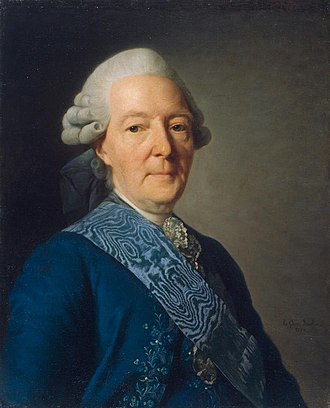
Portrait of Ivan Betskoy
The Man Who Tried to Build a New Russian Soul
His very name was a wound. Ivan Ivanovich Betskoy was the natural son of Field Marshal Prince Ivan Trubetskoy — conceived while his father was a prisoner of war in Sweden, born outside of marriage, and given a name that was a carefully constructed absence. "Betskoy" was a truncation of "Trubetskoy" — a name without the prefix, a son without the full inheritance. This origin shaped everything that followed.
Betskoy became, under Catherine the Great, Russia's most consequential educational reformer — founding the Smolny Institute for Noble Maidens in 1764 (Russia's first women's educational institution), establishing the Moscow Foundling Home, reforming the Academy of Arts, and creating a network of institutions designed to do something never attempted at scale in Russia: produce, deliberately and systematically, a different kind of person. He called it the cultivation of the "new breed" — a generation educated not merely in facts and skills but in moral sensibility and genuine virtue. Years in France, absorbing Enlightenment ideas at their source, had given him a Rousseauian conviction that human transformation through education was possible.
The INFJ is not content with improving institutions — they want to transform the kind of person the institution produces. Betskoy's twenty years of educational work were not administrative reform; they were social engineering in the service of a coherent vision of human flourishing.
He lived to ninety-one, working into very old age, visiting his institutions, knowing individual children by name. The vision that drove him was built to last longer than a single lifetime. Whether it did is another matter.
The New Breed of Russians
Betskoy's dominant Ni expressed itself in the most ambitious form that function takes: the conviction that a coherent vision, held with clarity and pursued with patience, could reshape social reality. His educational project was a unified theory of human development applied at institutional scale. Children removed from corrupting environments before age six, raised in controlled institutions, educated in virtue and sensibility — they would become, over two generations, the foundation of a different Russia. Not through law or force, but through the formation of character at its most impressionable stage.
This vision was precise where most visionaries are vague. Betskoy had a specific theory of developmental psychology — derivative of Locke and Rousseau, adapted for Russian conditions — about what children needed at each stage and what curriculum would form the "new breed." He wrote it all down in detailed institutional charters and his major educational treatise. The vision was not abstract; it was operational.
Catherine valued him because his Ni gave her something rare among her advisors: long-range perspective that was also practically actionable. Her Enlightenment correspondents — Voltaire, Diderot — offered ideas. Betskoy offered a plan.
The Children He Actually Knew
His Fe auxiliary kept Betskoy's grand vision from becoming cold social engineering. He was not writing policy papers about children in the abstract; he was visiting institutions, knowing children by name, caring about their particular circumstances. Contemporaries noted this consistently: the warmth, the personal attentiveness, the way he spoke about individual children rather than educational principles.
There is some historical evidence that Betskoy may have had a natural daughter — possibly a woman named Anastasia connected to entry #285 — whom he treated with genuine affection. It is a characteristically INFJ pattern: the man who built institutions for abandoned children had himself navigated the emotional weight of illegitimacy, and his warmth for the children in his care may have been colored by that personal understanding.
Rousseau Adapted for Russia
Betskoy's Ti tertiary provided the intellectual scaffolding that distinguished his vision from sentimentalism. His engagement with Rousseau was not superficial absorption but careful critical adaptation. He agreed with Rousseau on the importance of early childhood and the corrupting effects of flawed social environments. He disagreed, quietly but importantly, with Rousseau's radically individualistic conclusions — children needed to be formed within institutions, not in isolation; the "new breed" was a social project, not a personal one.
His major document, "A General Establishment for the Education of Both Sexes of Youth," is not a vision statement but a reasoned argument about developmental psychology and institutional design. He was not primarily an intellectual — he was a practitioner who used Ti to keep his practice coherent. An INTJ would have been more interested in the theory; Betskoy was more interested in the institutions.
Why INFJ Over ENFJ or INTJ
Why not ENFJ?
An ENFJ would have been more immediately charismatic, more focused on inspiring through personal presence. Betskoy was not this kind of person. His warmth was genuine but not his primary tool; the Ni vision came first, and the Fe warmth served it. That ordering — vision leads, warmth follows — is the INFJ pattern rather than the ENFJ one.
Why not INTJ?
An INTJ would have been colder, more purely strategic, less personally invested in the wellbeing of individual children. Knowing children by name, visiting institutions repeatedly over decades, genuinely caring about their circumstances — this exceeds what the INTJ's Te auxiliary typically produces. Betskoy's insistence on personal relationships and the human texture of his institutions marks him as Fe auxiliary rather than Te auxiliary.
Connected Figures
Further Reading
- Catherine the Great: Portrait of a Woman — Robert K. MassieThe most readable comprehensive biography of Catherine; covers Betskoy's educational work and his relationship with the empress in depth.
- By the Banks of the Neva: Chapters from the Lives and Careers of the British in Eighteenth-Century Russia — Anthony CrossIlluminates the international Enlightenment networks in which Betskoy operated, including the foreign advisors who shaped Catherinian Russia.
- Russia in the Age of Catherine the Great — Isabel de MadariagaThe scholarly standard on Catherinian government; discusses Betskoy's institutions within the broader reform program of the reign.
