 Historical Figure MBTI
4 min read
#29 · 2-9-26 · The German Enlightenment
Johann Georg Hamann
Anti-System Thinker · Prophet of Language and Faith
1730 — 1788
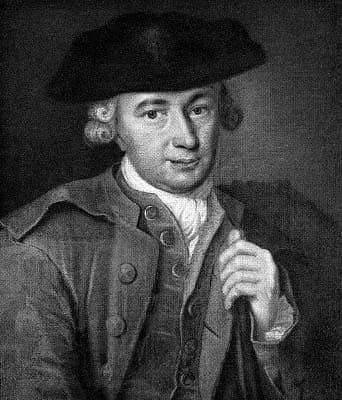
Portrait of Johann Georg Hamann.
The Man Who Refused to Purify Reason
Johann Georg Hamann lived in the same city as Immanuel Kant, walked the same streets, breathed the same intellectual air — and rejected almost everything the Enlightenment claimed to stand for. Where his contemporaries sought clarity, system, and universal method, Hamann leaned into paradox, metaphor, and lived contradiction.
He was not interested in explaining the world cleanly. He was interested in reminding it that thinking is never clean.
He is often misread as a purely mystical figure, or typed as INFJ for his symbolism and spiritual depth. But a closer look at his cognition, relationships, and writing style points decisively toward ENFP. His thinking was expansive rather than convergent, associative rather than architectural. He generated meaning through metaphor and provocation, not synthesis and closure.
This was not withdrawn intuition. It was expressive intuition, carried outward into language and life.
Ne — Dominant
Hamann's mind operated through association, analogy, and symbolic leap. His writings jump between scripture, classical references, sarcasm, and lived experience without apology. Meaning emerges not from linear argument but from constellation.
He did not ask what must be true in order for thought to function. He asked how thought is actually lived — through metaphor, narrative, and culture. This is classic dominant Ne: possibility-oriented, anti-reductive, and resistant to closure.
Rather than narrowing ideas into a single framework, Hamann multiplied them, trusting resonance over resolution.
Fi — Auxiliary
Hamann's convictions were deeply personal and internally anchored. His rejection of Enlightenment rationalism was not theoretical rebellion but value-driven resistance. He believed reason divorced from faith and embodiment was morally and spiritually dishonest.
This Fi core explains both his intensity and his nonconformity. He lived with a partner outside marriage, fathered children without seeking social legitimacy, and accepted material precarity rather than compromise his beliefs. His ethics were not negotiated socially; they were lived inwardly and expressed outwardly.
Te — Tertiary
Hamann was capable of sharp critique, but he wielded structure selectively and often reluctantly. When he engaged rationalist arguments, it was to expose their blind spots — not to replace them with a competing system.
He resisted method on principle. This was not an inability to organize, but a refusal to privilege structure over truth. His occasional precision served intuition and values, never the other way around.
Si — Inferior
Hamann struggled with routine, stability, and long-term material planning. His life was marked by financial instability and dependence on friends, including Kant at times.
Yet memory and tradition still mattered to him — filtered through emotion rather than preservation. Scripture, myth, and historical language were not rules to obey but living reservoirs of meaning. His relationship to the past was symbolic, not custodial.
Why Not INFJ?
Why not INFJ?
INFJs tend to metabolize intuition inwardly, synthesizing insight into coherent explanatory visions. Hamann did the opposite. He externalized intuition immediately, flooding language with metaphor and contradiction. He did not guide readers toward understanding; he unsettled them. He did not refine insight into architecture; he kept it open, provocative, and alive. Where INFJ intuition converges, Hamann's intuition proliferated.
Language as Cognition
Hamann's philosophy of language itself further clarifies this distinction. He did not treat language as a secondary vehicle for pre-formed insight, but as the very medium through which thought comes into being. Meaning, for him, emerged in expression — through metaphor, quotation, tone, and historical allusion — rather than preceding it as a finished internal vision awaiting translation.
Language was not how he explained truth.
It was how truth revealed itself.
The Counterpart: Hamann and Kant
Hamann's ENFP profile becomes especially clear when set beside Immanuel Kant's INTP cognition. Kant interrogated the logical conditions of thought; Hamann dissolved the pretense that thought had clean conditions at all. Kant purified reason into structure; Hamann re-embodied it. Kant asked what must be true; Hamann insisted that truth is always already messy.
Their friendship endured because they occupied complementary poles. Hamann reminded Kant that reason has roots. Kant reminded Hamann that insight needs containment.
Between them stood Johann Gottfried Herder, Hamann's intellectual heir and Kant's former student — absorbing Hamann's reverence for language and culture while maintaining Kant's moral seriousness, transforming their opposition into a humane philosophy of historical understanding.
Connected Figures
Further Reading
- Hamann's Socratic Memorabilia: A Translation and Commentary — James C. O'FlahertyThe essential gateway into Hamann's dense early text and his inversion of Enlightenment confidence.
- Johann Georg Hamann and the Origins of Modern Irrationalism — W. M. AlexanderTraces Hamann's influence on anti-rationalist currents from Kierkegaard to Heidegger.
- The Magus of the North: J. G. Hamann and the Origins of Modern Irrationalism — Isaiah BerlinBerlin's vivid intellectual portrait of Hamann as the prophetic counterweight to Enlightenment rationalism.
- Hamann: Writings on Philosophy and Language — Kenneth Haynes (ed. & trans.)A Cambridge Texts in the History of Philosophy edition offering key primary texts in accessible translation.
